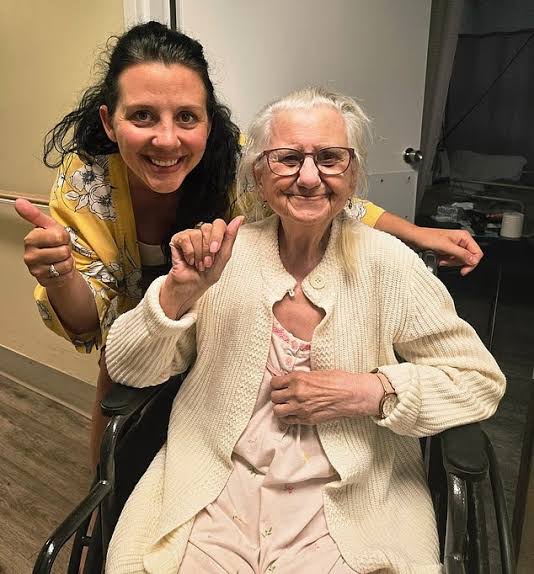
An 83-year-old Canadian grandmother died after receiving medical assistance in dying, but her family says she had previously rejected the procedure and later became deeply distressed after realizing it had been scheduled.
Now, her granddaughter is demanding answers about what happened during the final days of her life.
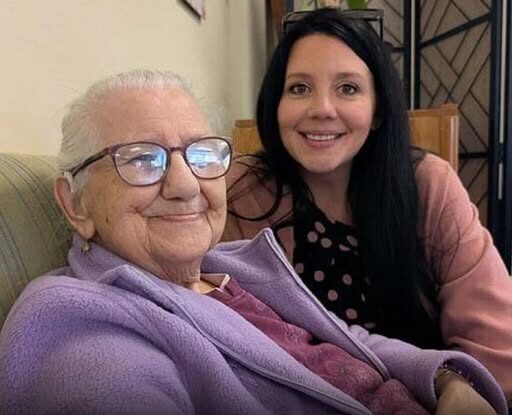
Brigitte Stegemann, affectionately known to her family as “GG” or “Oma,” died on July 10, 2026, at The Pearl care home in Cannifton, Ontario.
Her granddaughter, Brigitte Kranendonk, says the circumstances surrounding her grandmother’s death left the family with serious concerns.
Kranendonk alleges that Stegemann did not clearly consent to medical assistance in dying, commonly referred to in Canada as MAiD, immediately before the procedure.
Belleville Police have confirmed that the matter remains open and is being investigated by the force’s Criminal Investigations Division.
The existence of an investigation does not establish that any wrongdoing occurred.
The care home and medical practitioners involved have not publicly addressed all of Kranendonk’s allegations in detail. The family says they were informed that Stegemann had undergone the required assessments and had been legally approved for MAiD.
Kranendonk, however, says what she personally witnessed in the days leading up to her grandmother’s death did not appear consistent with what Stegemann wanted.
- Her Grandmother Had Initially Rejected MAiD
- Questions About Her Grandmother’s Understanding
- “Do You Know You’re Going to Die Tomorrow?”
- The Family Trusted the Professionals
- The Final Minutes
- What Did the MAiD Safeguards Require?
- Police Are Now Investigating
- A Granddaughter Looking for Answers
- The Case Remains Unresolved
Her Grandmother Had Initially Rejected MAiD
Stegemann was born in Germany and, according to her family, was a deeply committed Christian.
Her health had deteriorated considerably over time.
She had moved into The Pearl approximately a year and a half before her death.
Then, in February 2026, she was diagnosed with stage 4 stomach cancer.
Her doctors reportedly gave the family an uncertain prognosis.
She might have had roughly six months left.
Or she could potentially have lived significantly longer.
As the family discussed different possibilities for her future care, MAiD was brought up as one of the options.
According to Kranendonk, her grandmother initially rejected the idea.
She says Stegemann was clear about her wishes.
“No, I don’t want that.”
Kranendonk also says her grandmother’s Christian beliefs influenced the way she viewed medically assisted death.
But while Kranendonk and her husband were away on a 10-day road trip, the situation reportedly changed.
On July 3, Kranendonk says she received a phone call informing her that a MAiD assessment was being arranged because her grandmother’s health had deteriorated.
By the time Kranendonk returned, Stegemann had already undergone an initial consultation.
Her granddaughter was present for a subsequent assessment.
And what she witnessed during that assessment immediately concerned her.
Questions About Her Grandmother’s Understanding
English was not Stegemann’s first language.
She was also hearing impaired.
Kranendonk says her grandmother sometimes appeared to nod during the conversation without clearly demonstrating that she understood everything being discussed.
The granddaughter also became concerned about some of Stegemann’s answers during a cognitive assessment.
For example, Kranendonk says her grandmother stated that she had no siblings.
According to the family, Stegemann actually had 13 siblings, including two who were still alive.
Despite Kranendonk’s concerns, she says the family was informed that her grandmother had been determined to have the necessary capacity and was eligible for MAiD.
The procedure was scheduled for Friday, July 10.
Then, according to Kranendonk, a conversation the day before changed the way she viewed the entire situation.
“Do You Know You’re Going to Die Tomorrow?”
Kranendonk sat down with her grandmother because she wanted to make absolutely certain that Stegemann understood what was going to happen.
She says she asked her grandmother directly:
“Do you know that you’re going to die on Friday?”
According to Kranendonk, Stegemann became extremely upset.
She cried for a prolonged period.
Then, the granddaughter says, her grandmother told her:
“I’ve made a mistake.”
Kranendonk says she immediately reassured her grandmother that she did not have to go through with the procedure.
She told Stegemann that she could simply tell the doctors she had changed her mind.
For the family, that conversation became one of the most important moments surrounding her death.
Under Canada’s MAiD framework, a person who retains decision-making capacity must generally be given the opportunity to withdraw a request and must expressly consent immediately before MAiD is administered.
There are limited exceptions.
Under certain legal circumstances, a person can make a valid waiver of final consent in advance.
Such arrangements are subject to specific requirements, including circumstances involving a reasonably foreseeable natural death and a written agreement made while the individual still has decision-making capacity.
If the requirements for a valid waiver are met and the person subsequently loses capacity, MAiD can potentially proceed without another verbal confirmation.
However, Canadian guidance also provides that a waiver becomes invalid if the person demonstrates refusal or resistance through words, sounds or gestures.
Exactly what documentation existed in Stegemann’s case, what the assessments concluded, and whether all applicable safeguards were satisfied are now among the questions surrounding the case.
The Family Trusted the Professionals
Kranendonk says the family trusted the professionals caring for her grandmother.
Rather than continuing to challenge every stage of the process, she decided to spend the remaining time with Stegemann.
Then came July 10.
Family members gathered around her that morning.
They spent time together outside in the care home garden.
They ate strawberry ice cream.
Her pastor prayed with her.
According to Kranendonk, Stegemann was still interacting with the people around her.
At one point, when Kranendonk became emotional, she says her grandmother told her:
“If you don’t stop crying, I’m not going to sleep tonight.”
To Kranendonk, the comment suggested that her grandmother remained aware of what was happening around her.
Then the family was asked to return inside.
The Final Minutes
Kranendonk says the family had expected the doctor involved in the MAiD procedure to arrive later that morning.
Instead, the process began earlier than they anticipated.
She alleges that a nurse had difficulty inserting an IV and that multiple attempts were made, resulting in significant bleeding.
By the time the doctor arrived, Kranendonk says her grandmother appeared far less responsive.
That moment has become one of the central disputed points in the case.
According to Kranendonk, the doctor told Stegemann that she would be given medication and asked whether that was acceptable.
The granddaughter says her grandmother did not respond.
She says Stegemann did not nod.
She did not open her eyes.
And she did not verbally indicate that she wanted the procedure to continue.
Kranendonk says the doctor nevertheless proceeded.
Stegemann died shortly afterward.
The granddaughter says she left the room with serious questions about what had happened during those final moments.
She questioned whether her grandmother had become unconscious before the medication was administered.
She also questioned whether Stegemann still had the capacity to provide final consent at that point.
What Did the MAiD Safeguards Require?
Those questions are significant under Canada’s MAiD framework.
Generally, when a patient still has decision-making capacity, they must be given the opportunity to withdraw their request and must provide express consent immediately before MAiD is administered.
There are limited circumstances in which a person can waive that final-consent requirement in advance.
But even when such a waiver exists, Canadian guidance says that signs of refusal or resistance can invalidate it.
Kranendonk says she does not know exactly what documentation existed in her grandmother’s case.
That uncertainty is one of the reasons the family has sought access to medical records.
She says she repeatedly requested Stegemann’s documentation from The Pearl.
She also says that after learning more about MAiD safeguards, she began questioning whether every required step had been properly followed.
One of her concerns involves an allegation that some paperwork may have been completed only after Stegemann had already died.
That claim has not been independently established.
The care home and practitioners involved have not publicly provided a detailed response addressing each of Kranendonk’s allegations.
The family, however, says it was told that Stegemann had legally consented to MAiD.
Kranendonk disputes that conclusion.
She maintains that her grandmother’s distress the previous day—including her alleged statement, “I’ve made a mistake”—should have resulted in another review of her wishes.
She also believes that Stegemann’s lack of an obvious response immediately before the procedure should have caused the process to stop.
For now, those remain allegations.
They have not been resolved by an independent investigation or court.
Police Are Now Investigating
After her grandmother’s death, Kranendonk contacted several authorities.
She says she raised her concerns with Ontario’s Chief Coroner’s Office and the Patient Ombudsman.
She also contacted Belleville Police.
Police have confirmed that the matter remains open and is being investigated by their Criminal Investigations Division.
Because the investigation is ongoing, authorities have not publicly released detailed conclusions about what happened.
That leaves several major questions unanswered.
What exactly did Stegemann understand about MAiD?
What did the assessments determine about her decision-making capacity?
Was there a valid waiver of final consent?
If such a waiver existed, did anything happen that could have invalidated it?
What was documented immediately before the procedure?
And how did the medical team interpret Stegemann’s condition and behavior when the medication was administered?
Those questions will be important in determining what happened.
A Granddaughter Looking for Answers
For Kranendonk, the issue is deeply personal.
She had cared for her grandmother for years.
She had also served as her medical power of attorney.
And she says she trusted the professionals responsible for Stegemann’s care.
Looking back, Kranendonk says she wishes she had known more about the legal options available to the family.
She has said she regrets not exploring whether an emergency court order could have delayed the procedure while questions about consent were reviewed.
At the time, however, she says she did not even realize such an option might exist.
She also says that simply removing her grandmother from the care home did not seem realistic.
Stegemann still required medical treatment and support.
The family was trying to balance her cancer diagnosis, her comfort and the rapidly developing decisions surrounding her end-of-life care.
That is part of what made the situation so overwhelming for Kranendonk.
She says events seemed to move forward much faster than the family expected.
The Case Remains Unresolved
For now, the circumstances surrounding Stegemann’s death remain under investigation.
Her family alleges that she did not clearly consent to MAiD on the morning she died.
The medical side has maintained that the procedure was legally authorized.
Police are continuing to examine the circumstances.
Until that investigation is completed, the most serious allegation—that Stegemann was euthanized against her will—remains an allegation rather than an established fact.
What is clear is that the case has raised difficult questions about informed consent, decision-making capacity and the safeguards surrounding medical assistance in dying.
At the center of those questions is one issue the family wants answered:
Did Brigitte Stegemann’s final wishes truly match what happened on the morning of July 10, 2026?