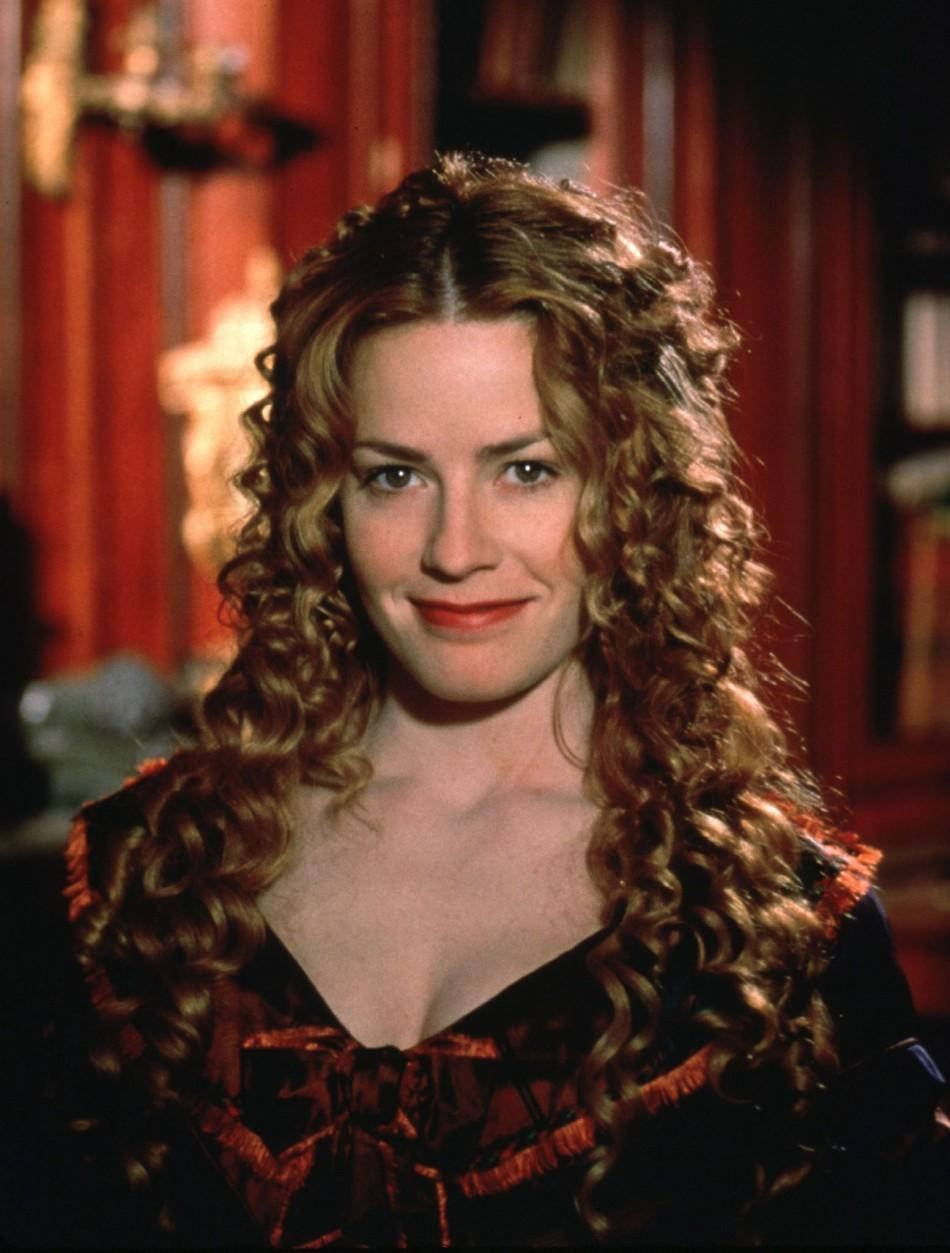
Snapped on this day in 1996, the face is instantly recognizable — warm yet resilient, charming yet steely. Who is this magnetic screen presence whose mix of sweetness and quiet strength turned her into one of Hollywood’s most beloved actresses of the late 20th century? The answer, of course, is Elisabeth Shue.

For many, Shue will forever be remembered as the girl next door who stepped onto the screen in The Karate Kid (1984). As Ali Mills, the bubbly love interest who cheered on Daniel LaRusso, she brought warmth and authenticity to a teen classic that could have easily felt one-note without her presence. Ali wasn’t just a prize for the karate champion; she was spirited, confident, and strong-willed, a reflection of the qualities that Shue herself would continue to embody throughout her career.

But to reduce Elisabeth Shue to just the sweet high school girlfriend would be to miss the sharp edges and daring choices that defined her trajectory. After The Karate Kid
, Shue quickly proved she had range. She stepped into the sci-fi phenomenon Back to the Future Part II (1989) and Part III (1990), replacing Claudia Wells as Jennifer Parker, Marty McFly’s steady girlfriend. While her role in those films was relatively small, it placed her in one of the most beloved franchises of all time, solidifying her standing as a familiar face to audiences worldwide.

Her real breakout as a leading lady, however, came with Adventures in Babysitting (1987). Playing Chris Parker, a suburban teenager whose attempt to babysit turned into a chaotic, citywide odyssey, Shue showcased both comedic timing and dramatic chops. She was plucky, resourceful, and endlessly watchable — a young actress proving she could carry a film almost entirely on her shoulders. The movie became an instant cult classic and remains a touchstone of 1980s cinema, in no small part because of Shue’s radiant, grounded performance.
The 1990s brought even more daring turns. Shue wasn’t content with playing only wholesome characters; she wanted complexity, challenge, and grit. That determination culminated in Leaving Las Vegas (1995), where she starred opposite Nicolas Cage in a harrowing tale of addiction, despair, and unexpected tenderness. As Sera, a sex worker who forms an unlikely bond with a suicidal alcoholic, Shue delivered a raw, layered performance that stunned critics and audiences alike. Gone was the girl next door — in her place stood a woman of resilience and vulnerability, trying to survive a cruel world while holding on to her humanity. The role earned her an Academy Award nomination for Best Actress, along with Golden Globe and Screen Actors Guild nominations, and remains one of the most celebrated performances of her career.

By the time the photo from 1996 was taken, Elisabeth Shue had already built a résumé that defied typecasting. She had balanced blockbusters with small, character-driven films, and she had shown a willingness to embrace both glamour and grit. She was magnetic not because she fit neatly into one Hollywood archetype, but because she slipped between them with ease. Sweetness and steel — that was her signature combination.
In addition to her acting career, Shue’s personal story also set her apart in Hollywood. She briefly stepped away from the industry to complete her Harvard University degree in political science, demonstrating the same discipline and ambition that defined her career choices. Balancing education, family, and a demanding profession, Shue proved she was more than just another starlet chasing fame — she was a woman intent on creating a life that reflected her values.

Even beyond the 1990s, Elisabeth Shue continued to surprise. She starred in the 1997 thriller The Saint opposite Val Kilmer, played a scientist in the blockbuster Hollow Man (2000), and later took on television, joining the cast of
CSI: Crime Scene Investigation in 2012. More recently, she delighted fans with a nostalgic yet fierce reprisal of Ali Mills in Cobra Kai (2021), returning to the Karate Kid universe decades later with the same charm that first won over audiences in the 1980s.
Her ability to reinvent herself while remaining authentic is perhaps her greatest legacy. While many actresses of her generation struggled against Hollywood’s tendency to pigeonhole women into narrow roles, Shue carved out a career of surprising variety. Whether playing the supportive girlfriend, the adventurous babysitter, the hardened survivor, or the complex heroine, she infused every character with humanity and relatability.
Elisabeth Shue’s career also stands as a testament to perseverance. For all the accolades, there were challenges too — roles that didn’t work, projects that faltered, or the uphill battle of proving herself in an industry that often underestimated women. Yet Shue always returned, never content to be dismissed as just a pretty face from a teen classic. Instead, she built a body of work that remains inspiring not just for its range, but for its refusal to compromise.
Looking back at her in 1996 — luminous, confident, and just coming off the acclaim of Leaving Las Vegas — we can see an actress in full command of her craft. She had already evolved from ingénue to leading lady, from comedic charm to dramatic gravitas. And yet, even then, her story was far from finished.

Today, Elisabeth Shue is celebrated not only as an actress who lit up everything from teen favorites to sharp-edged thrillers, but also as a woman who turned her Hollywood journey into something uniquely her own. Sweetness and steel, vulnerability and resolve — she embodied them all, and in doing so, became one of the most magnetic screen presences of her generation.