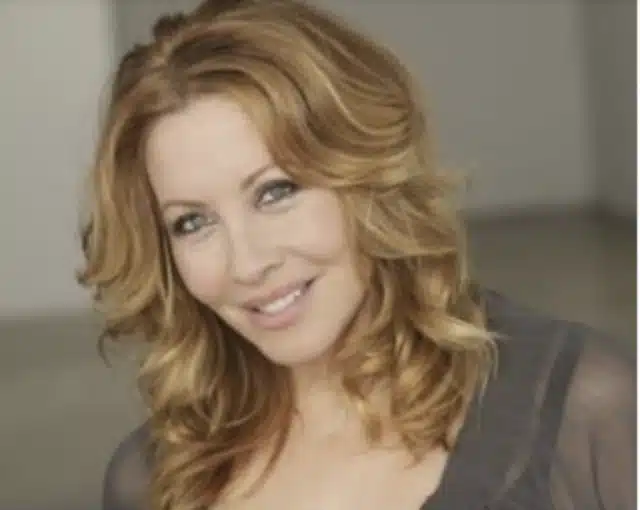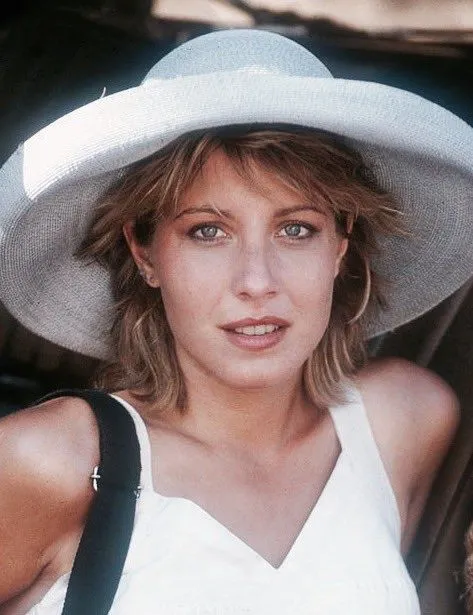
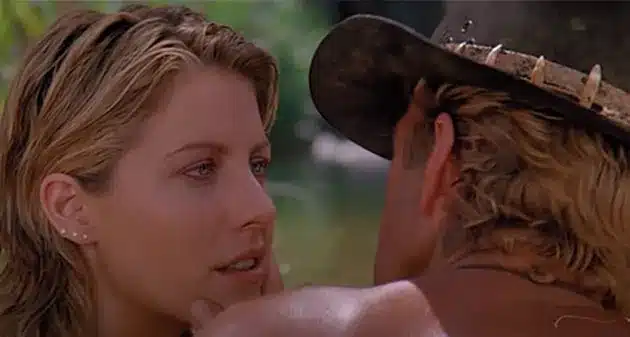
Following her breakout role in Crocodile Dundee, Linda Kozlowski became an overnight global sensation. Her performance as the sharp, cool-headed journalist Sue Charlton not only defined the film’s appeal but also pushed her into international stardom.
Audiences around the world instantly recognized her face, her charm, and the effortless chemistry she shared with co-star Paul Hogan. Yet, despite the fame that followed, Kozlowski’s relationship with Hollywood was far more complicated than her sudden rise suggested.
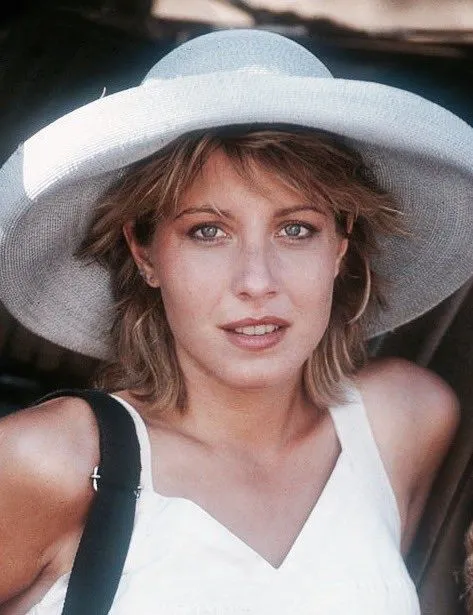
Born on January 7, 1958, in Fairfield, Connecticut, Linda Kozlowski grew up far from the worlds of film studios and red carpets. She was a naturally gifted performer—serious, driven, and drawn to the discipline of acting.
After high school, she earned acceptance into the prestigious Juilliard School, a place known for its rigor and its ability to shape raw talent into professional artistry. There, she refined her craft under the guidance of instructors who demanded excellence.
She graduated in 1981, stepping into adulthood with the confidence of someone who had survived the pressure cooker that is Juilliard.
Her early career unfolded on stage. Linda immersed herself in off-Broadway productions that demanded emotional range and stamina. These were small shows, often in intimate theaters, but they strengthened her foundation as an actress.
Eventually, she moved to Broadway and to television roles, including the 1985 film adaptation of Death of a Salesman. Acting opposite the legendary Dustin Hoffman was intimidating, but it was also a pivotal moment.
Hoffman recognized her talent, took her under his wing, and became a mentor. His support would later prove life-changing.
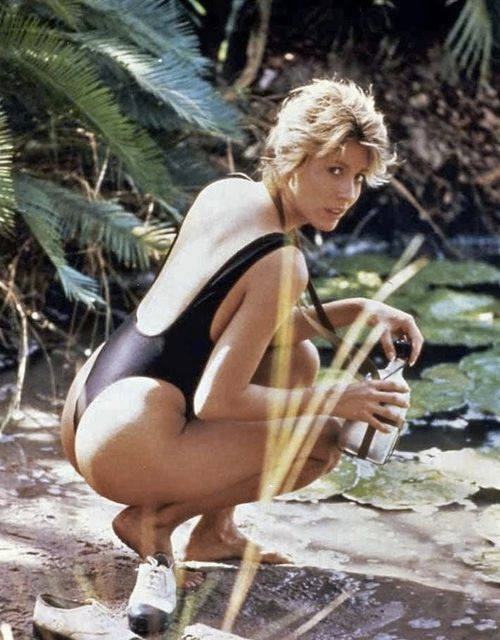
After Death of a Salesman, however, Linda didn’t receive the career momentum she had hoped for. Work became sporadic. She waited tables, struggled financially, and tried to hold onto her artistic ambitions in a city where dreams often dissolve.
Seeing her situation, Dustin Hoffman and his wife generously offered her temporary housing in their Malibu beach house. It was from this unexpected sanctuary—far from the stages of New York—that Linda’s greatest opportunity arrived.
Hoffman recommended her for an audition across the world: the role of Sue Charlton in an Australian film few in Hollywood were paying attention to. Linda auditioned and won the part. That film was
Crocodile Dundee.
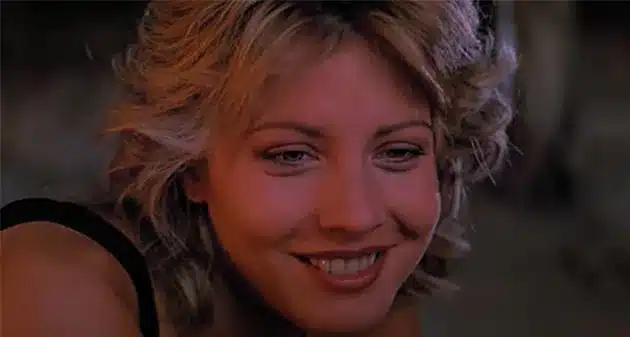
The movie exploded into a worldwide phenomenon. Made on a modest $10 million budget, it earned more than $320 million and became one of the highest-grossing films of the 1980s. Linda went from a struggling actress to a household name almost instantly.
Australians embraced her first, since the film premiered there earlier, but soon the entire world knew her face. Sue Charlton was clever, brave, funny, and charismatic—and audiences loved her.
Despite the global fame, Linda sensed something troubling beneath the surface. Hollywood was eager to use her, but not necessarily eager to understand her. She was repeatedly offered roles that felt limiting—characters written as accessories to male leads, especially comic ones.
It became clear that the industry wanted to typecast her as a version of Sue Charlton rather than allow her to grow or explore deeper roles. Offers piled in, but the creative satisfaction she craved did not.
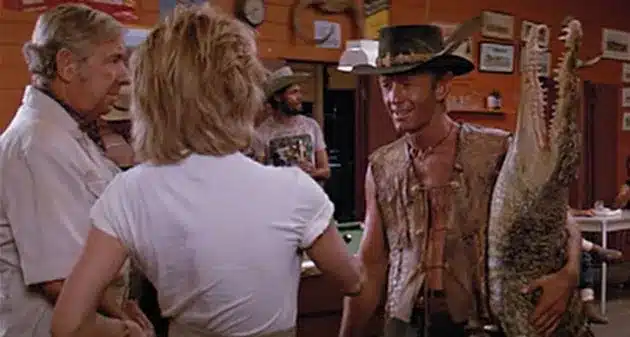
She reprised her role in Crocodile Dundee II (1988) and later in Crocodile Dundee in Los Angeles (2001), but outside the Dundee franchise, meaningful opportunities remained scarce. Eventually, Linda made the difficult decision to step away from acting entirely.
It wasn’t a retreat—it was a declaration. She refused to spend her life playing roles that didn’t reflect her talent or her aspirations.
Her personal life was closely intertwined with her professional one. During the filming of the
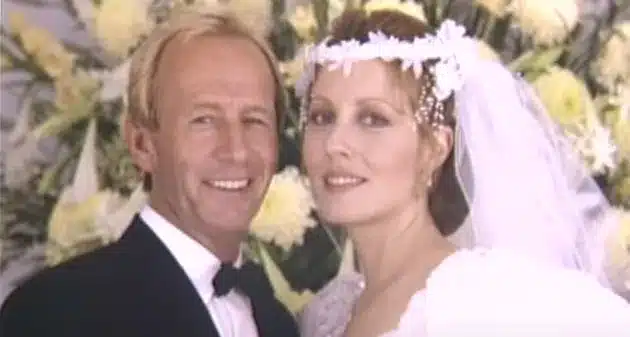
Crocodile Dundee series, Linda fell in love with Paul Hogan. Their relationship grew steadily, and in 1990, they married.
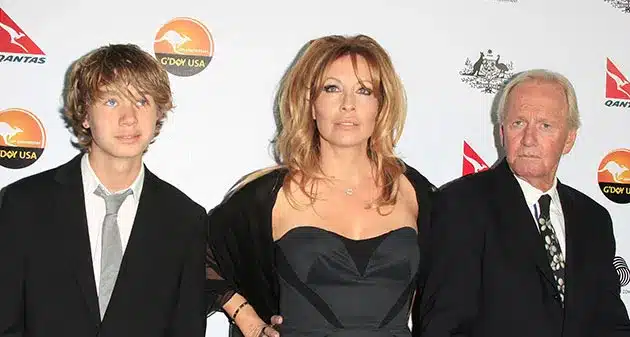
In 1998, they welcomed their son, Chance. For years, they lived a quiet life away from the relentless chaos of Hollywood. But like many relationships formed in the intense fire of fame, their marriage eventually came to an end. In 2014, they divorced after nearly 25 years together.
What followed was not a downward spiral, but a transformation.
After the divorce, Linda chose to rebuild her life on her terms. With a significant settlement supporting her newfound freedom, she sought a fresh environment—one far removed from studios, tabloids, and the ghost of her star-making role.
That decision led her to Morocco, a land of vibrant colors, ancient architecture, and endless desert horizons.
There she met Moulay Hafid Baba, a charismatic Moroccan tour guide. Their connection was immediate, natural, and uncomplicated. For the first time in years, Linda felt life opening rather than narrowing.
She embraced the culture, the people, the rhythm of Moroccan life—and soon, she embraced a new career.
Together, she and Baba founded Dream My Destiny, a luxury travel company based in Marrakech. Their agency creates personalized, high-end tours for travelers seeking intimate, authentic experiences.
Linda’s artistic instincts—her sensitivity to emotion, atmosphere, and human connection—translated perfectly into crafting unforgettable journeys. Clients describe her presence as warm, intuitive, and deeply engaged.
Today, Linda Kozlowski’s life looks nothing like the Hollywood trajectory many expected for her.
And yet, in many ways, she seems exactly where she was always meant to be—living freely, shaping her own story, surrounded by beauty, and deeply connected to the world around her.
Her legacy as Sue Charlton remains indelible. But her impact extends beyond a single iconic role. Linda Kozlowski is a reminder that success doesn’t require staying in the spotlight—and happiness often lies in the places we least expect.
She didn’t just walk away from Hollywood.
She walked toward herself.