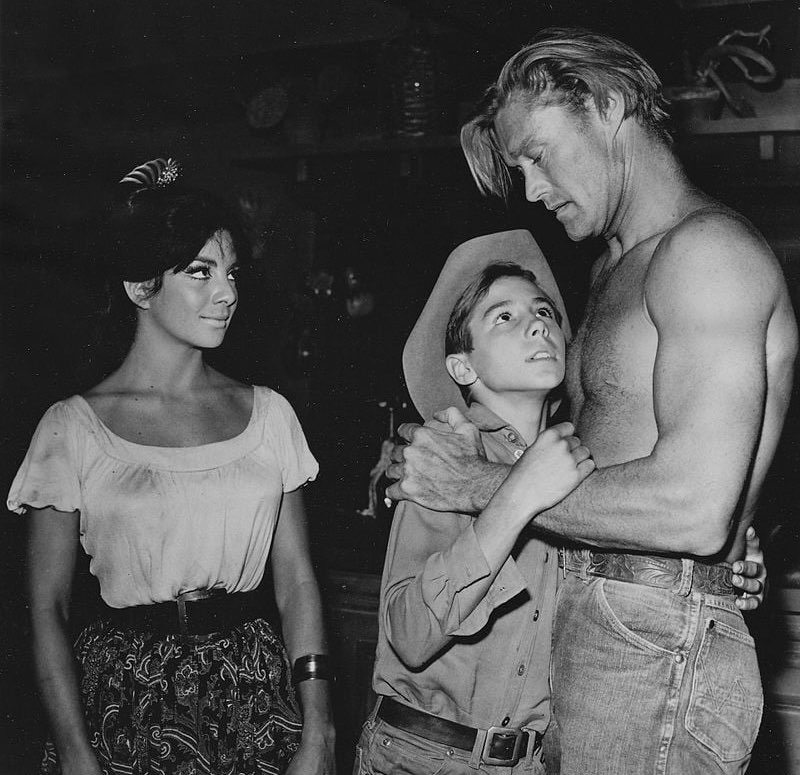
The father–son bond in The Rifleman remains one of the most iconic relationships in television history, even six decades after its debut. Chuck Connors as Lucas McCain and Johnny Crawford as his son Mark captured the hearts of 1950s audiences with their blend of action, integrity, and heartfelt lessons.
But even the finest classics aren’t without quirks. Let’s dive into some behind‑the‑scenes gems, mishaps, and surprising stories that fans might’ve missed.
- 👖 Anachronistic Jeans & Trendsetting Cowboys
- 👨👦 Real Life Son On Screen
- 🤝 Casting Lucas Was No Easy Task
- 🏹 The Modified Winchester Rifle Magic
- 🏨 Change in the Town Icon
- 🍫 Young Johnny Crawford’s Audition Incident
- 🔍 The Search for a Female Lead
- ⚾ Famous Guest Stars & Family Extras
- 🤠 Protective Mentors & Shakespeare Scenes
- 🏜️ Why It Still Matters
👖 Anachronistic Jeans & Trendsetting Cowboys
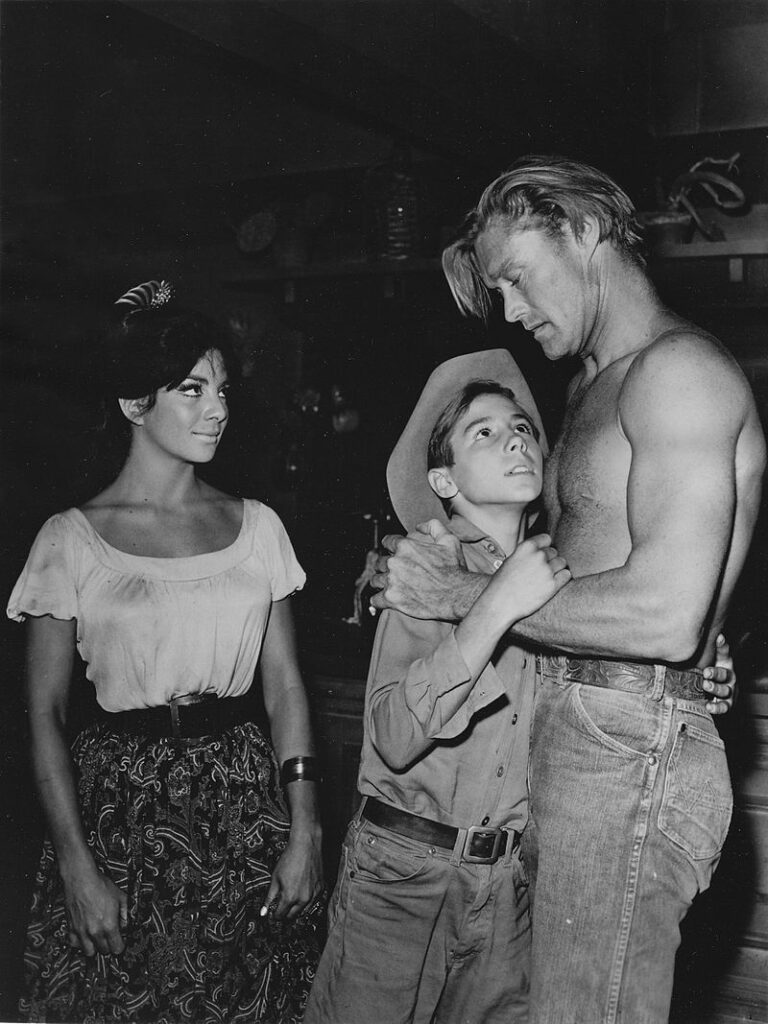
In the episode “End of a Young Gun”, Lucas McCain repairs a wagon wheel without a shirt. Eagle-eyed viewers might spot the Wrangler “W” logo stitched on his back pocket—jeans that wouldn’t exist until the 1940s, even though the story is set in the 1880s. A wardrobe goof or McCain’s time‑travelling fashion sense?
👨👦 Real Life Son On Screen
In “Tension”, at a funeral scene, Lucas and Mark meet a young boy, Toby. That boy was Jeff Connors, Chuck’s real-life son, with two lines in the episode. A small appearance, but a warm nod to Connors’ family—and sadly, Jeff passed away in 2014.
🤝 Casting Lucas Was No Easy Task
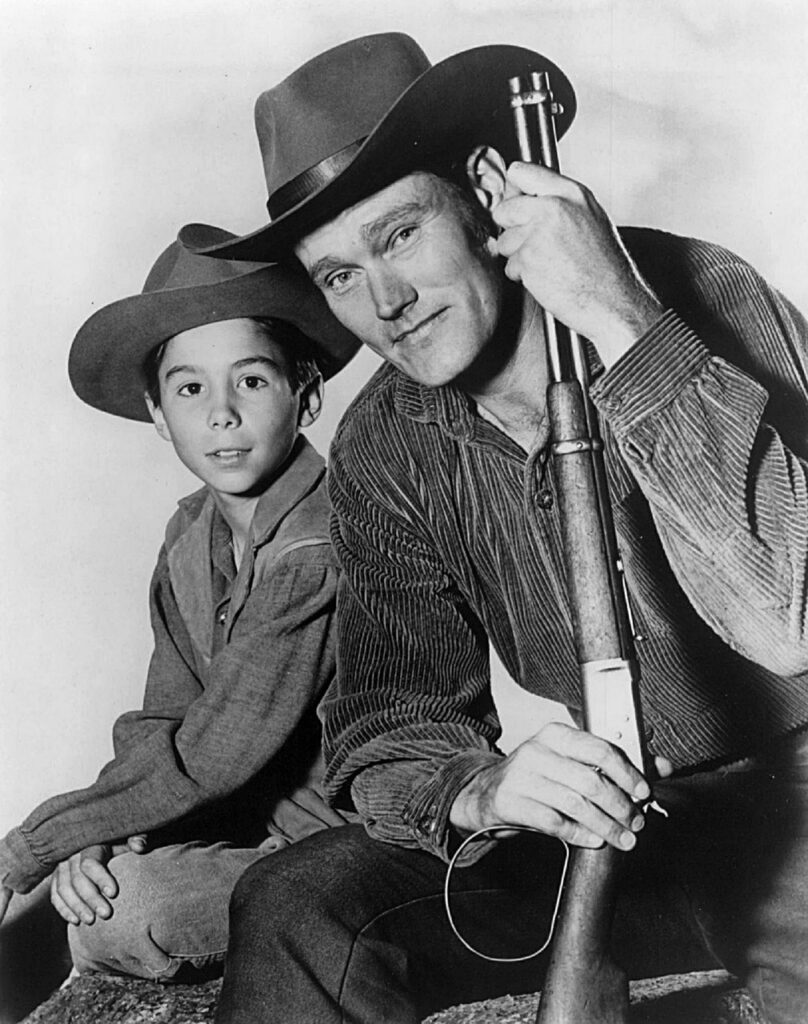
Chuck Connors had to beat out about 40 other actors for the part, and initially declined ABC’s offer, since he earned more freelancing. The turning point? After producers brought their kids to see him in Old Yeller, they returned with a stronger offer—including a 5% ownership stake—and suddenly Lucas McCain was his character.
🏹 The Modified Winchester Rifle Magic
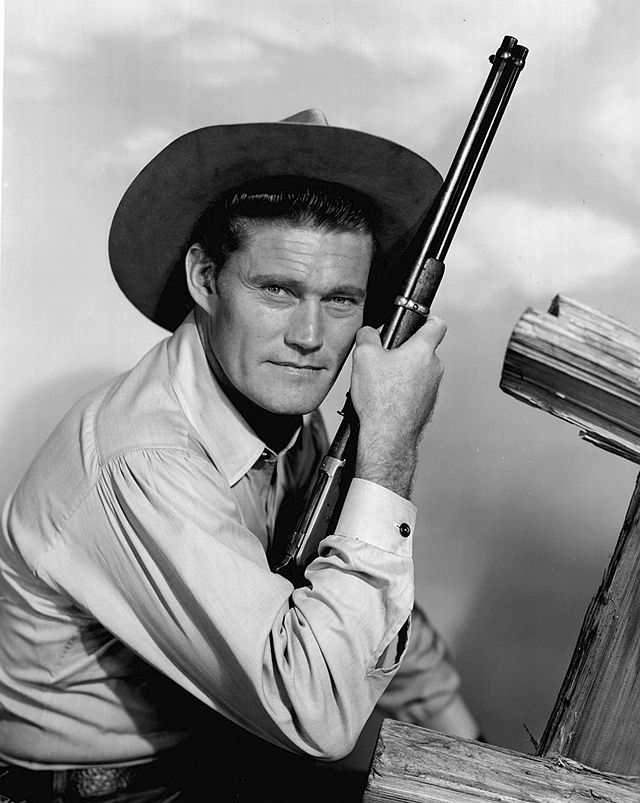
The show’s trademark was Lucas’s rapid-fire Winchester Model 1892—anachronistic for the 1880s setting, but unforgettable. The rifles were expertly modified for spin-cocking and continuous fire: one main prop, a backup, and a Spanish “El Tigre” replica for stunt scenes. Connors genuinely possessed the athletic agility to handle them, thanks to his pro baseball and basketball background.
Even more extraordinary? That same rifle appeared in John Wayne’s Stagecoach (1939). Producer Arnold Levin confirmed it was the identical weapon Lucas used on the show.
🏨 Change in the Town Icon
In the series pilot “The Sharpshooter”, the Madera Hotel appears as the California House. Later episodes display it under its familiar name—no explanation was given, but it remains a delightful continuity quirk
🍫 Young Johnny Crawford’s Audition Incident
As a three-year-old, Crawford appeared in an audition where Rosalind Russell was distributing chocolate bars. After refusing to return his bar during a re-take, he was cut and reportedly blacklisted, at least temporarily from future child roles
🔍 The Search for a Female Lead
While the show focused on Lucas’s life as a widower, a romantic interest came in season three with Milly Scott (played by Joan Taylor). But her exit prompted a search through 60+ actresses before casting Patricia Blair as Lou Mallory—a role that eventually clicked with Connors and viewers alike
⚾ Famous Guest Stars & Family Extras
-
Buddy Hackett, four years younger than Christopher Dark (who played his son), portrayed a father on the show, subverting age norms for casting
-
The boy playing “Fancy,” a baby girl in one episode, was a baby boy named Robert Anacher
-
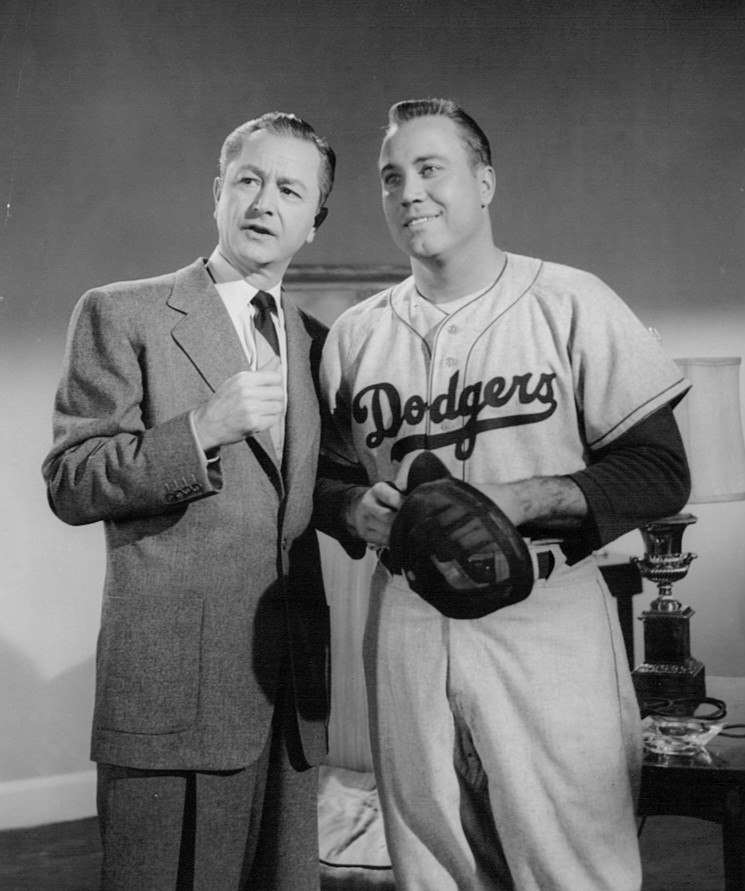
Baseball legends like Duke Snider and Don Drysdale made guest appearances; Connors had only hit two MLB home runs, while Snider was “the Duke of Flatbush” with far greater hitting power
🤠 Protective Mentors & Shakespeare Scenes
Johnny Crawford often credited Chuck Connors as a mentor beyond acting, telling baseball stories, reciting Casey at the Bat, and even quoting Shakespeare. Meanwhile, Paul Fix, who played Marshal Torrance, acted as a fatherly figure on set, obsessively guarding Crawford from gun mishaps—his caution rooted in a childhood accident that nearly cost Fix his life
🏜️ Why It Still Matters
Despite historical slip-ups—anachronistic wardrobes, misnamed saloons, and age-defying casting—the heart of The Rifleman lay in its lessons, characters, and enduring father–son bond. Each episode delivered a clear moral lesson with warmth and courage, rooted in honesty and respect. That’s why it resonates even today, richer than many modern shows
In summary, The Rifleman was built as much on emotional truth and character integrity as on its Western charm. These behind‑the‑scenes nuggets—jeans fifty years too early, a real son in a cameo, casting drama, and the storied firearm—aren’t flaws, but part of the lovable tapestry that made Lucas and Mark McCain unforgettable in TV history.