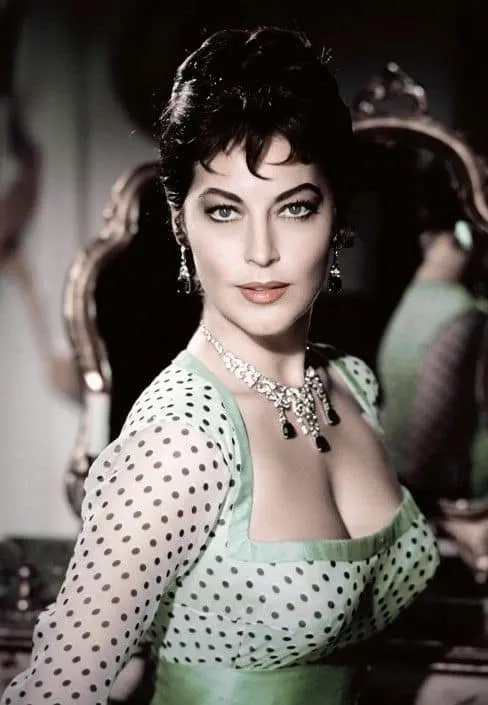
Ava Gardner was more than a screen siren—she was a force of nature, a presence so commanding that even Hollywood, with all its stars and glitter, could barely contain her. Rising to fame in the 1940s and 1950s, she captivated audiences with her striking beauty, smoky voice, and a magnetism that made it impossible to look away. She wasn’t just another actress in the studio system—she was a phenomenon, as unpredictable as she was irresistible.
With her luminous skin, flowing dark hair, and smoldering green eyes, Gardner embodied the classic femme fatale archetype of her era. Yet unlike others who were groomed and polished into stardom, her sensuality never felt manufactured. It radiated naturally, a raw, untamed energy that seemed to burn through the screen. Her beauty was undeniable, but it was her confidence—the way she carried herself, the way she looked straight into the camera with both daring and defiance—that cemented her place as one of Hollywood’s most unforgettable stars.
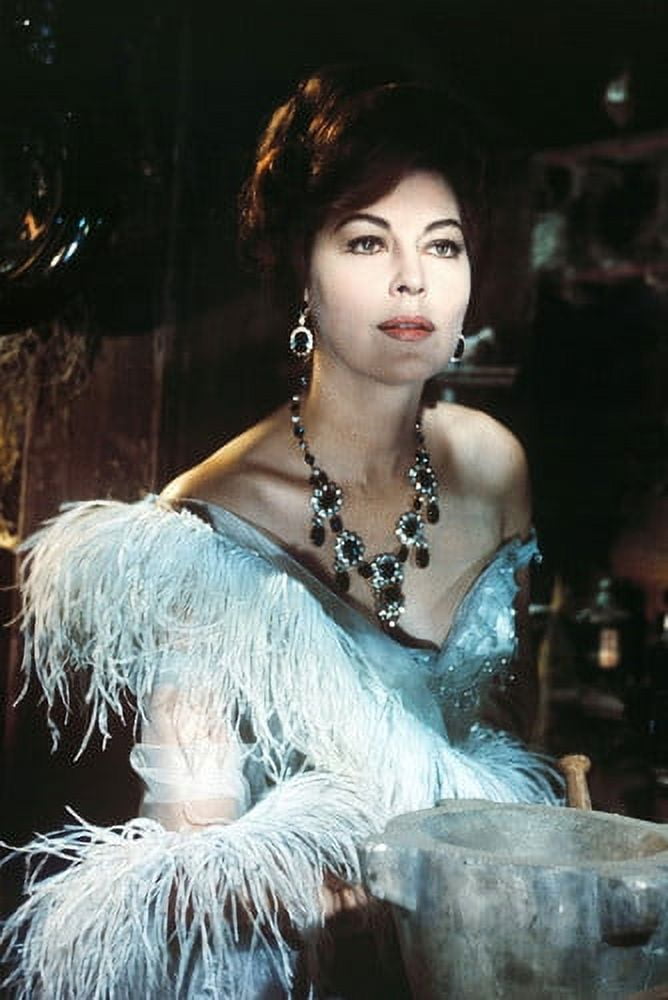
Her breakthrough came with The Killers (1946), opposite Burt Lancaster, where she played the alluring femme fatale Kitty Collins. The role was a revelation, instantly catapulting her from a rising talent to a bona fide star. Gardner’s Kitty wasn’t just seductive—she was layered, calculating yet vulnerable, glamorous yet dangerous. The performance announced to the world that Gardner was no mere decoration in film noir; she was its heartbeat. From that moment on, audiences and critics alike knew they were witnessing something extraordinary.
Over the next decade, Gardner delivered a string of performances that showcased her range and intensity. In Pandora and the Flying Dutchman (1951), she embodied a woman caught between love and destiny, bringing a haunting romanticism to a role that could have easily been one-dimensional. Then came Mogambo (1953), where she held her own alongside Clark Gable and Grace Kelly in a tale of passion and jealousy set in the African wilderness. For her work in that film, Gardner earned an Academy Award nomination for Best Actress—a recognition that proved her artistry extended far beyond her mesmerizing looks. Her screen presence was both volcanic and delicate, always walking the fine line between vulnerability and strength.

But Ava Gardner’s story cannot be confined to her films alone. If anything, her life off-screen was just as captivating, if not more so. She was fiercely independent, unapologetically passionate, and utterly unafraid to live life on her own terms—even when it cost her. She became as famous for her fiery romances as she was for her acting. Her marriages to Mickey Rooney, bandleader Artie Shaw, and singer Frank Sinatra often dominated headlines. Each relationship was marked by intensity, glamour, and heartbreak, and the press couldn’t get enough.
Her first marriage, to Rooney, was brief and turbulent, ending after just a year. Her second, to Shaw, was equally fraught, with Gardner struggling under his intellectual dominance. But it was her third marriage, to Frank Sinatra, that became one of Hollywood’s great love stories—passionate, tempestuous, and endlessly scrutinized. Gardner and Sinatra were both fiery personalities, drawn to each other with magnetic force yet often tearing each other apart. Their union was filled with arguments, reconciliations, and moments of deep tenderness. Though the marriage ended in divorce, Sinatra later called Gardner the love of his life, and their bond endured long after the papers were signed.

What set Gardner apart from many of her contemporaries was her refusal to be controlled by men, by studios, or by public opinion. The Hollywood system in the 1940s and 1950s was notorious for manufacturing images and demanding conformity. Many actresses were carefully molded into wholesome icons or glamorous sex symbols, their lives tightly managed by contracts and publicity machines. Gardner, however, was different. She pushed back. She embraced her imperfections, admitted her insecurities, and made no apologies for the choices she made—whether they scandalized the press or not.
“I either write the script or I get written out,” she once said. It wasn’t just a witty remark; it was her philosophy. She refused to let anyone else dictate her narrative. Whether she was dancing flamenco in Spain, chain-smoking in a London flat, or drinking bourbon with friends until dawn, Gardner lived fully and authentically. Her spirit was restless, her passions intense, and her honesty disarming.
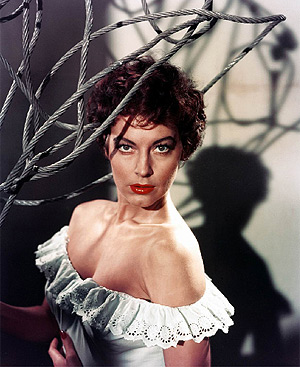
Of course, that honesty extended to her reflections on her career. Gardner often admitted she didn’t consider herself a great actress, claiming she relied more on instinct and presence than technique. Yet critics and audiences disagreed. What she lacked in formal training, she more than compensated for with authenticity and charisma. Her ability to fill a frame with emotion—sometimes with just a look, a tilt of the head, a flicker in her eyes—was a gift few possessed.
As the decades passed, Gardner’s relationship with Hollywood shifted. By the 1960s and 1970s, she had grown weary of the industry’s demands and chose to live much of her later life abroad, particularly in Spain and later in London. There, she found a sense of freedom, away from the relentless gaze of the American press. Yet even in relative seclusion, she remained a figure of fascination. Writers, photographers, and fans continued to be drawn to her, sensing that her story was one of both triumph and tragedy.
In her later years, Gardner struggled with health issues, including the effects of lifelong smoking and drinking. Yet she never lost her sharp wit or her independent spirit. She published her autobiography, Ava: My Story, in 1990, offering candid reflections on her life, loves, and career. It was raw, honest, and self-deprecating—much like the woman herself. She didn’t shy away from her mistakes or regrets, but she also didn’t wallow in them. Instead, she presented herself as she always had: unfiltered, unapologetic, and entirely real.
Ava Gardner’s legacy is more than a collection of films, more than a handful of glamorous photographs or tabloid headlines. She represents a rare kind of authenticity in an industry often built on illusion. She was glamorous, yes, but also rebellious, vulnerable, and strong. She embodied contradictions—femme fatale and free spirit, Hollywood star and restless wanderer, icon and outsider.
Even today, her image continues to inspire. Artists and filmmakers still draw upon her aura of mystery and allure, while her life story remains the subject of biographies, documentaries, and endless fascination. Gardner reminds us that beauty can be both a gift and a burden, that fame can be intoxicating and isolating, and that living on one’s own terms is the bravest act of all.
Ava Gardner didn’t just play complex women—she was one. In a world that tried to reduce her to a type, she remained defiantly herself, carving out a place in cinematic history that remains untouchable. She will always be remembered as one of Hollywood’s brightest stars, but more importantly, as a woman who refused to let anyone dim her fire.
Her story is not just about the roles she played or the men she loved, but about the way she lived—with passion, honesty, and courage. And in that, she left behind a legacy that will never fade.