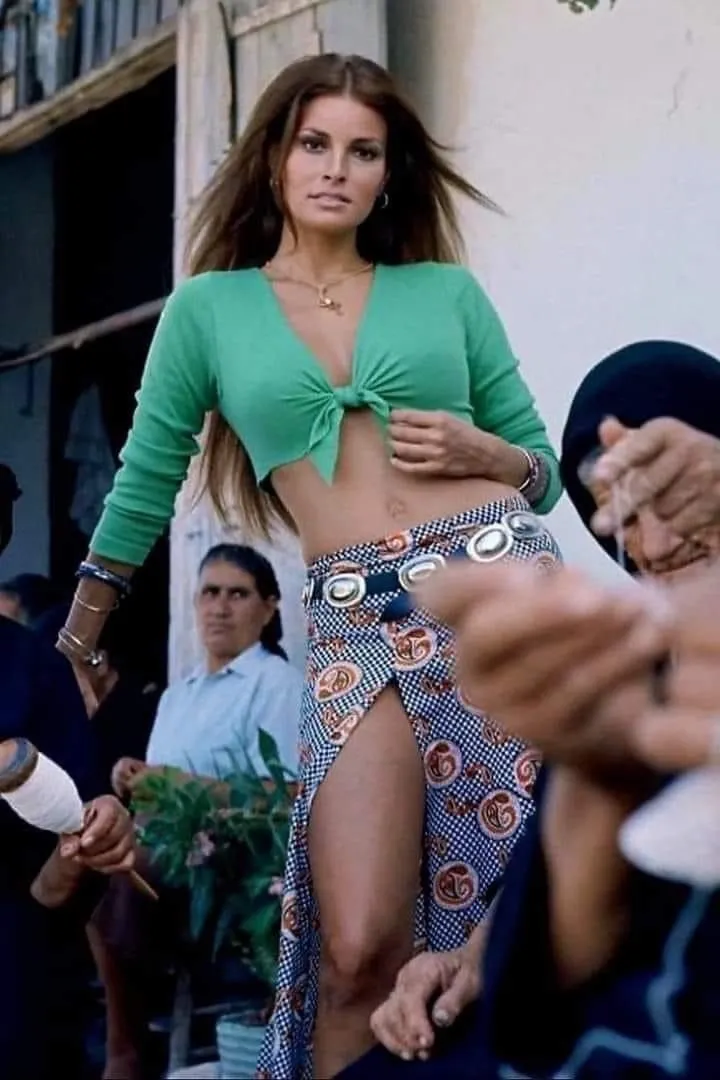
From the moment she stepped onto the screen in 1966 wearing that now-legendary doe-skin bikini in One Million Years B.C., Raquel Welch became a cultural phenomenon. Without uttering more than a few lines of dialogue, she etched herself into film history and redefined Hollywood’s image of the female star. That single moment crystallized her as a global sex symbol — a label she carried with both pride and frustration for the rest of her life.
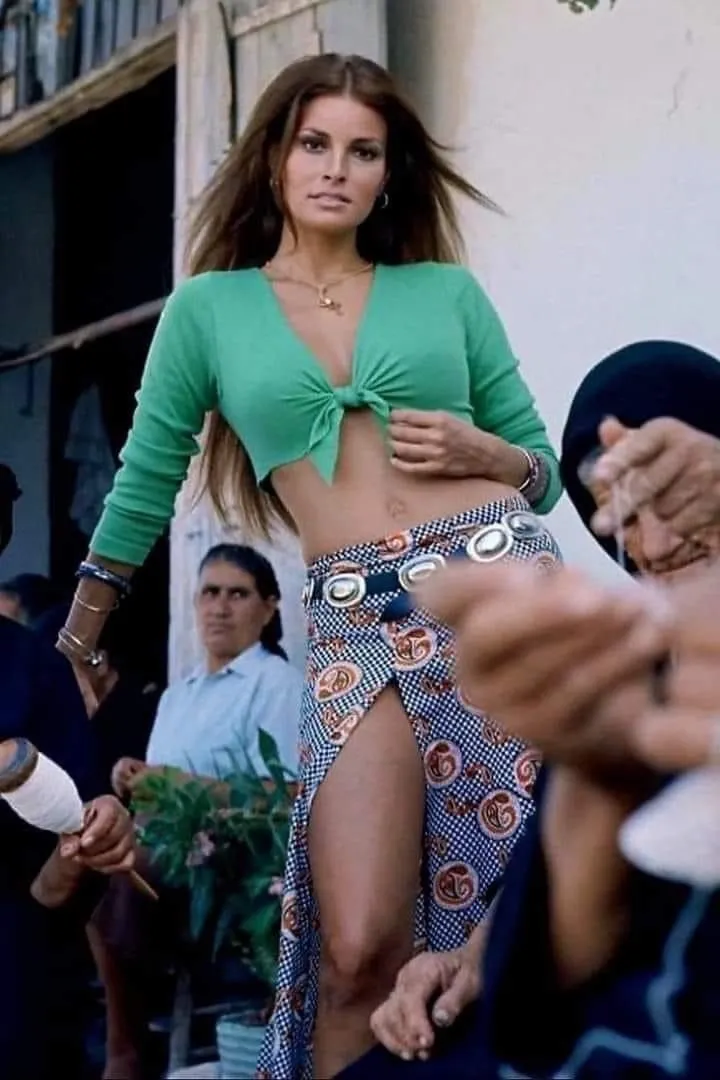
For audiences of the 1960s, Raquel Welch was a revelation. At a time when Hollywood often presented women as either delicate ingénues or background ornaments, she exuded something more powerful: strength, sensuality, and independence. Her screen presence suggested that women could be alluring without being submissive, and her very image helped pave the way for a new kind of leading lady.
But behind the spotlight was a story far more complex than the posters and magazine covers suggested. Welch, born Jo Raquel Tejada in Chicago in 1940 to a Bolivian father and an American mother, grew up in a modest household. Her beauty was evident early on, but so was her discipline. She trained as a dancer and developed a strong sense of professionalism that would guide her through a business notorious for chewing up its brightest stars.

Her early career was marked by persistence. She worked as a weather presenter, took small acting parts, and endured endless rejections before finally breaking through. When Fantastic Voyage (1966) and
One Million Years B.C. was released in the same year; her rise seemed meteoric. The famous bikini image turned her into an international pin-up, but it also became a double-edged sword. Hollywood wanted Welch the icon, not Welch the actress, and she spent much of her career fighting against that typecasting.
What many didn’t see was her determination to assert control over her own path. She turned down roles she felt were demeaning, insisting that her beauty not be the only thing audiences remembered. She worked in a range of genres, from the swashbuckling
The Three Musketeers (1973), which won her a Golden Globe, to comedies, thrillers, and stage musicals. Her performances may not always have silenced critics, but her refusal to conform to expectations won her respect over time.

Away from the screen, Welch cultivated an image of glamour, but she also guarded her private life fiercely. She was a devoted mother to her two children, Damon and Tahnee, and often spoke about how difficult it was to balance family with the demands of Hollywood. Her relationships — four marriages, each scrutinized by the media — revealed the challenges of being a woman constantly in the public eye.
As she grew older, Welch faced the dilemma that so many actresses confront: how to age in an industry obsessed with youth. Yet she managed to reinvent herself again and again. She moved into fitness, releasing bestselling workout videos in the 1980s, and became a symbol of health and vitality. In interviews, she was candid about the double standards of Hollywood but also expressed gratitude for the opportunities her career afforded her.

Behind the glamour was also resilience. Welch spoke openly about her struggles with loneliness, her complicated relationship with fame, and her need to be seen as more than just an image. She admitted that the “sex symbol” label sometimes felt like a cage, one that obscured her intelligence, wit, and ambition. Still, she never fully rejected it; instead, she tried to redefine it on her own terms.
Her legacy is undeniable. For countless women in the industry, Raquel Welch proved that it was possible to command attention not just through beauty, but through strength and presence. She inspired generations of actresses who sought to carve out identities that were multidimensional.

When she passed away in 2023 at the age of 82, tributes poured in from around the world. Fans remembered the striking beauty, but those who knew her recalled the woman who fought to be more than a pin-up — the actress who refused to let Hollywood dictate her worth.
Raquel Welch’s story is ultimately one of transformation. From a groundbreaking moment on screen in 1966 to decades of navigating the harsh realities of fame, she became more than an icon: she became a symbol of perseverance. Behind the posters, behind the glamour, was a woman who demanded to be seen in full — and in doing so, she changed the way women were perceived in Hollywood.