In the late 1970s, music was a living experiment. Punk was surging, disco was saturating the clubs, and a new wave of artists was beginning to blend the two worlds into something that sounded raw yet modern, rebellious yet glamorous. Few embodied this duality more powerfully than Blondie, the New York band fronted by the electrifying Debbie Harry. Before they were international superstars, Blondie was already beginning to redefine what a rock band could look and sound like. One of the most vivid glimpses of this transformation came in 1978, when the group arrived in Paris during their
Plastic Letters tour and performed at Le Stadium, giving the French capital a night that has since become legendary.
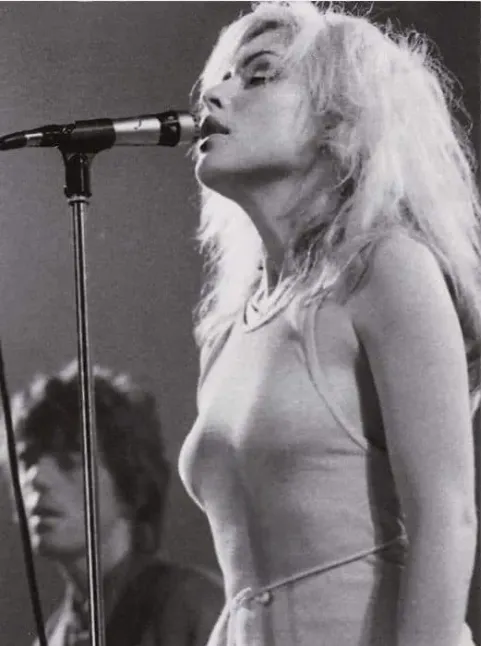
At the time, Blondie was still in the early chapters of their career. Their second album,
Plastic Letters, had been released earlier that year, featuring songs such as “Denis” and “(I’m Always Touched by Your) Presence, Dear.” The album marked a step forward from their debut, showcasing their ability to weave together elements of garage rock, punk energy, and retro pop melodies. In the United States, they were still considered cult favorites of the New York scene, best known to CBGB regulars and a growing downtown audience. But in Europe — particularly the UK and France — they were quickly gaining traction. “Denis,” a cover of Randy & the Rainbows’ doo-wop hit, had become a surprise success across the continent, climbing the charts in several countries and turning Debbie Harry into a familiar face on magazine covers and music programs.
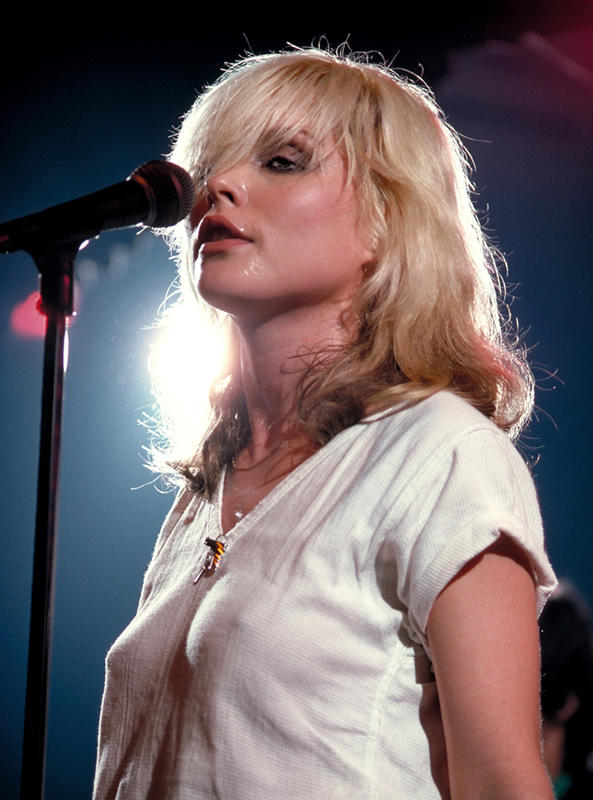
Paris was buzzing with cultural energy in 1978, and Blondie’s arrival fed directly into the city’s appetite for the new and the bold. The venue, Le Stadium, may not have been among the largest arenas in Europe, but its intimacy allowed the performance to carry a raw immediacy. Fans packed the hall, some of them drawn by word of mouth, others simply curious about the blonde New Yorker who was being called a punk goddess with the allure of a movie star. From the moment Debbie Harry stepped onto the stage, it was clear they were witnessing something different from the usual rock fare.
Harry had already perfected her mixture of toughness and vulnerability, blending the detached cool of Andy Warhol’s Factory scene with the street-smart bravado of a Lower East Side singer. Her platinum hair and striking features gave her a Hollywood glow, yet her delivery — sometimes sweet, sometimes sardonic, sometimes cutting — ensured no one mistook her for a passive frontwoman. On stage in Paris, her voice cut through the air with clarity and playfulness, moving seamlessly from teasing whispers to soaring belts. For many in the crowd, who had only seen photos of her until then, it was a revelation to watch how she embodied the music in real time.

The band behind her — Chris Stein on guitar, Clem Burke on drums, Jimmy Destri on keyboards, and Frank Infante on bass — delivered a performance that was lean, tight, and punchy. They weren’t trying to replicate the bloated arena-rock acts that dominated much of the 1970s. Instead, Blondie’s songs felt like snapshots of the city streets: sharp, stylish, and fleeting, designed to grab attention and vanish before overstaying their welcome. “Denis” turned into a sing-along moment, with the Parisian crowd responding exuberantly to the French lyrics woven into the song. Other tracks, such as “Fan Mail” and “Detroit 442,” captured the gritty pulse of their New York origins, while Harry’s stage presence elevated them into an experience that transcended language barriers.

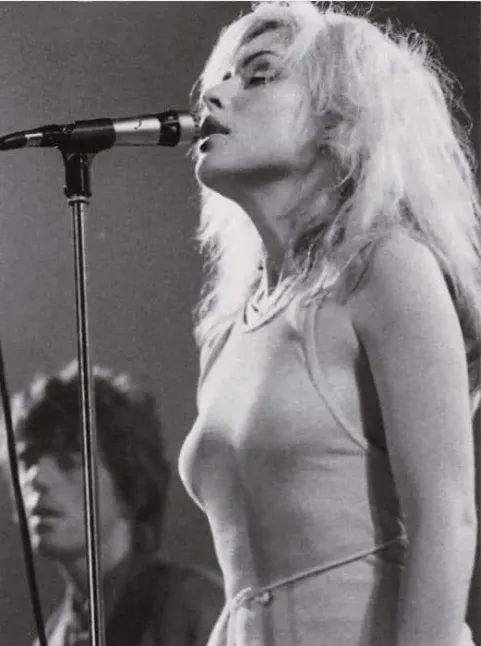
Photographers in attendance captured the electricity of that night, and those images would later circulate widely, ensuring that the Paris show achieved near-mythic status. Black-and-white shots of Harry leaning into the microphone, eyes flashing with intensity, or caught mid-laugh as the crowd roared, became staples in European music press. They were more than just concert photos: they were portraits of an artist stepping fully into her power, just before superstardom transformed her life. Fans would later look back on these pictures as evidence of Blondie’s ability to fuse punk edge with pop glamour, a fusion that would soon become their trademark.

In the broader cultural context, Blondie’s Paris performance symbolized more than just a successful night on tour. It represented the moment when punk stopped being confined to gritty New York clubs and began evolving into something more expansive and international. Harry was central to that shift. Unlike some of her male contemporaries in punk, who rejected mainstream recognition outright, she embraced the possibility of pop stardom while retaining the danger and unpredictability of the underground. In France, where fashion and art were inseparable from music, Harry’s image resonated strongly. She wasn’t just another rock singer; she was a style icon, a muse for photographers, designers, and filmmakers who saw in her a new archetype of female power.

Within a year of the Paris show, Blondie would release Parallel Lines (1978 in the US, early 1979 in some territories), the album that catapulted them into the stratosphere with hits like “Heart of Glass,” “One Way or Another,” and “Hanging on the Telephone.” But to those who had been in Paris in 1978, none of this came as a surprise. They had already seen how Debbie Harry could command a stage, how her band could bend genres into something irresistible, and how the combination of visual allure and musical precision could ignite an audience.
The night at Le Stadium lives on not only in photographs but also in the memories of those who were there, who recall the sensation of watching a star rise in real time. Harry would go on to influence generations of musicians, from Madonna to Gwen Stefani to Lady Gaga, but in that Paris concert, she was still carving out her identity, finding the balance between punk outsider and global superstar. For many fans, that moment remains her most compelling — when she was simultaneously raw and polished, dangerous and glamorous, the embodiment of everything rock and roll could be.
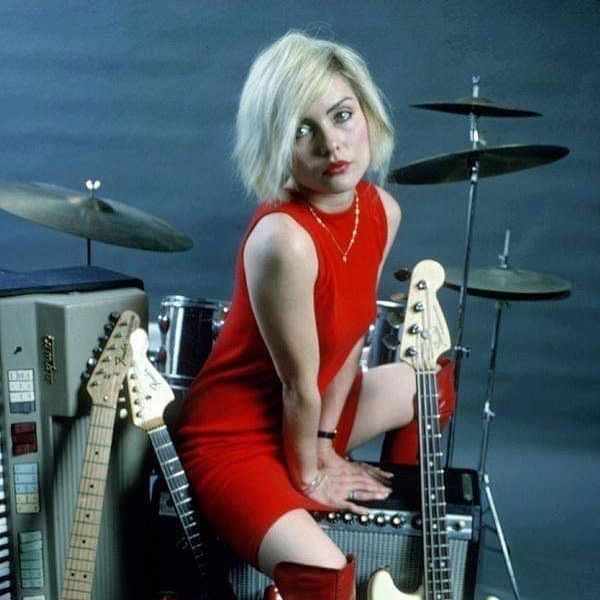
Looking back, it is tempting to view the performance through the lens of what Blondie would become. But part of the magic of 1978 was that the future was still unwritten. The band had not yet sold millions of records, Harry had not yet become a household name, and “Heart of Glass” had not yet redefined what pop music could sound like. Instead, there was only the immediacy of the performance — the sweat, the lights, the roar of the crowd, and the sense that something new was happening right before their eyes. Paris had witnessed the birth of a legend, and the photos from that night continue to remind us of the moment when Debbie Harry and Blondie set the city on fire.