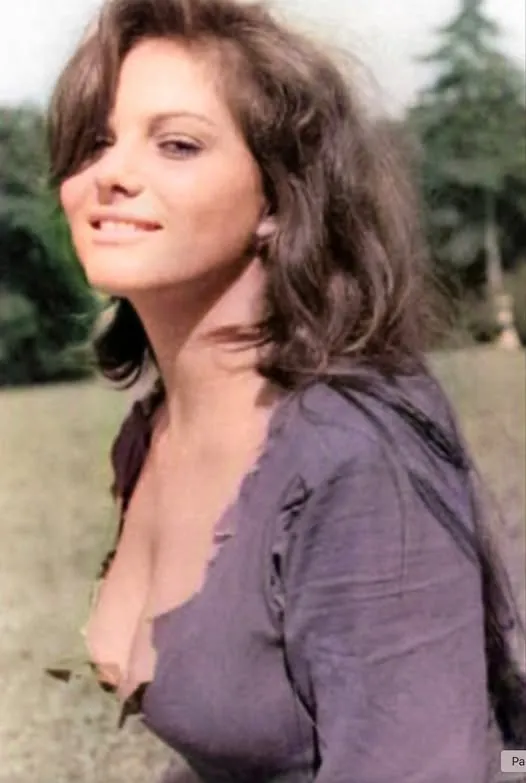
Claudia Cardinale wasn’t just another pretty face flickering on the screen—she was the kind of woman who made the film stock sweat. In the 1960s, when the world was drunk on Fellini and dust and cigarette smoke, she walked into the frame with that impossible mix of beauty and guts, and everyone else had to move aside. Directors with egos bigger than cathedrals bent toward her light, and co-stars with names carved into marble looked almost human standing next to her. She stuck it out for damn near seventy years, through the glamour and the grind, and became the emblem of an age when cinema still had blood in its veins. Now she’s gone, eighty-seven years old,and the tributes pour in like cheap wine at a wake. They talk about “legacy” and “luminary,” but really, she was the kind of flame that makes the night look darker once it’s out.
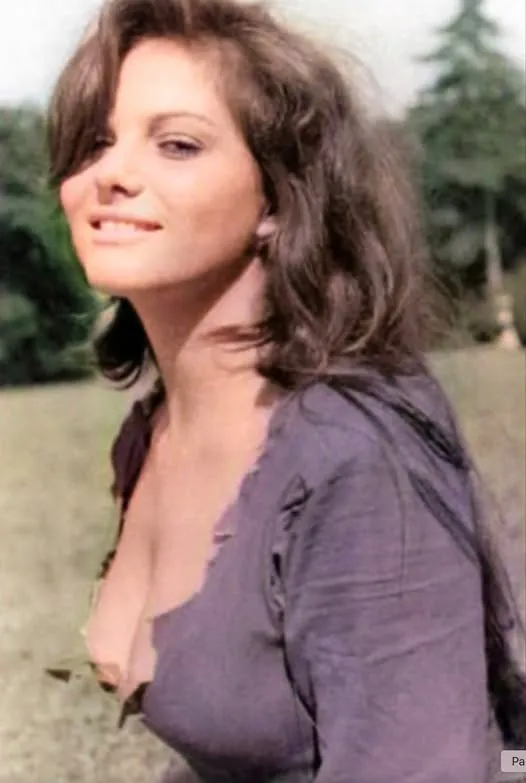
Early Life and Discovery
Born Claude Joséphine Rose Cardinale on April 15, 1938, in La Goulette, Tunisia, Claudia Cardinale grew up in a multilingual household as the daughter of Sicilian immigrants. She spoke French and Arabic during her childhood in North Africa, while Italian (in a Sicilian dialect) was the language of her family – an upbringing that later gave her a truly international aura. Cardinale’s entry into the world of cinema came almost by chance. In 1957, at age 18, she won a local beauty contest in Tunis called “The Most Beautiful Italian Girl in Tunisia,” which awarded her a trip to the Venice Film Festival. At that glamorous gathering of film luminaries, the young Cardinale’s striking looks immediately caught the eye of producers. Before long, she was offered a contract with the film producer Franco Cristaldi, who became her mentor and guide in the Italian movie industry.
Cardinale made her screen debut with a minor role in the French-Tunisian drama Goha (1958), appearing briefly alongside a then up-and-coming Omar Sharif. Although the part was small, it marked the start of what would become an extraordinarily prolific career.
Transitioning into Italian cinema, however, presented some early challenges. Coming from a French-speaking background, Cardinale initially struggled with the Italian language on set, and her strong accent led directors to have her lines dubbed by others in her first few Italian films. Yet even without her own voice audible, her on-screen charisma was undeniable. Italian audiences and filmmakers were captivated by the dark-haired young actress who conveyed both innocence and latent passion through her expressive eyes. The late 1950s set the stage for Cardinale’s rapid ascent: she was clearly a natural in front of the camera, and it was only a matter of time before she would become one of Europe’s most celebrated leading ladies.
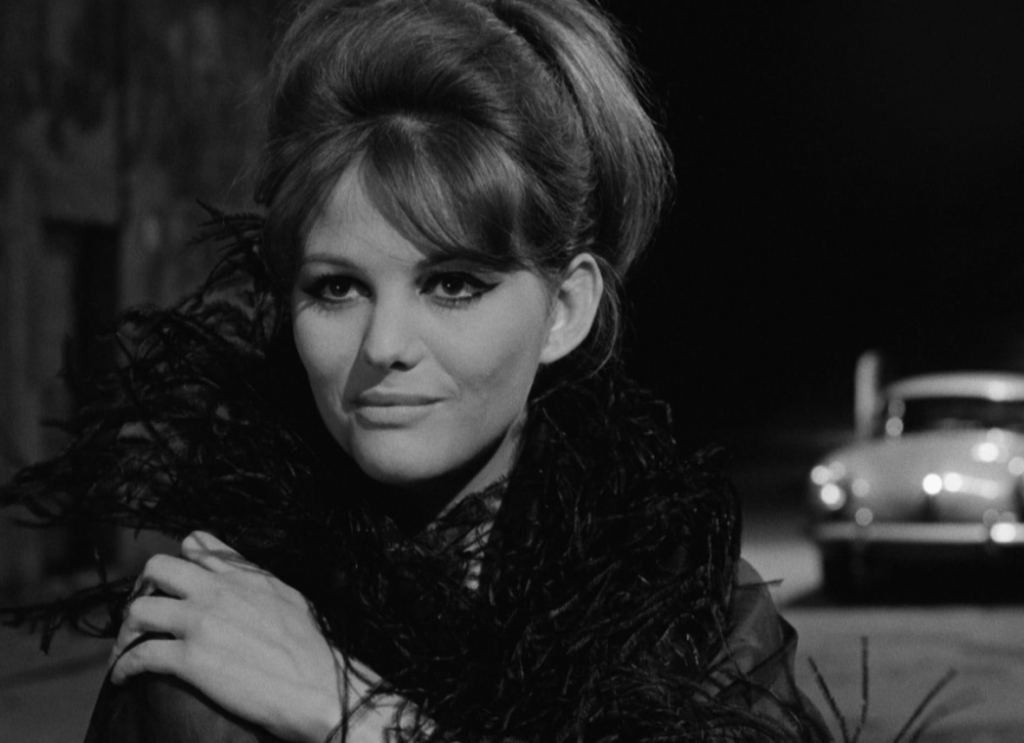
Rise to Stardom in European Cinema (1958–1963)
Claudia Cardinale’s rise to stardom was swift and firmly rooted in the golden era of postwar Italian cinema. By the early 1960s, she was landing substantive roles that showcased a remarkable range for a newcomer. In Luchino Visconti’s drama
Rocco and His Brothers (1960), for example, Cardinale made a strong impression in a supporting role as a kind-hearted young fiancée, bringing warmth and authenticity to a gritty story. Around the same time, she took on leading parts that proved her ability to carry a film: in Mauro Bolognini’s adaptation
Il bell’Antonio (1960) she played a young bride facing an unexpected marital crisis, and in Valerio Zurlini’s Girl with a Suitcase (1961) she portrayed Aida, an abandoned singer whose mix of resilience and vulnerability won audiences’ hearts. These performances, among others, quickly established Cardinale as one of Italy’s brightest young stars. Critics praised her sultry on-screen allure coupled with genuine acting depth. By 1962, she was being heralded not just as a beauty but as a talent, often noted for how she could command attention even alongside veteran co-stars.
The year 1963 marked Cardinale’s definitive breakthrough to international acclaim. She featured in two of the decade’s most celebrated films, working with Italy’s top directors back-to-back. First, in Federico Fellini’s surreal masterpiece
8½(1963), Cardinale appeared as a luminous muse in the imagination of a film director (played by Marcello Mastroianni). Though her role in 8½ is more emblematic than narrative, it was significant in that Fellini insisted on using Cardinale’s own voice on-screen – a deep, husky voice that added a new dimension to her allure and let audiences hear her true presence for the first time.
She then co-starred in Luchino Visconti’s epic The Leopard (1963), playing Angelica Sedara, the beautiful and ambitious daughter of a bourgeois mayor who catches the eye of an aristocratic prince’s nephew (Alain Delon) during the tumult of Italy’s unification. In the film’s grand ballroom scenes, Cardinale’s radiant performance opposite screen giants like Delon and Burt Lancaster demonstrated that she could hold her own and captivate the audience in a lavish historical production. With the critical and commercial success of
8½ and The Leopard, Cardinale became an international name. She was often mentioned alongside established Italian actresses like Sophia Loren and Gina Lollobrigida, yet Cardinale’s persona was distinct. Younger and emerging just as Italian cinema was attaining global prestige, she combined youthful innocence, smoldering sensuality, and a confident acting prowess that made her stand out in the crowded field of 1960s film stars.