Farrah Fawcett, born on February 2, 1947, in Corpus Christi, Texas, remains one of the most recognizable faces in American pop culture history. With her radiant smile, trademark golden locks, and unforgettable screen presence, she became a household name in the 1970s, a symbol of both glamour and strength. Best known for her role as Jill Munroe in the television series
Charlie’s Angels, Fawcett transcended her role as a TV star to become a cultural phenomenon whose influence endures even today.

Growing up in Texas, Farrah displayed both athleticism and artistic talent. She attended the University of Texas at Austin, where she studied art and showed an early interest in creativity. However, her striking beauty quickly drew attention from the entertainment industry. While still a student, her photos circulated among Hollywood agents, and it wasn’t long before she moved west to pursue a career in acting and modeling.
By the mid-1970s, Farrah had begun making a name for herself through commercials, print modeling, and small television appearances. Audiences first got a glimpse of her charisma in ads for shampoo and beauty products, where her fresh-faced energy made her instantly memorable. Yet it was her casting in
Charlie’s Angels in 1976 that propelled her into superstardom.
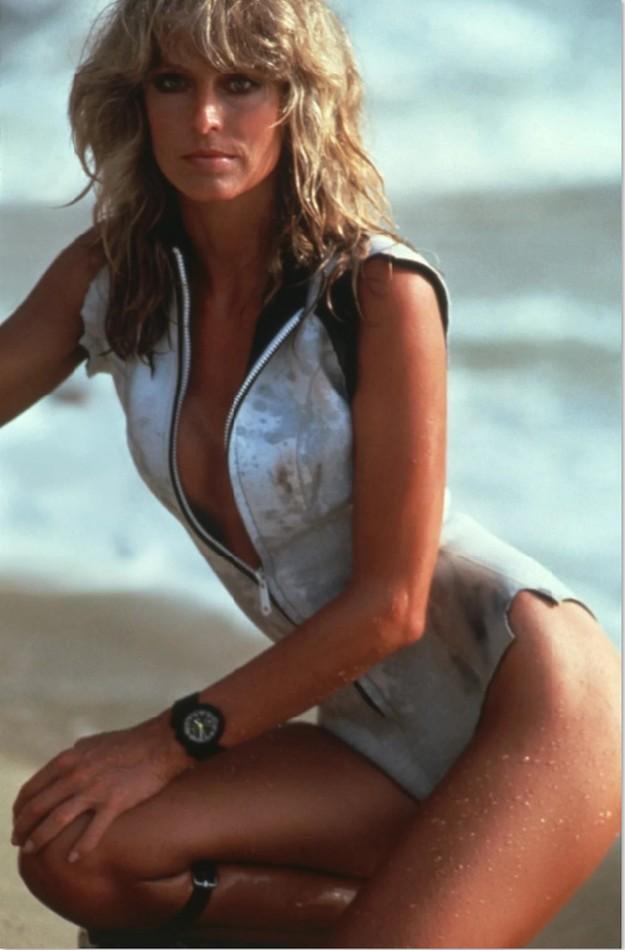
Charlie’s Angels was a groundbreaking series for its time. Produced by Aaron Spelling, the show followed three glamorous female private investigators working under the guidance of the mysterious “Charlie.” Fawcett’s role as Jill Munroe—the smart, athletic, and adventurous Angel—captivated audiences. Her chemistry with co-stars Kate Jackson and Jaclyn Smith, combined with her undeniable charm, helped the show soar in popularity. At its peak,
Charlie’s Angels drew over 20 million viewers weekly, and Farrah became the undisputed star of the trio.
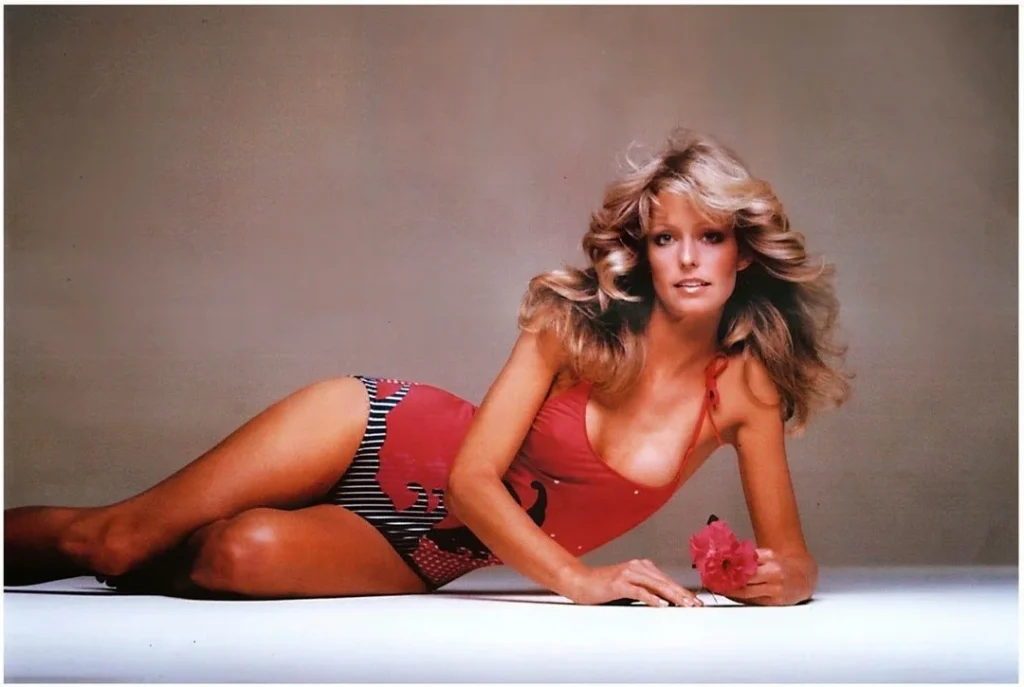
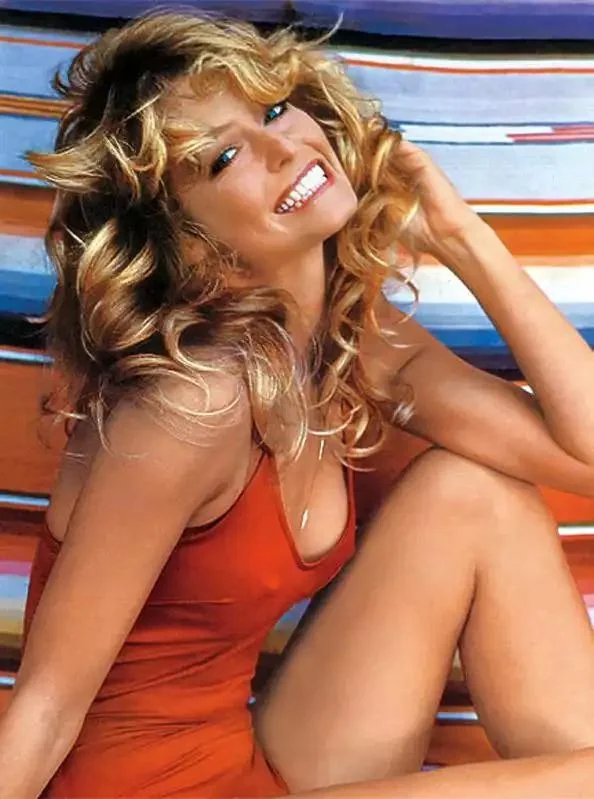
Her image during this time was everywhere. In 1976, Fawcett posed for a poster wearing a simple red one-piece swimsuit, her sunlit hair cascading over her shoulders, and her famous smile lighting up the frame. The photo was casual, unpretentious, and magnetic. The poster sold over 12 million copies worldwide, becoming the best-selling pin-up poster of all time and cementing Farrah’s status as a cultural icon. It was not just an image—it was
the image of the 1970s, embodying an era’s ideals of beauty, freedom, and youth.
Despite her enormous success on Charlie’s Angels, Fawcett shocked fans by leaving the series after just one season. Her decision was rooted in her desire to prove that she was more than just a glamorous TV star. She wanted to pursue more serious acting opportunities and establish herself as a versatile performer in film. Though some of her early film roles, such as
Somebody Killed Her Husband (1978), did not receive critical acclaim, her determination to grow as an actress never wavered.
By the 1980s, Farrah reinvented herself as a dramatic actress, taking on roles that revealed depth and resilience. Her performance in the television movie
The Burning Bed (1984) was a turning point. Playing a woman trapped in an abusive marriage who takes drastic measures to escape, Fawcett delivered a raw, powerful performance that silenced her critics. The film drew huge ratings and earned her an Emmy nomination, while also sparking national conversations about domestic abuse. She followed this success with.

Extremities (1986), both on stage and in its film adaptation, where she played a woman fighting back against an attacker. Once again, her intensity and emotional courage impressed critics and earned her Golden Globe and Emmy nominations.
These roles marked a significant shift in how Fawcett was perceived—not just as a glamorous star, but as an actress with real dramatic range. She continued to take on challenging roles in projects such as
Small Sacrifices (1989), where she portrayed a woman accused of murdering her own children. Once again, her performance was widely praised, and she cemented her reputation as a serious dramatic actress.
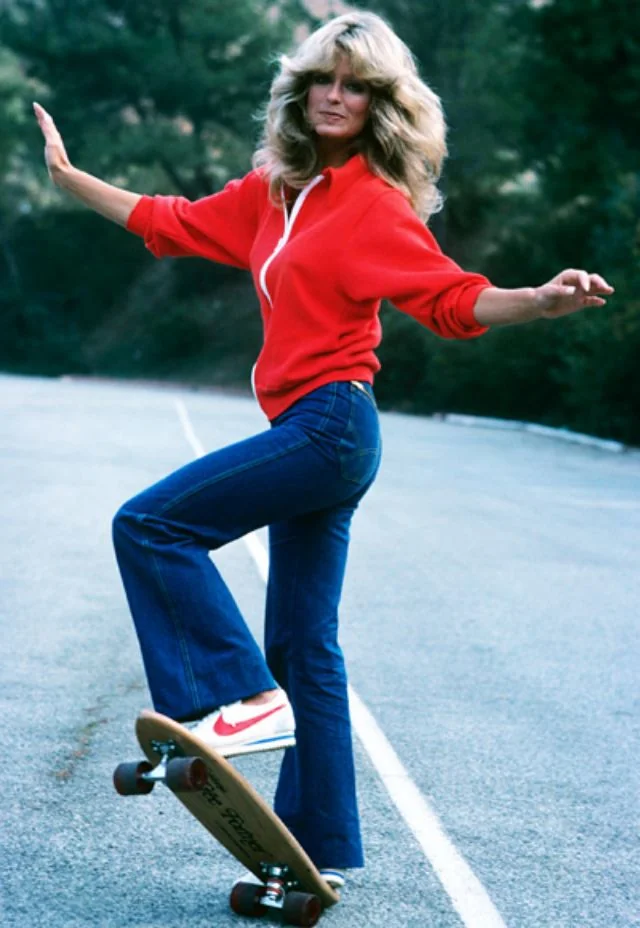
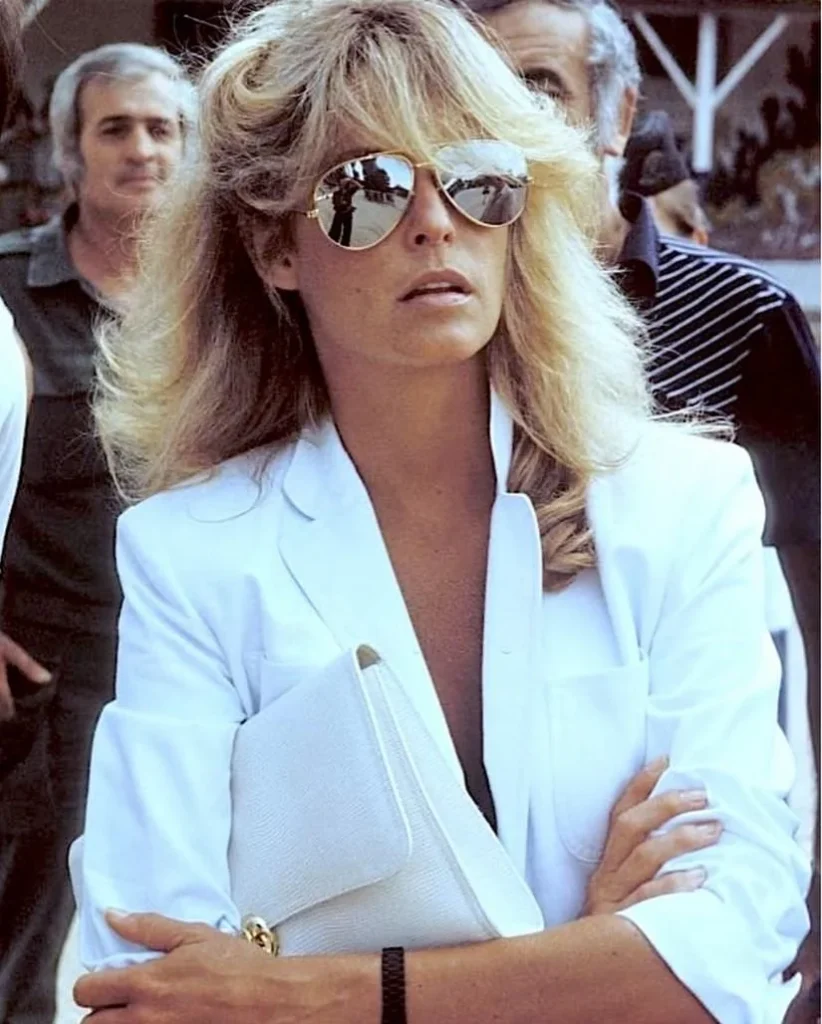
Beyond her acting career, Farrah Fawcett’s influence extended to fashion, style, and popular culture. Her feathered hairstyle, known simply as “the Farrah,” became one of the most copied looks of the 1970s, with countless women asking salons to replicate it. Her sense of style—effortless, athletic, and modern—resonated with fans who saw her as both glamorous and approachable.
In her personal life, Fawcett was often in the public eye. Her marriage to actor Lee Majors, star of The Six Million Dollar Man, made them one of Hollywood’s most glamorous couples of the 1970s. Later, her long-term relationship with actor Ryan O’Neal drew media attention, particularly as the couple navigated both highs and lows together over decades.
Fawcett’s career slowed somewhat in the 1990s and 2000s, but she remained active, taking roles in television and film while also producing her own projects. In 2006, her personal strength became the focus when she was diagnosed with cancer. She faced the illness with courage, documenting her journey in the candid television special
Farrah’s Story (2009). Her openness brought awareness and inspired many who were battling similar struggles.
Farrah Fawcett passed away on June 25, 2009, at the age of 62. Her death came on the same day as the passing of pop icon Michael Jackson, but her legacy was already firmly established. Fans and fellow actors remembered her not only for her dazzling beauty and groundbreaking television work but also for her bravery, resilience, and willingness to take risks in her career.
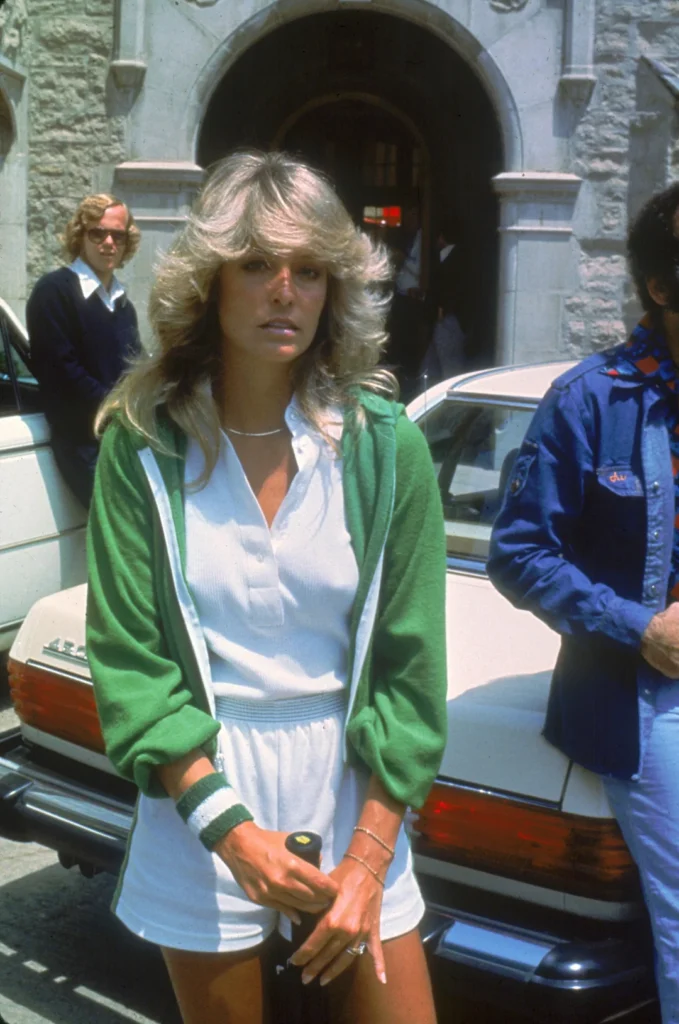
Today, Farrah Fawcett’s impact remains visible in the worlds of fashion, film, and television. She is remembered as the woman who defined an era—an actress who transformed from a pin-up idol into a respected performer with a voice that carried beyond Hollywood. Her iconic smile and timeless appeal continue to captivate new generations, ensuring that her legacy as one of America’s most beloved stars will never fade.