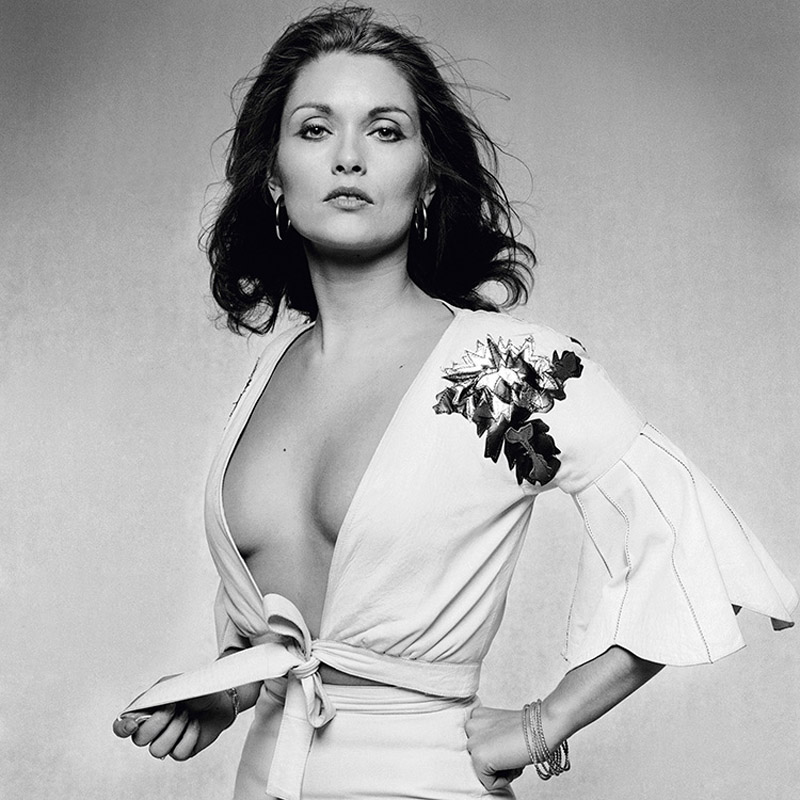
In the golden age of British television, few faces were as instantly captivating—or as mysterious—as Alexandra Bastedo. With her striking green eyes, angelic features, and an aura that seemed almost otherworldly, she became an icon of 1960s pop culture. Yet behind the glamorous image of a television star was a woman of deep convictions, restless curiosity, and relentless compassion. Her life’s story was not merely one of fame but of purpose, resilience, and humanity.

Alexandra Lendon Bastedo was born on March 9, 1946, in Hove, Sussex, England, into a family of diverse heritage. Her father’s roots stretched across Spain, France, the Netherlands, and Germany, while her Canadian-born mother carried Spanish ancestry. Growing up in such a multicultural household, Alexandra quickly developed a gift for languages. Fluent in French, Spanish, and Italian, she would later put this talent to good use not only in her acting career but also in charity work and diplomatic endeavors.
Her entry into the limelight was almost accidental. As a teenager attending Brighton and Hove High School, she entered a local beauty contest—more out of curiosity than ambition—and won. The victory opened doors to modeling, which in turn led to opportunities in film. At just 17, she secured a small part in the 1963 film
13 Frightened Girls, directed by William Castle. Though a minor role, it was enough to capture the attention of casting directors. For Alexandra, it was the first step into a world that would soon know her name.

Her true breakthrough came in 1968 when she was cast as secret agent Sharron Macready in the British espionage-science fiction series The Champions. Alongside Stuart Damon and William Gaunt, Bastedo played one of three agents who, after surviving a plane crash in Tibet, acquire enhanced mental and physical abilities from a mysterious advanced civilization. The series struck a chord during a time when Cold War anxieties merged with fascination for science fiction, and Alexandra became one of its brightest stars.
As Sharron Macready, Bastedo was more than just a glamorous figure on screen. Her character was intelligent, resourceful, and unafraid to stand toe-to-toe with her male colleagues. At a time when female roles in television were often limited to sidekicks or damsels in distress, she represented a shift. Audiences admired her poise and strength, and young women saw in her a figure who could be both graceful and powerful. It was a subtle but significant step toward more nuanced portrayals of women on television.

Off-screen, however, Alexandra harbored ambivalence toward the entertainment industry. While she appeared in films such as Casino Royale (1967), The Blood Spattered Bride (1972), and The Ghoul (1975), she grew wary of the superficiality and objectification that often came with the profession. Unlike many of her contemporaries, she was not seduced by fame alone. She was thoughtful and intellectually curious, always seeking meaning beyond the camera lens.
That search for purpose crystallized in her lifelong passion for animal welfare. In the 1980s, Alexandra founded the Alexandra Bastedo Champions Animal Sanctuary (ABC Animal Sanctuary) at her home in West Sussex. What began as a small endeavor soon grew into a refuge for abandoned, mistreated, and elderly animals. This was not a vanity project for publicity; Alexandra immersed herself fully in the work. She cleaned stalls, nursed sick animals, and spent her own resources to keep the sanctuary running. Her compassion earned her respect in animal rights circles, where she was admired for her authenticity and commitment.
Her advocacy did not end there. Bastedo was ahead of her time in embracing vegetarianism, alternative medicine, and environmental causes. She used her platform to raise awareness, years before these issues became part of mainstream conversation. She also expressed her love of animals and the natural world through writing. Her books, including
Beware Dobermanns, Donkeys and Ducks (1994) and Canine Capers (1997), were both witty and heartfelt, blending storytelling with her genuine care for creatures great and small. Her autobiography, A Handbook for Heroines
, offered advice to young women, reflecting her belief in female empowerment and self-worth.
In her personal life, Alexandra was known for her warmth, humor, and generosity. In 1980, she married Patrick Garland, a respected director and writer. Their marriage was marked by deep affection and mutual respect, lasting until his death in 2013. Their home doubled as the heart of the animal sanctuary, a space that welcomed not just creatures in need but also friends, colleagues, and fellow artists seeking comfort.
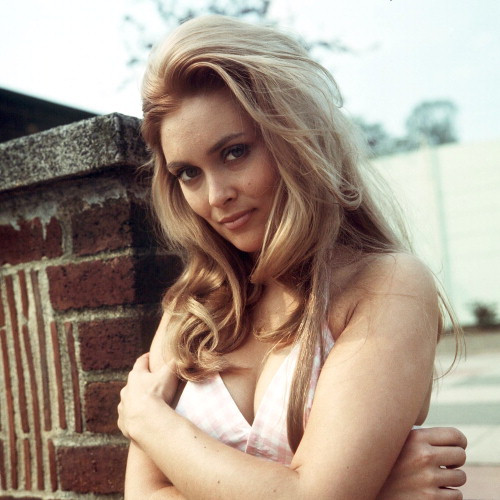
Though she stepped back from full-time acting in her later years, Alexandra never fully disappeared from public life. She occasionally returned to the stage and made guest appearances on television, including a cameo in
EastEnders in 2008, which delighted longtime fans. Her beauty remained luminous, but it was her character—gentle, resilient, and principled—that defined her legacy in her later years.
On January 12, 2014, Alexandra Bastedo passed away at the age of 67 after a battle with breast cancer. Tributes poured in from across the entertainment world and the animal rights community. Colleagues remembered her as a gifted actress with rare presence, while animal welfare groups mourned the loss of a tireless advocate. To many, she was not just the star of a 1960s cult television show but a heroine whose compassion and integrity were as memorable as her iconic beauty.
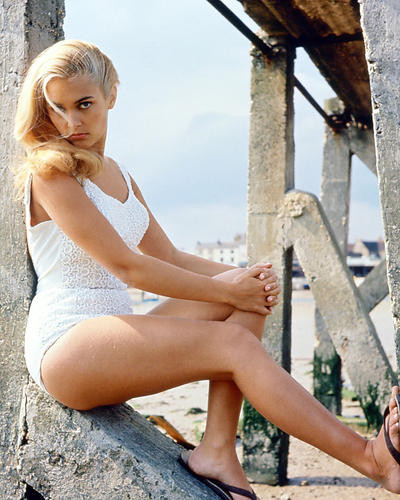
Alexandra Bastedo’s life defied the shallow stereotypes often attached to women in entertainment. She was more than the glamorous spy of The Champions. She was an intellectual, a humanitarian, and a woman who channeled her fame into causes greater than herself. Her story reminds us that true strength lies in empathy, and that beauty—though it may open doors—finds its deepest expression in kindness, courage, and conviction.
Though she is gone, her legacy continues, both on screen and at the sanctuary she left behind. For those who remember her, Alexandra Bastedo remains a symbol of a time when television icons could become cultural touchstones—and of how one woman used that spotlight not for vanity, but for compassion.