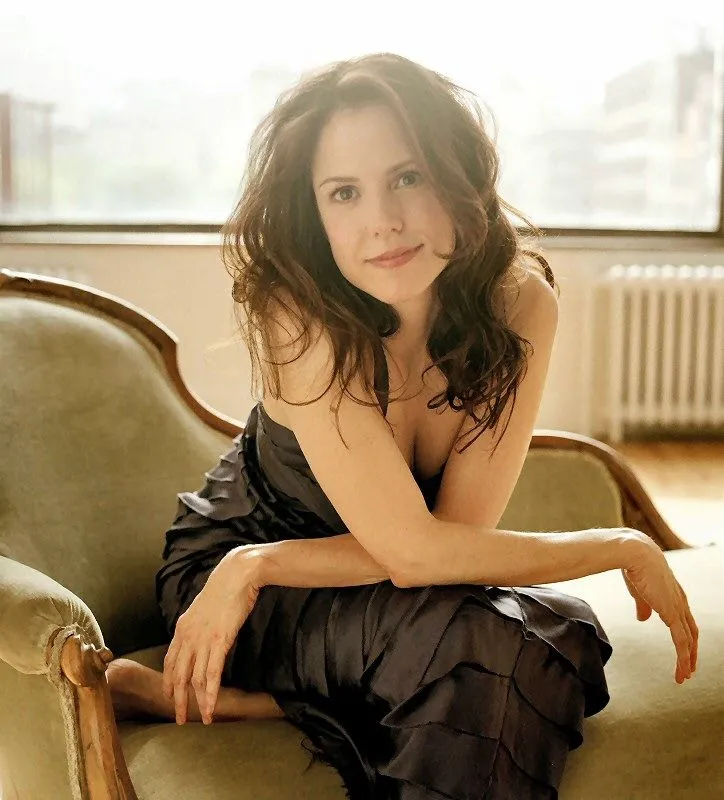
Few performers in modern American entertainment embody both intellect and vulnerability quite like Mary-Louise Parker. With her piercing gaze, sharp wit, and ability to make even silence feel electric, she has carved out a singular space across film, television, and theater. She’s the kind of actress who never plays a line the way you expect — and never lets you forget it once she does.
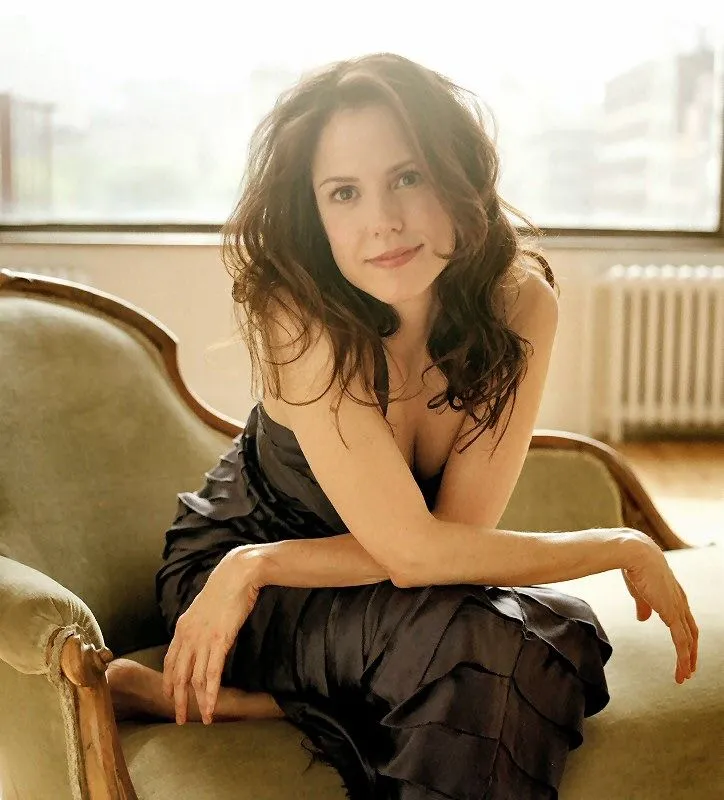
Born on August 2, 1964, in Fort Jackson, South Carolina, Parker grew up in a military family that moved frequently, giving her a lifelong sense of observation and adaptability. Those qualities would later become her trademarks — the quiet intensity, the subtle intelligence, and the emotional precision that defined her most unforgettable roles.
After studying acting at the University of North Carolina School of the Arts, she moved to New York City and began performing on stage. It didn’t take long for her to stand out. In the late 1980s and early ’90s, she became a fixture of the Broadway and off-Broadway scene, praised for performances that were both raw and cerebral.
Her breakthrough came with the 1990 play “Prelude to a Kiss”, in which she played a young woman whose spirit mysteriously switches bodies with an elderly man. The role showcased Parker’s uncanny ability to blend emotional honesty with surreal circumstances — a quality that would come to define her career. The play earned her a
Tony nomination and established her as one of the theater’s most promising new talents.

Hollywood soon followed. In films like “Fried Green Tomatoes” (1991) and “The Client” (1994), Parker brought nuance to supporting roles that might have felt thin in lesser hands. She could communicate a lifetime of feeling with a single look. But while she appeared in numerous films throughout the 1990s, it was on television and the stage that she truly found her artistic home.
One of her early standout television roles came in “The West Wing”, where she played Amy Gardner, a quick-witted political strategist whose intelligence and self-assurance matched — and often outsmarted — the men around her. In a show known for its razor-sharp dialogue, Parker’s delivery was masterful: playful, precise, and laced with a subtle bite. She brought warmth and depth to what could have been a purely intellectual role, turning Amy into a fan favorite.
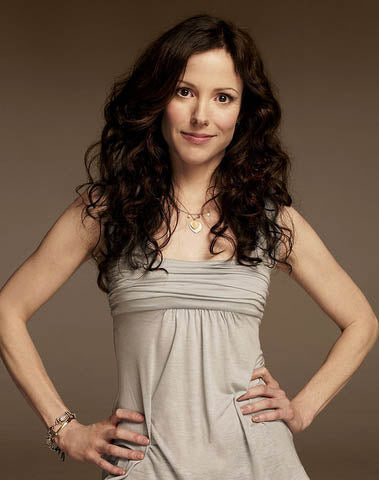
Then came “Angels in America” (2003) — the monumental HBO miniseries adaptation of Tony Kushner’s Pulitzer Prize–winning play. Parker portrayed Harper Pitt, a fragile Mormon housewife whose addiction to Valium becomes a poetic metaphor for disillusionment and denial. It was a performance of breathtaking sensitivity — alternately funny, heartbreaking, and hallucinatory. She captured both the surrealism and the tragedy of Harper’s journey, earning her a Golden Globe and an Emmy Award.
Critics hailed her as one of the most fearless actresses of her generation. “Mary-Louise Parker doesn’t act,” one reviewer wrote. “She inhabits — not the character’s skin, but her mind.”
A few years later, Parker found an even broader audience — and another unforgettable role — as Nancy Botwin in Showtime’s Weeds (2005–2012). On paper, the premise was outrageous: a suburban mom who turns to selling marijuana after her husband’s death. But in Parker’s hands, Nancy became something more than a comedic antihero — she was a portrait of survival, desire, and contradiction.

Parker gave Nancy complexity: a mother who was both nurturing and reckless, a businesswoman driven by desperation, a woman constantly teetering between control and chaos. Her performance turned Weeds into one of the defining dramedies of the 2000s and earned her a second Golden Globe and multiple Emmy nominations. As one critic put it, “She made weed entrepreneurial — and middle-class guilt existential.”
While television brought her global fame, Parker never abandoned the stage. In fact, Broadway remained the place where she most fearlessly reinvented herself. In
2001, she starred in “Proof,” David Auburn’s Pulitzer Prize–winning drama about a brilliant but troubled mathematician mourning her father’s death while grappling with her own genius and instability. Her performance was revelatory — a delicate balance of vulnerability and intellect — and it earned her the
Tony Award for Best Actress in a Play.

Nearly two decades later, she would return to Broadway and win her second Tony, for “The Sound Inside” (2020), proving that her power had only deepened with time. Critics praised her ability to hold an audience with quiet intensity, describing her performance as “a master class in emotional economy.” Few actors can command a stage by doing so little — or make stillness feel so alive.
But Parker’s artistry doesn’t stop at acting. She’s also an accomplished writer. In 2015, she published Dear Mr. You, a memoir told through a series of lyrical letters addressed to the men who have shaped her life — from her father to past lovers to imagined strangers. The book was met with critical acclaim for its introspective honesty and literary craft. It revealed the same qualities that define her acting: wit, vulnerability, and the courage to explore emotion without sentimentality.
Parker wrote,
“I like to think I live somewhere between the poem and the punchline.”
That line could easily describe her entire career.

Offscreen, Parker is famously private — a rarity in today’s celebrity landscape. She has raised two children, including one with actor Billy Crudup, and speaks openly about the challenges of balancing creativity, motherhood, and solitude. Despite her fame, she’s never courted the spotlight; she’s courted the work.
Her performances, whether on stage or screen, share a common thread: they pulse with intelligence. Not the cold, cerebral kind — but the kind that burns, questions, and aches. Whether she’s crafting lines on the page or delivering them under bright lights, Parker radiates an emotional truth that makes her impossible to look away from.
Today, Mary-Louise Parker stands as one of the few actresses to have earned television’s Emmy, film’s Golden Globe, and theater’s Tony — a rare trifecta of talent that underscores her extraordinary range. But accolades have never seemed to define her. What defines her instead is a restless curiosity — a hunger to keep discovering new corners of humanity through her art.