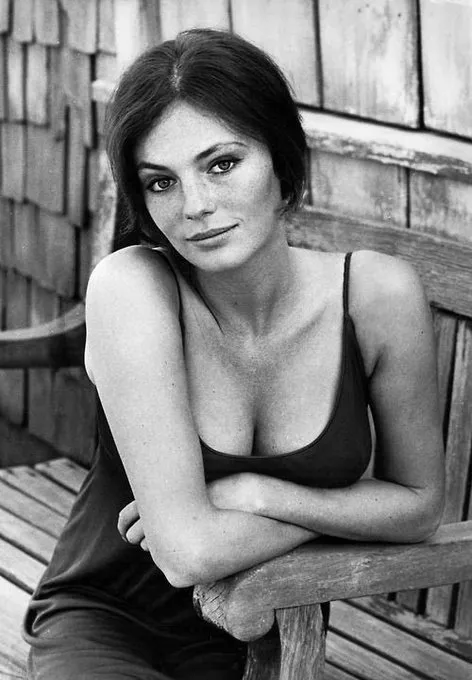
Jacqueline Bisset has long stood as a symbol of elegance, intelligence, and strength — a rare combination that has made her one of Hollywood’s most enduring stars. Her career, which now stretches across nearly six decades, tells the story not only of a gifted actress but also of a woman who carved her own path in an industry that often sought to define women by their looks alone.
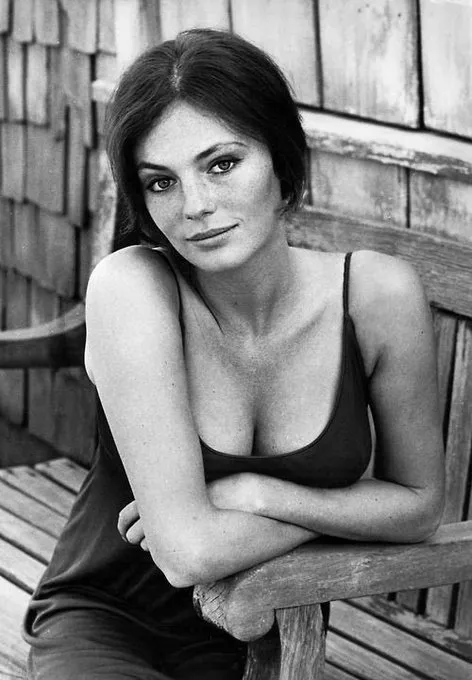
Born Winifred Jacqueline Fraser Bisset on September 13, 1944, in Weybridge, Surrey, England, she grew up far from the glitz of Hollywood. Her mother, a lawyer-turned-housewife, was of French descent and her father a Scottish general practitioner. Jacqueline’s early years were shaped by art, culture, and discipline. She studied ballet as a child, dreaming of becoming a dancer, before eventually turning toward acting. The poise and precision she learned from dance would later infuse her screen presence with an effortless grace.
Her screen debut came in Roman Polanski’s Cul-de-Sac (1966), a small role that marked the beginning of a remarkable journey. Two years later, she caught the attention of Hollywood with
back-to-back appearances in Detective, opposite Frank Sinatra, and Bullitt, alongside Steve McQueen. Both films became classics, and Bisset’s natural poise, paired with a quiet intensity, set her apart from the crowd of emerging starlets.
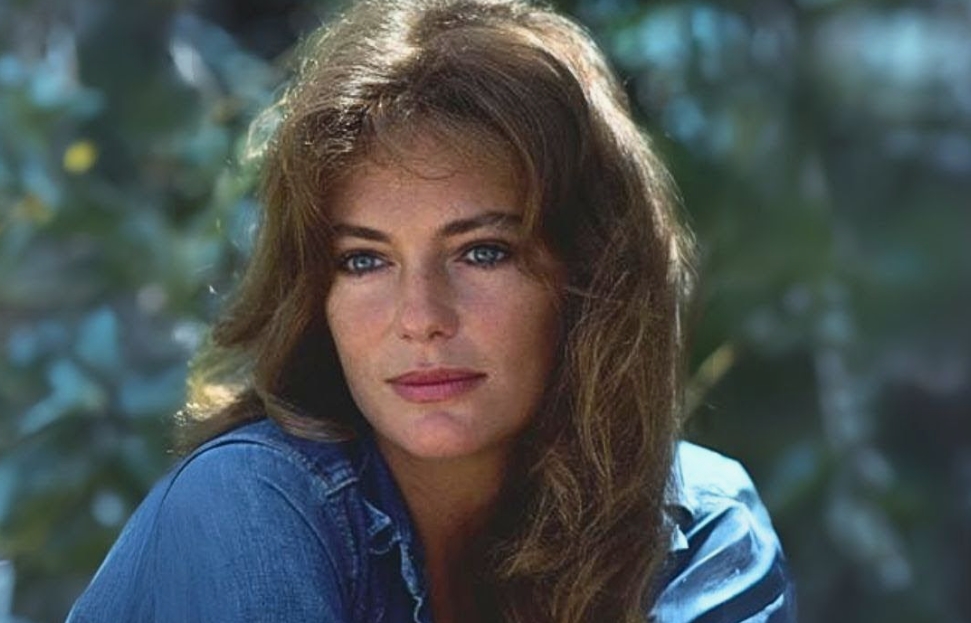
By the end of the 1960s, she had earned her first Golden Globe nomination for The Sweet Ride (1968), confirming what audiences already sensed — that she was destined for longevity, not fleeting fame. Her combination of European sophistication and understated sensuality made her magnetic on screen. In an era that celebrated icons like Sophia Loren and Brigitte Bardot, Bisset brought something uniquely her own — a calm intelligence that seemed to simmer just beneath the surface.
The 1970s were her decade of transformation. Bisset became one of the few actresses who could move effortlessly between Hollywood blockbusters and European art films. In Casino Royale (1967)
, she showed her playful side as Miss Goodthighs, while Murder on the Orient Express (1974) showcased her in a refined ensemble cast. Then came The Deep (1977), the underwater thriller that cemented her international stardom. Clad in a white T-shirt and diving gear, Bisset became a pop culture phenomenon — her image from the film gracing posters, magazine covers, and countless teenage bedroom walls.
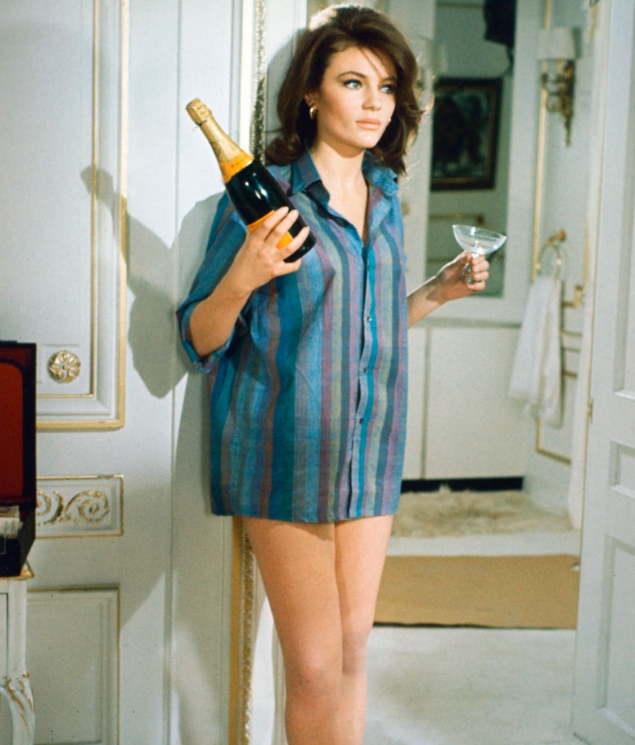
Yet despite her status as a sex symbol, she resisted being boxed in. In interviews, she often expressed discomfort with fame, insisting that she was an actress first and a celebrity second. “I never wanted to be a movie star,” she once said. “I just wanted to act — to explore people, emotions, and stories.”
Her performances in the 1980s and 1990s reflected that pursuit. She appeared in Rich and Famous (1981) opposite Candice Bergen, Under the Volcano (1984) directed by John Huston, and La Cérémonie (1995)
by Claude Chabrol — each film revealing new facets of her range. Whether playing an elegant socialite or a woman on the edge of emotional collapse, Bisset imbued every role with empathy and humanity.

The 2000s marked a new phase in her career. Rather than retreating from the spotlight, she embraced roles that allowed her to explore aging, resilience, and vulnerability. In The Sleepy Time Gal (2001)
, she gave one of her most nuanced performances as a radio host facing mortality. In America’s Prince (2003), she portrayed Jacqueline Kennedy Onassis, a role that demanded both precision and emotional restraint — qualities that came naturally to her.
Recognition continued to follow. In 2010, the French government awarded her the Legion of Honor, acknowledging not just her artistry but also her contribution to cultural exchange between France and the world. Three years later, she won the
Golden Globe Award for Best Supporting Actress for Dancing on the Edge (2013), a BBC drama about the jazz scene in 1930s London. When her name was announced, Bisset looked genuinely stunned. Her acceptance speech — unfiltered, emotional, and meandering — became an instant viral moment. Many described it as the most honest speech of the night, a glimpse into the humility behind decades of glamour.

Behind the scenes, Bisset’s personal life has been as fascinating as her career — though she has always guarded it carefully. She was romantically linked to several prominent men, including
Frank Sinatra, Steve McQueen, Michael Sarrazin, and Alexander Godunov, yet she never married. “I’m too independent for anything permanent,” she once admitted. “I’ve always preferred to leave rather than compromise who I am.”
Her independence was not rebellion but philosophy. She spoke often about self-knowledge, solitude, and integrity — values that kept her grounded even as fame surrounded her. While many of her contemporaries succumbed to Hollywood’s relentless pressures, Bisset built a life outside of it, splitting her time between England, France, and California, pursuing art, literature, and cooking.

Even as she grew older, she continued to take risks. In the French thriller The Lodger (2020) and the film Loren & Rose (2022), she took on roles that mirrored her own legacy — complex, mature women facing the passage of time with dignity and introspection. Directors who have worked with her often remark on her humility, preparation, and quiet authority on set.
At 80, Jacqueline Bisset remains luminous. She has refused to conform to Hollywood’s obsession with youth, openly rejecting cosmetic surgery. “Plastic surgery changes the map of your face,” she said. “I want to recognize the person in the mirror.” Instead, she attributes her timeless beauty to forgiveness, gratitude, and peace of mind. “If you want to look good,” she famously told the audience during her Golden Globe speech, “you’ve got to forgive everybody.”
Her philosophy resonates deeply in an industry that often prizes perfection over authenticity. She believes that beauty is not in appearance but in presence — in how one carries the weight of life with grace.

Today, Bisset’s name evokes more than nostalgia. She is not merely a relic of old Hollywood but a living bridge between eras — from the golden age of cinema to today’s evolving landscape. She remains, in every sense, timeless: a woman of intelligence, courage, and quiet rebellion.
Nearly sixty years after her debut, Jacqueline Bisset continues to embody what true stardom means — not the pursuit of fame, but the pursuit of truth.
Her career reminds us that talent may open the door, but integrity keeps it open. And in that sense, Jacqueline Bisset has never stopped shining.