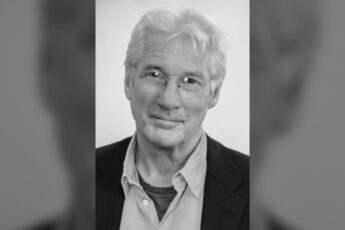
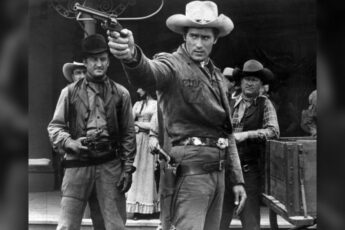
Anita Ekberg was more than just a beautiful face on the silver screen — she was the embodiment of a cinematic era defined by glamour, mystery, and timeless allure. Born Kerstin Anita Marianne Ekberg on September 29, 1931, in Malmö, Sweden, she was the sixth of eight children in a modest family. From those humble beginnings, no one could have imagined that this Swedish girl would one day walk through the waters of the Trevi Fountain in Rome and into film history.
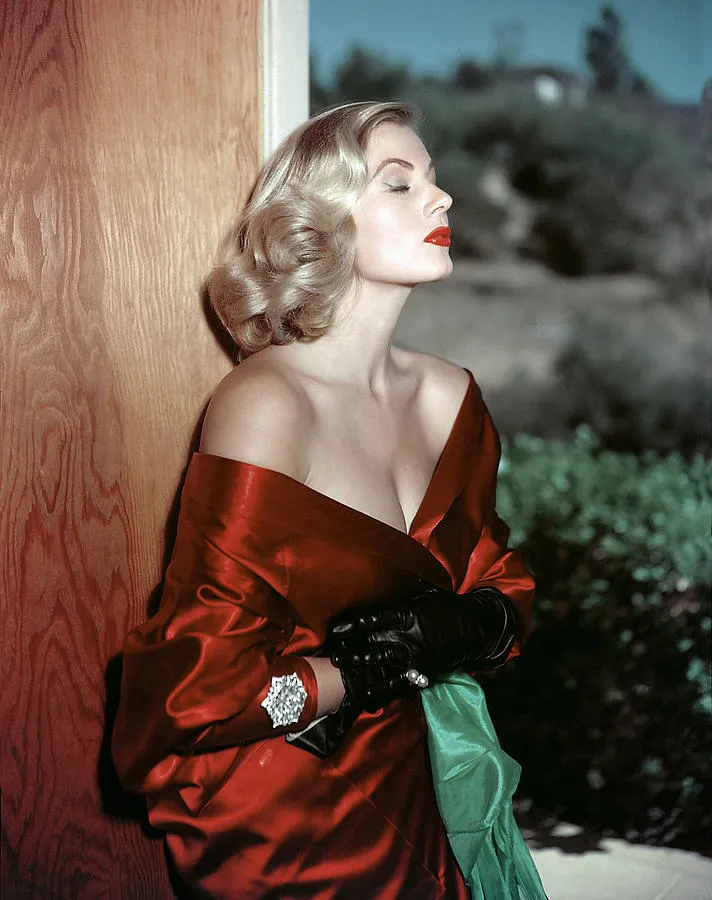
Ekberg’s early life gave little hint of the international fame awaiting her. As a teenager, she worked as a model to help support her family. Her striking features — golden hair, luminous blue eyes, and a statuesque figure — quickly made her stand out. In 1950, she entered and won the title of Miss Sweden, a decision that changed her life forever. Her victory led her to represent her country in the Miss Universe competition held in the United States. Although she didn’t win the crown, her confidence, charm, and unmistakable screen presence caught the attention of Hollywood talent scouts.
Soon, Anita Ekberg found herself on a plane bound for Los Angeles — a place that seemed like another world from her quiet Scandinavian upbringing. She was signed by Universal Pictures, joining a studio system eager to find the next great starlet. Like many European actresses of the 1950s, she was initially typecast for her beauty rather than her talent. But Ekberg’s personality — direct, fiery, and unapologetically independent — made her stand apart.

Her early Hollywood years were a blend of glamour and struggle. She studied English, took acting lessons, and appeared in small roles that showcased her magnetic screen presence. Films like Blood Alley (1955), where she acted opposite John Wayne, and War and Peace (1956), in which she portrayed the alluring Helene Kuragina, began to give her recognition. Audiences were fascinated by her — she wasn’t just another blonde bombshell in an age crowded with them. She had something different: a European sophistication, a self-assuredness that seemed to hint at secrets behind her smile.
However, it wasn’t Hollywood that would immortalize Anita Ekberg — it was Rome.
In the late 1950s, she moved to Italy, drawn by the energy of a film industry in full bloom. Italian cinema was thriving, and directors like Fellini, Visconti, and Antonioni were redefining what film could be. It was there, among the cobblestone streets and flickering café lights of postwar Rome, that destiny and art collided.
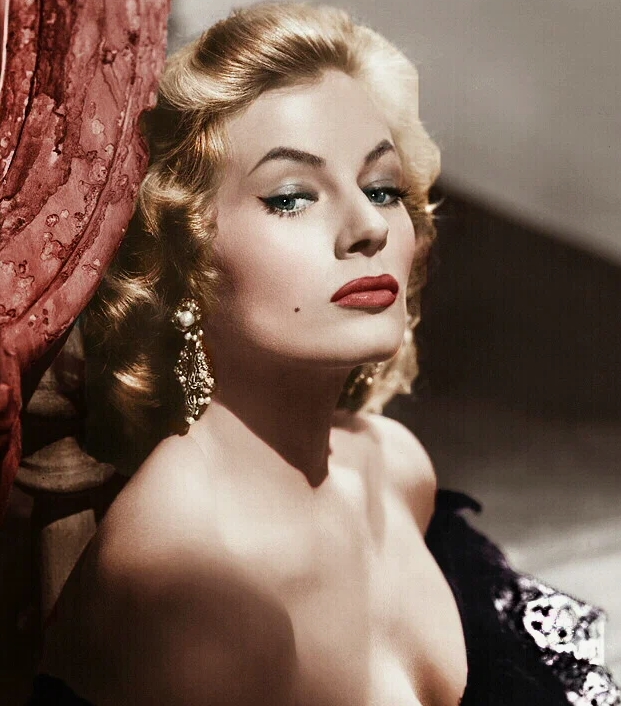
Federico Fellini cast Ekberg as Sylvia, the impossibly glamorous movie star in his 1960 masterpiece La Dolce Vita. The film itself was a love letter to Rome — both its beauty and its decadence — and Ekberg’s performance became its beating heart. In one of the most iconic scenes in film history, she wades through the Trevi Fountain at night, calling to her co-star Marcello Mastroianni with a playful, “Marcello! Come here!”
That moment, captured in shimmering black and white, transformed Anita Ekberg into a legend. The image of her standing in the fountain, her gown clinging to her figure, became the very definition of cinematic glamour. Yet behind the surface, the scene also captured something deeply human — the loneliness beneath fame, the longing for connection in a world dazzled by illusion. Fellini later said,
“Anita wasn’t just Sylvia. She was the dream — and the sadness that comes after.”

After La Dolce Vita, Ekberg’s life changed overnight. She was hailed as an international star, her name synonymous with elegance and sensuality. Paparazzi followed her every move, her image graced magazine covers, and Rome itself seemed to orbit around her like a planet around its sun. But fame, as always, was fleeting.
Despite her enormous success, Hollywood never quite knew what to do with Anita Ekberg. She was too European to fit the mold of the American sweetheart, too bold to be typecast as just another pin-up. As a result, her roles after
La Dolce Vita never reached the same artistic heights. She continued to act in Italian and European films, appearing in titles such as Boccaccio ’70 (1962) and Call Me Bwana (1963), but her Hollywood chapter had quietly closed.

Still, she made Italy her true home. She bought a villa near Rome and became a fixture in Italian society — attending film festivals, art openings, and television appearances. The press dubbed her “La Dolce Diva,” the living symbol of the golden age of cinema.
In later years, she reunited with Fellini for Intervista (1987), a semi-autobiographical film about his life and art. In one poignant scene, an older Ekberg watches her younger self in
La Dolce Vita projected on a screen — the woman in the fountain now looking back at her past. The moment, both nostalgic and tender, beautifully mirrored her real life: a reflection on time, fame, and the price of immortality.

Away from the camera, Ekberg lived with both grace and candor. She spoke openly about her struggles — with finances, health, and the inevitable fading of celebrity. In interviews, she remained disarmingly honest, often laughing at her own legend.
“I was born at the right time,” she once said. “Everything I did, I did with passion. If that makes me larger than life, then so be it.”
Though the spotlight dimmed in her later years, Anita Ekberg never truly disappeared. Film historians, critics, and fans continued to celebrate her contributions to cinema. Retrospectives of Fellini’s films often placed her front and center, her presence reminding audiences that some performances are not just seen but felt — deeply, indelibly.

Anita Ekberg passed away on January 11, 2015, at the age of 83. She had spent her final years quietly in Italy, the country that had given her both fame and a sense of belonging. When news of her passing spread, tributes poured in from around the world. The Italian newspaper La Repubblica wrote, “With her, a piece of our dream of cinema disappears — but the dream itself will never fade.”
Today, more than six decades after she stepped into the Trevi Fountain, her image remains one of the most iconic in film history. It continues to symbolize the intoxicating beauty and mystery of cinema’s golden age — an era when a single scene could capture the imagination of the world.

Anita Ekberg’s life was one of contrasts — between light and shadow, fame and solitude, illusion and truth. But through it all, she remained authentic: a woman who lived passionately, loved deeply, and left behind a legacy of unforgettable grace.
She once said, “People will forget the movies, but they will not forget the feeling.”
And she was right. For as long as there are films, there will be that midnight moment in Rome — the water shimmering, the city sleeping, and Anita Ekberg, forever radiant, forever walking toward the camera, into eternity.