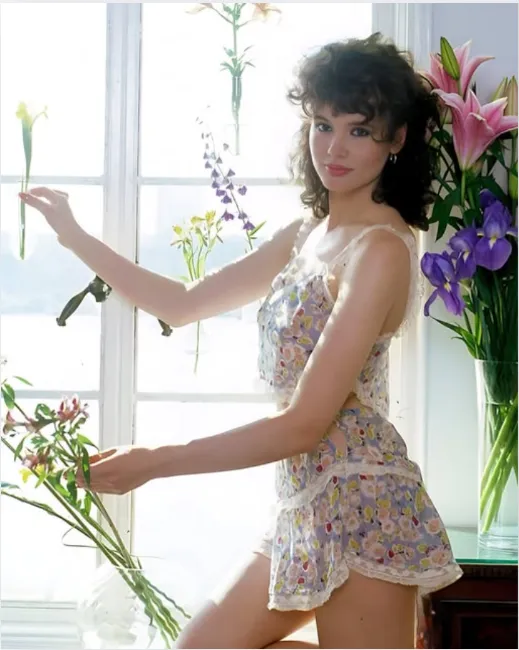
In 1981, a young model with striking features was photographed while working for Victoria’s Secret. At the time, no one could have predicted how quickly she would trade the catwalk for Hollywood, or how deeply she would leave her mark on film history. That young woman was Geena Davis—a star who would go on to embody resilience, intellect, and a rebellious spirit that transformed how women were portrayed on screen.
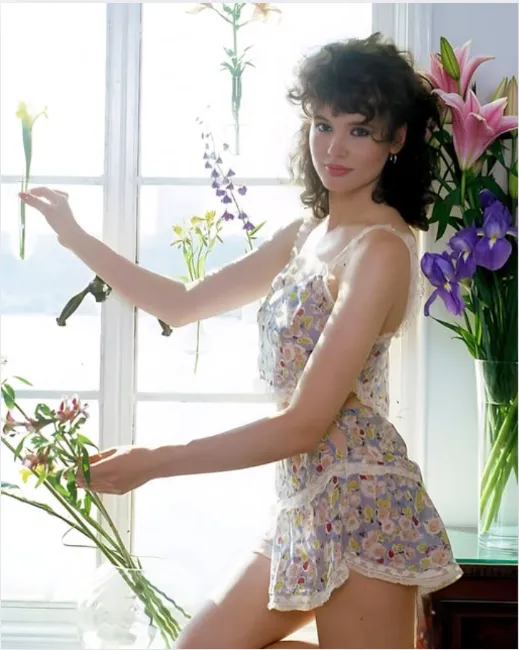
Long before she became synonymous with cult classics and action blockbusters, Davis was just another hopeful chasing opportunity in New York. Born Virginia Elizabeth Davis in Wareham, Massachusetts, she grew up tall, bookish, and driven. She studied drama at Boston University, but her early career path wasn’t straightforward. Modeling paid the bills while she sought auditions, and it was through that world of glossy photographs and runway appearances that she caught the attention of casting agents. Yet Davis was never content to remain in the background. Her ambitions were cinematic, her talent undeniable, and soon, Hollywood came calling.
Her screen debut came in 1982 with a small but memorable role in Tootsie, playing a soap opera actress opposite Dustin Hoffman. Though her screen time was brief, her charisma was obvious. Hollywood noticed. Within a few years, Davis was landing major roles in films that would become cornerstones of 1980s and 1990s cinema. She had a rare quality—able to switch seamlessly between comedy, drama, and action, while always radiating intelligence and strength.

The breakthrough came with The Fly (1986), a cult classic that paired her with Jeff Goldblum. Their on-screen chemistry—and off-screen romance—captured attention, but it was Davis’s ability to ground a wild sci-fi horror story with genuine emotion that truly impressed critics. Then, in 1988, she won an Academy Award for Best Supporting Actress in
The Accidental Tourist, cementing her place as one of Hollywood’s brightest talents.
But Davis wasn’t done. If the late ’80s made her a star, the early ’90s made her an icon. In 1991, she and Susan Sarandon roared across the screen in Thelma & Louise, a rebellious road movie that rewrote the rulebook for female characters in Hollywood. It was bold, unapologetic, and deeply feminist, offering women something rarely seen in mainstream cinema: a story of liberation on their own terms. The film shocked critics, electrified audiences, and earned Davis another Academy Award nomination. Decades later,
Thelma & Louise remains a cultural touchstone, and its cliffhanger ending has been analyzed, celebrated, and mythologized as one of the great moments in film.
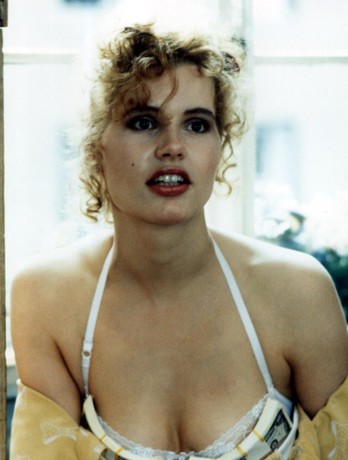
Her momentum continued with A League of Their Own
(1992), where she starred alongside Madonna and Tom Hanks in a story about women’s baseball during World War II. As Dottie Hinson, Davis balanced strength, grace, and vulnerability, and the film went on to become a beloved classic. It wasn’t just about baseball—it was about proving that women belonged on fields, in films, and in conversations from which they had too often been excluded.
By the mid-1990s, Davis had become one of the few actresses trusted to lead action blockbusters. She teamed up
The Long Kiss Goodnight (1996). The latter, where she played an amnesiac assassin, showcased her physicality and ability to carry an action film. Though not all of these movies succeeded at the box office, Davis’s performances demonstrated her fearlessness and versatility. She was willing to take risks, willing to step outside expectations, and willing to fail if it meant breaking new ground.

But beyond Hollywood, Geena Davis’s legacy deepened in unexpected ways. In 2004, she founded the Geena Davis Institute on Gender in Media, a research-based organization that shines a light on the lack of representation and diversity in film and television. Through this work, Davis became not just a star but an advocate, using her platform to push for systemic change. She has often said that playing strong female characters made her aware of the gap between fiction and reality—and she wanted to bridge that gap for the next generation.
Her advocacy work has had a measurable impact, with industry leaders turning to the Institute for data and guidance. Davis has been honored with numerous humanitarian awards, showing that her influence reaches far beyond red carpets and cinema screens. She is, in many ways, as much an activist as an actress, someone who transformed personal success into a tool for collective progress.
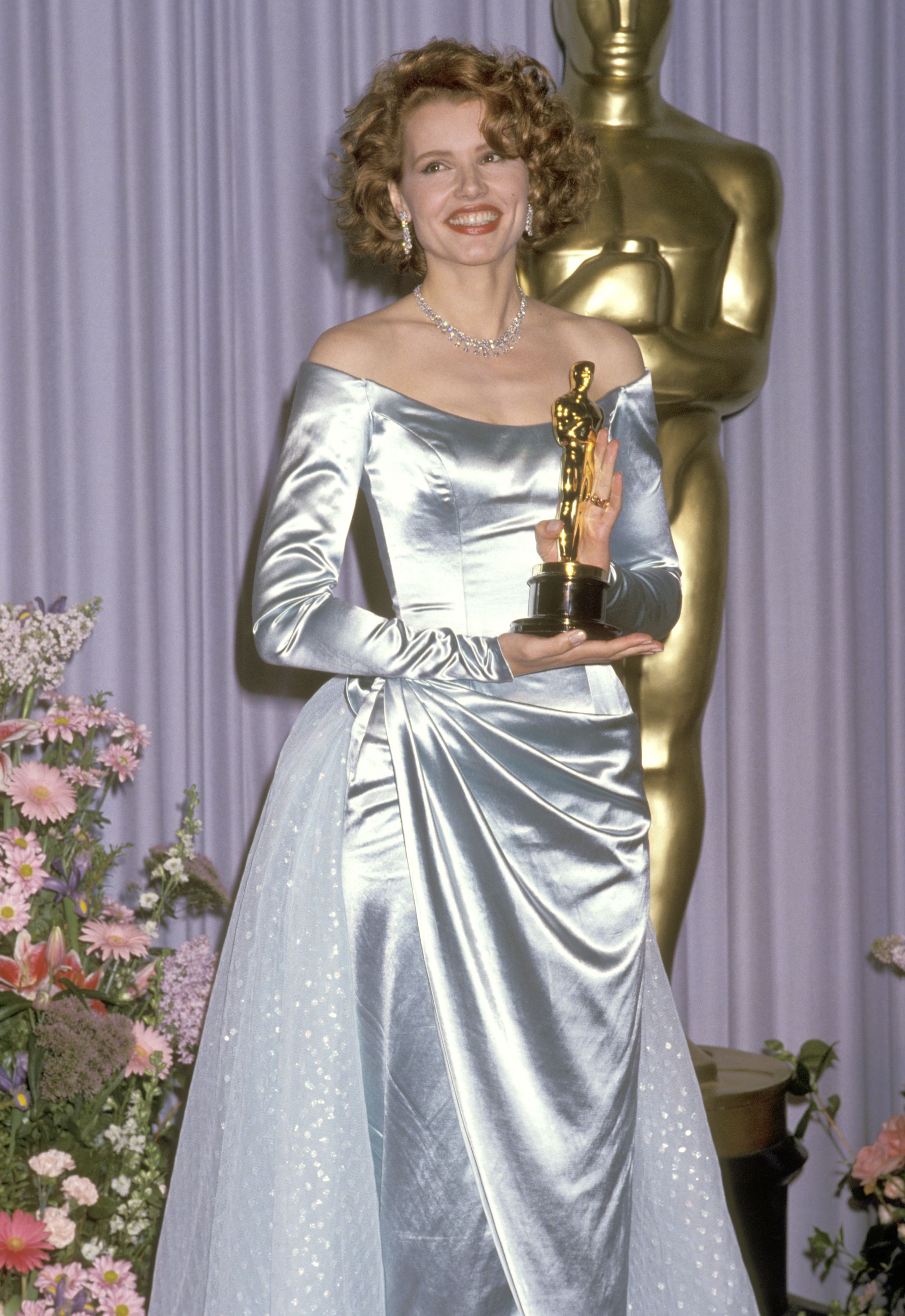
Looking back at that 1981 photograph, it’s hard not to marvel at the journey that followed. The young model posing for Victoria’s Secret would soon step into roles that redefined what women could be in film: scientists, athletes, outlaws, warriors. And off-screen, she would dedicate herself to ensuring that future generations of girls would see themselves reflected on screen—not just as side characters, but as heroes.
Geena Davis is more than a movie star. She is a symbol of resilience, reinvention, and rebellion. Her career proves that an actress can be beautiful without being reduced to beauty, intelligent without apology, and powerful without permission. From cult classics to advocacy campaigns, Davis has built a legacy that continues to inspire.
And it all began with that snapshot in 1981—a reminder that sometimes the most ordinary moments capture the beginning of an extraordinary story.