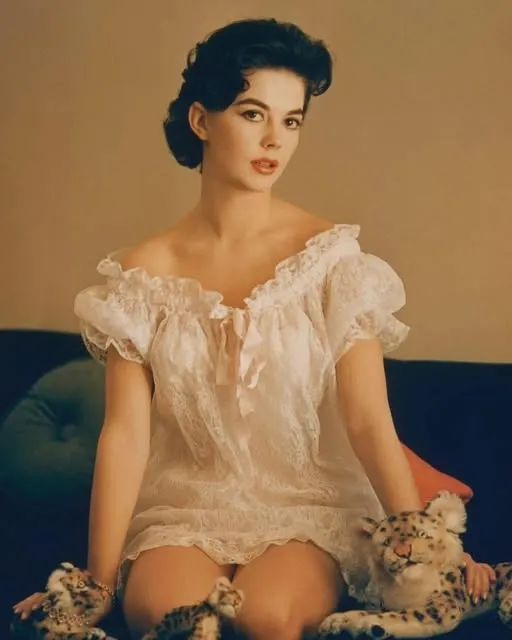
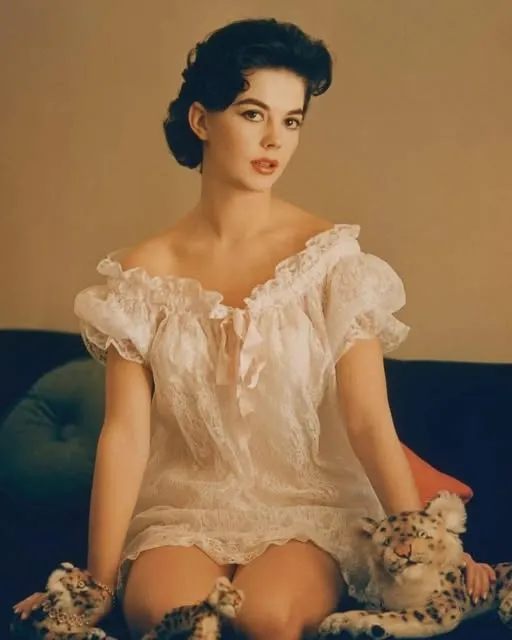
Natalie Wood, born on July 20, 1938, in San Francisco, California, remains one of the most enduring and fascinating figures of classic Hollywood. With her captivating screen presence, striking beauty, and undeniable talent, she rose from a precocious child actress to a celebrated leading lady whose life and career continue to intrigue audiences decades after her passing.
Her journey into Hollywood began astonishingly early. At just four years old, Natalie was already appearing in small film roles, but it was her performance in Miracle on 34th Street
(1947) that made her a star. Playing Susan Walker, the little girl who questions the existence of Santa Claus, Wood charmed audiences with her sincerity and natural talent. The film became a beloved holiday classic, and the young actress’s performance cemented her as one of Hollywood’s brightest child stars. From that point on, Natalie Wood was no longer just another child actor—she was destined for stardom.
As she matured, Natalie faced the challenge that has undone many child stars: transitioning into more adult roles without losing her audience. She did so with remarkable grace. In 1955, she delivered a breakthrough performance in Rebel Without a Cause, opposite James Dean and Sal Mineo. Her portrayal of Judy, a troubled teenager searching for love and belonging, earned her an Academy Award nomination for Best Supporting Actress. More importantly, the film captured the spirit of American youth in the 1950s, and Natalie’s role solidified her place as a cultural icon.
The 1960s saw Wood’s career flourish further. She starred in Splendor in the Grass (1961), directed by Elia Kazan, where she gave one of the most intense and emotionally raw performances of her career. Playing Deanie Loomis, a young woman torn between love and societal expectations, Natalie revealed a depth that surprised critics and proved her ability to handle complex roles. That same year, she enchanted audiences as Maria in the film adaptation of
West Side Story (1961). The musical became a cultural phenomenon, and Wood’s portrayal of the innocent yet passionate heroine introduced her to an even wider audience.
Her versatility was undeniable. Natalie could move from dramatic intensity to romantic vulnerability, from musicals to thrillers, all with equal ease. Over the course of her career, she earned three Academy Award nominations: for
Rebel Without a Cause (1955), Splendor in the Grass (1961), and Love with the Proper Stranger (1963). These accolades underscored her rare ability to balance glamour with substance, beauty with depth. Unlike many actresses of her era who were often typecast, Wood consistently demonstrated her range, ensuring her reputation as one of the most respected talents in Hollywood.
But Natalie’s story was not only about her career. Her personal life, often splashed across tabloids, captivated the public. She was married three times—twice to actor Robert Wagner and once to producer Richard Gregson. Her tumultuous romance with Wagner, in particular, fascinated the press and fans alike. Their on-again, off-again marriage seemed to embody both passion and volatility. Despite her glamorous image, Natalie was known by friends and colleagues as warm, generous, and deeply devoted to her family, particularly her daughters, Natasha Gregson Wagner and Courtney Wagner.
Behind the sparkle of fame, however, Natalie carried insecurities and struggles. Like many child stars, she had grown up under immense pressure from both her family and the industry. She often spoke about the difficulty of balancing her desire for normalcy with the relentless demands of Hollywood. Yet, she always managed to present herself with poise, radiance, and professionalism, traits that endeared her to audiences and colleagues.
Tragically, Natalie Wood’s life came to an abrupt and mysterious end on November 29, 1981. While on a boat trip off the coast of Catalina Island with her husband Robert Wagner, actor Christopher Walken, and the boat’s captain, Natalie drowned under circumstances that remain unclear to this day. Her sudden death at the age of 43 shocked the world and became one of Hollywood’s most enduring mysteries. The official cause was ruled as drowning, but unanswered questions, conflicting testimonies, and the lingering uncertainty have fueled decades of speculation. To this day, her passing remains the subject of debate, investigation, and fascination.
Despite the tragedy of her untimely death, Natalie Wood’s legacy endures. Her body of work continues to captivate audiences. From the wide-eyed little girl in Miracle on 34th Street to the troubled teenager in
Rebel Without a Cause, from the heartbroken young woman in Splendor in the Grass to the romantic heroine in West Side Story, she brought unforgettable characters to life with authenticity and passion. Each performance reflected not just her talent but also her ability to connect with audiences on a deeply human level.
Natalie’s impact extends beyond her films. She represents a golden era of Hollywood, a time when stars were larger than life yet still accessible to their fans. Her beauty—especially her famous violet eyes—combined with her vulnerability and emotional honesty, created a timeless allure. Younger generations discovering her films for the first time continue to be struck by her charisma and talent.
Moreover, Natalie Wood’s life story reminds us of the challenges that often accompany fame. She experienced extraordinary success but also faced pressures and difficulties that few could truly understand. Her resilience in navigating the highs and lows of her career and personal life continues to inspire admiration.
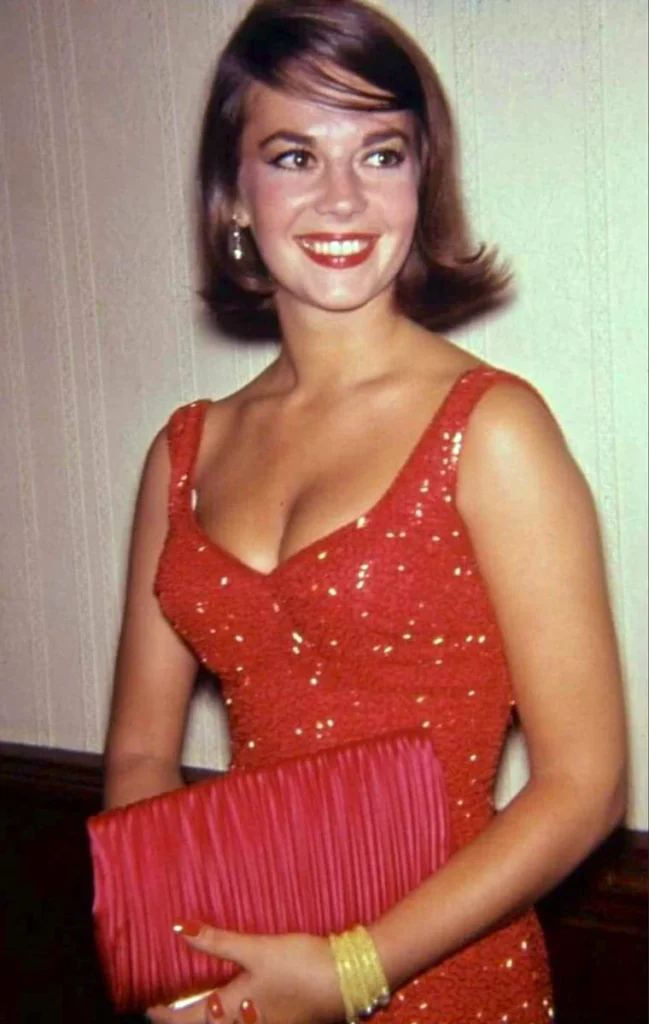
In remembering Natalie Wood, we celebrate not only a gifted actress but also a woman of strength, vulnerability, and complexity. Her legacy is that of an eternal Hollywood icon, one whose star continues to shine brightly more than four decades after her passing. Though her life was cut short, the magic she brought to the screen ensures that Natalie Wood will never be forgotten.