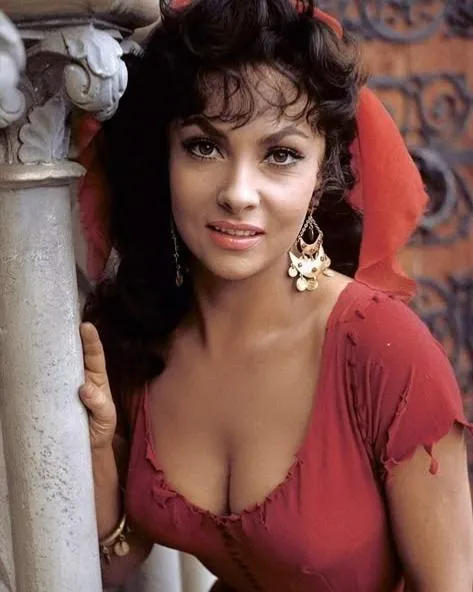
Gina Lollobrigida was one of the most iconic actresses of the 1950s and 1960s, a woman whose beauty, charisma, and talent made her not only a star of the screen but also a cultural symbol of post-war Italy.
Born Luigia Lollobrigida on July 4, 1927, in Subiaco, a picturesque town outside Rome, she grew up in a country that was still reeling from the effects of World War II. Her family was of modest means, and the Italy of her youth was marked by economic hardship and political instability.
Yet within that environment, she developed an early passion for the arts. Initially, she studied sculpture and painting at the Academy of Fine Arts in Rome, showing remarkable skill with her hands and a natural eye for form and beauty.
She dreamed of a life in the creative world, never imagining that her path would lead her to the global spotlight.
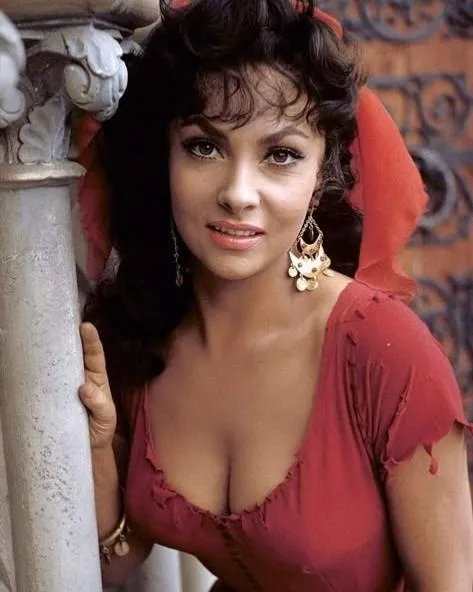
Her first brush with fame came when she entered local beauty contests, and her striking looks quickly caught attention. Modeling followed, which eventually led to her early roles in Italian cinema.
At first, she appeared in small comedic films and dramas, often cast as a secondary character, but even in these modest beginnings, her presence was undeniable.
Post-war Italian cinema was entering a golden age, with neorealism shaping the industry through directors like Roberto Rossellini and Vittorio De Sica.
While Lollobrigida was not initially associated with neorealism, she embodied a new type of Italian star: glamorous, sensuous, and self-assured, a figure that helped redefine Italian femininity on the global stage.

Her big break came in the early 1950s, as she began appearing in films that gained international recognition. Her exotic beauty—dark hair, expressive eyes, and radiant charm—made her an instant favorite not only in Italy but abroad.
Hollywood soon took notice. By the mid-1950s, she signed a contract with major American studios and began appearing in films that would cement her reputation as a global star.
One of her most memorable roles came in
The Hunchback of Notre Dame (1956), where she played Esmeralda opposite Anthony Quinn’s Quasimodo. Her performance was praised not only for her physical beauty but also for the humanity and strength she brought to the character.
That same year, she starred in Trapeze alongside Burt Lancaster and Tony Curtis, a lavish production that further solidified her as a Hollywood leading lady.
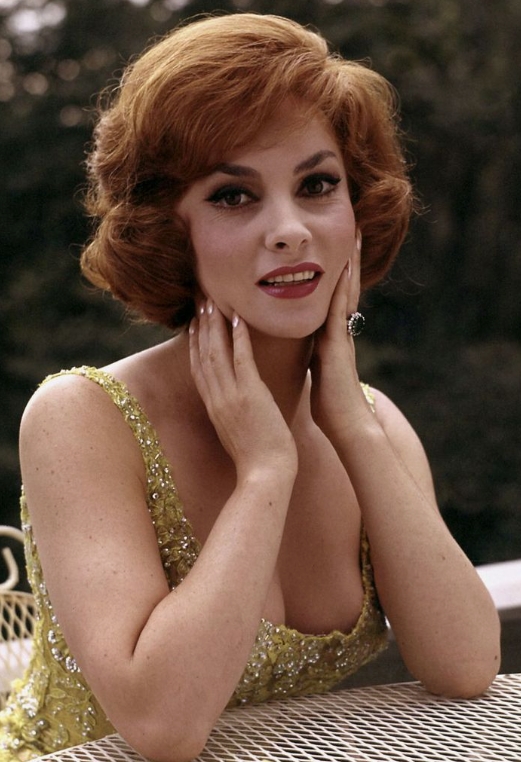
Lollobrigida quickly became synonymous with glamour and sensuality. Her roles often highlighted her allure, yet she was far more than a screen siren.
In The World’s Most Beautiful Woman (1955), known in Italian as La donna più bella del mondo, she combined her dramatic talent with her operatic singing voice, dazzling audiences and earning critical acclaim.
In the romantic comedy Come September (1961), she showcased a playful, lighthearted side opposite Rock Hudson, proving that she could thrive in both comedy and drama.
During this time, Lollobrigida was frequently compared to other international screen icons, most notably Sophia Loren.

The media often played up their supposed rivalry, framing them as two sides of Italian beauty: Loren the earthy, voluptuous goddess and Lollobrigida the refined, fiery enchantress.
In truth, both women had distinct careers and styles, and while rivalry made for good headlines, it also highlighted just how significant Italian actresses had become in shaping the image of post-war European cinema.
Lollobrigida’s fame extended far beyond Italy—she became one of the most photographed women in the world, a fixture of red carpets, magazine covers, and society events.
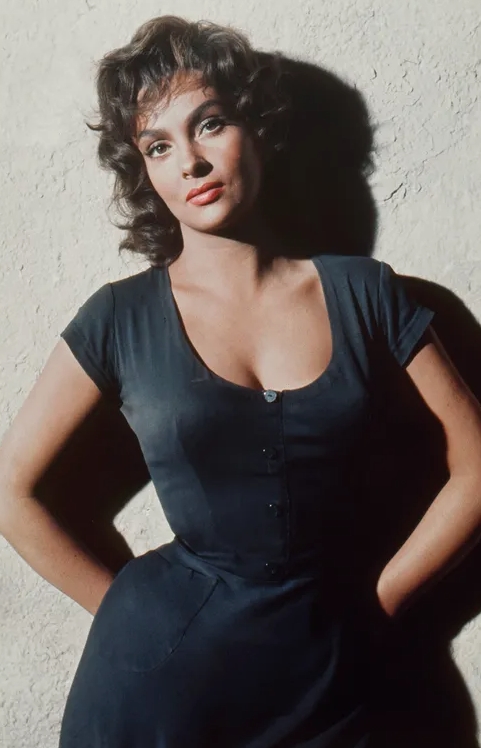
But Gina Lollobrigida was not content to be defined only by her acting career. By the late 1960s and 1970s, she began to step away from the screen and pursue other passions.
Photography became a central focus of her creative life. She traveled extensively, capturing images of artists, political leaders, and everyday people with an eye that blended artistry and journalism.
Her photography was exhibited internationally, earning her respect in artistic circles. She photographed figures such as Fidel Castro, Henry Kissinger, and Salvador Dalí, demonstrating her ability to gain access to world leaders and capture them in moments of striking intimacy.
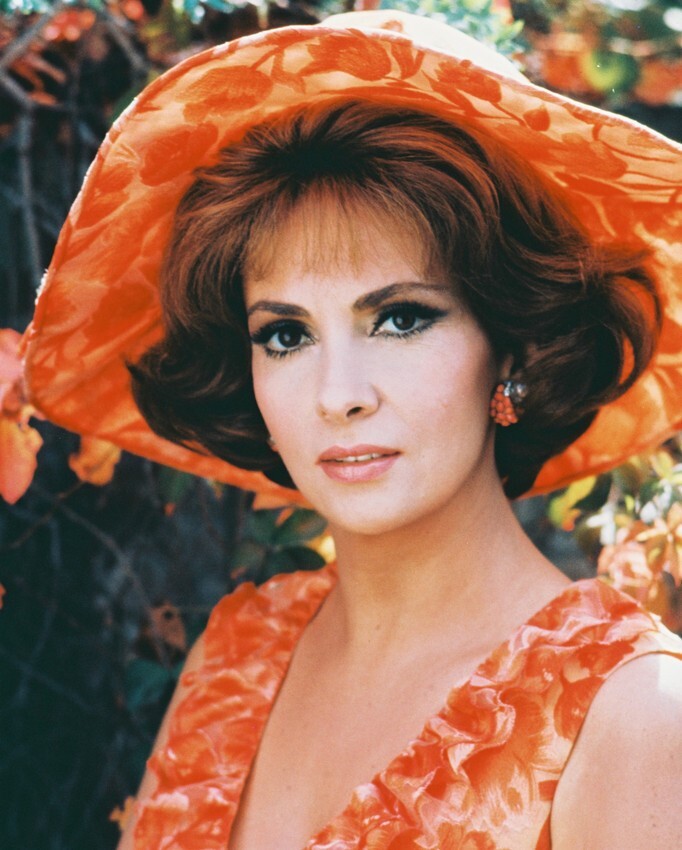
Her interest in photography reflected her lifelong desire to control her own artistic narrative, rather than simply being an object of the camera’s gaze.
Through her lens, she shifted from being the observed to being the observer, redefining herself in ways many actresses of her era never attempted. Her success as a photographer also underscored her versatility as an artist, proving that her creativity extended far beyond acting.
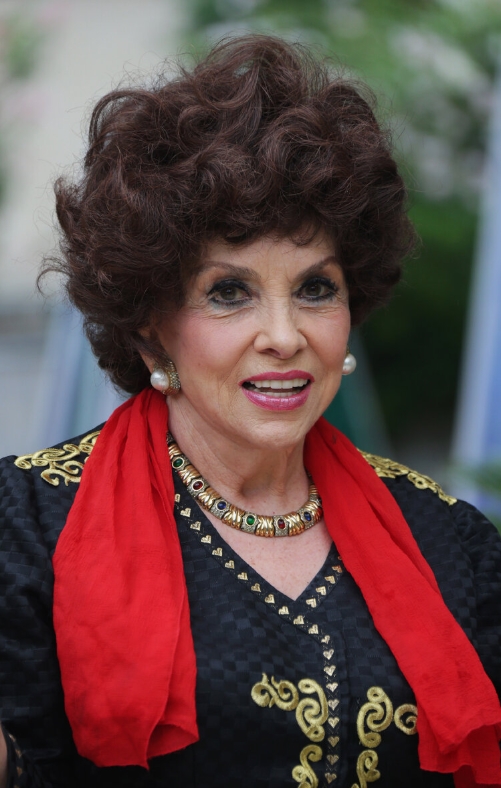
Beyond her work in cinema and photography, Lollobrigida was deeply involved in humanitarian causes. She supported organizations focused on children’s welfare, women’s health, and animal rights, using her fame to raise awareness and funds for those in need.
Her philanthropy demonstrated that she was not just a glamorous star but a compassionate woman dedicated to making a positive impact on the world.
Even as she aged, her legacy continued to grow. Lollobrigida was honored with numerous awards, including a Golden Globe and multiple lifetime achievement recognitions from film festivals and cultural institutions.
Her influence was felt not only in film but in fashion and art as well, as she became a symbol of mid-20th-century elegance and Mediterranean beauty.
In her later years, Lollobrigida largely retired from acting, but she never faded from public consciousness. She occasionally gave interviews, reflecting on her career with wit and candor, and she remained a beloved figure in both Italy and abroad.
When she passed away on January 16, 2023, at the age of 95, tributes poured in from around the world. Fans, filmmakers, and fellow artists remembered her not only as a screen goddess but as a woman of intelligence, independence, and enduring creativity.
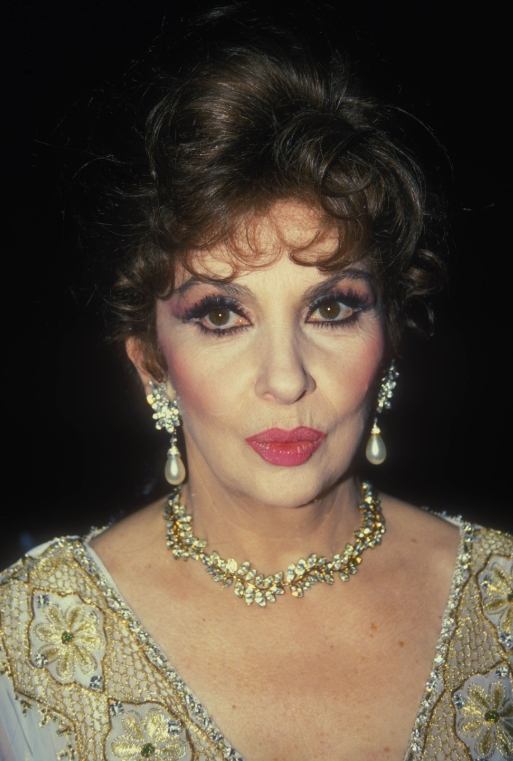
Gina Lollobrigida’s story is one of transformation, resilience, and brilliance. From a small-town girl in post-war Italy to an international screen siren, from an acclaimed actress to a respected photographer and humanitarian, her journey reflected the many ways a woman could shape her destiny in the 20th century.
She captivated audiences with her performances, enchanted the world with her beauty, and inspired countless admirers with her artistry and generosity. Her legacy lives on not just in the films she made, but in the indelible mark she left on culture and society.
More than just a movie star, Gina Lollobrigida was a symbol of her era—a woman who embodied glamour and strength in equal measure, and whose contributions to film and the arts will be remembered for generations to come.