Right before the Golden Globe Awards, Pamela Anderson made a move that felt at once familiar and quietly strategic.
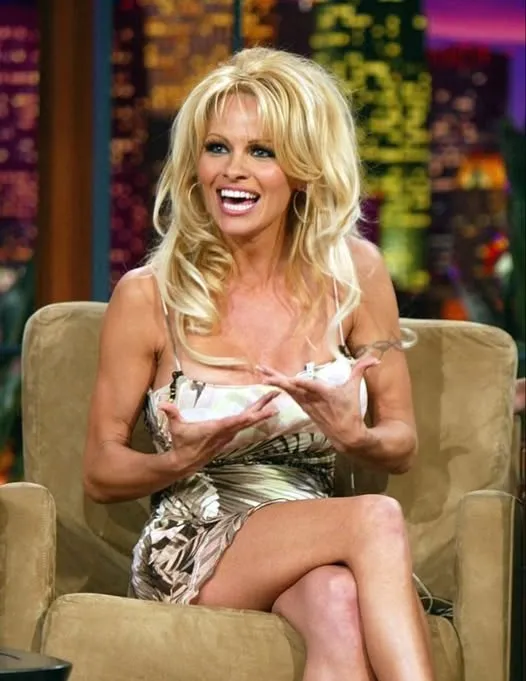
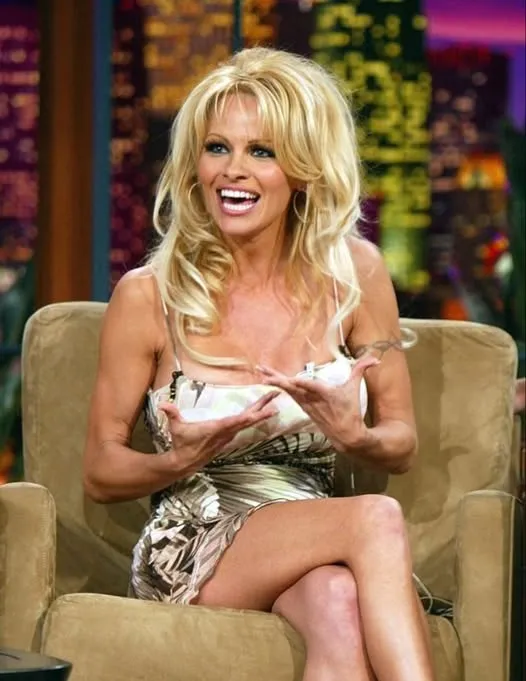
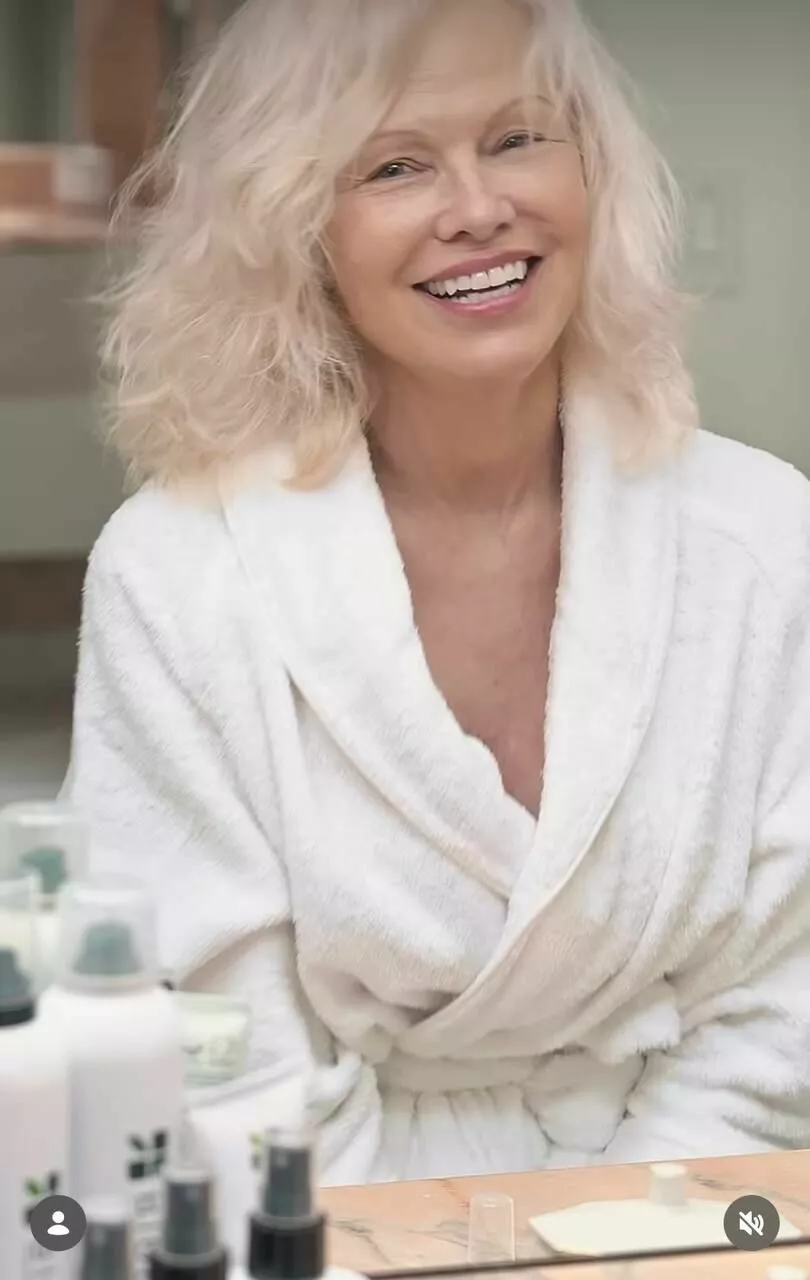
She returned to the platinum blonde hair that once defined her public image, a color so closely associated with her that it has long functioned as visual shorthand for an entire era of pop culture.
But this wasn’t a nostalgic stunt or a bid for attention. It was something subtler — a deliberate recalibration of how the past can be revisited without being repeated.
At 58, Anderson has spent the last few years dismantling expectations around her appearance with remarkable consistency.
Minimalism became her statement. Simplicity became her power. That context is what made the return to platinum blonde resonate far beyond a simple hair change.
Just months earlier, in the fall, Anderson had experimented with a warm red shade — softer, earthier, and deliberately understated.
It aligned with the stripped-back image she had been cultivating: bare skin, natural textures, and an almost monastic refusal to play by Hollywood’s traditional beauty rules.
The blonde’s return, then, felt like a pivot. Sharp. Icy. Unmistakable. But not regressive.
Over the weekend leading up to the ceremony, Pamela shared the transformation with her followers in a way that felt intimate rather than promotional. One post offered a close-up look at the revived blonde, the color crisp and luminous.
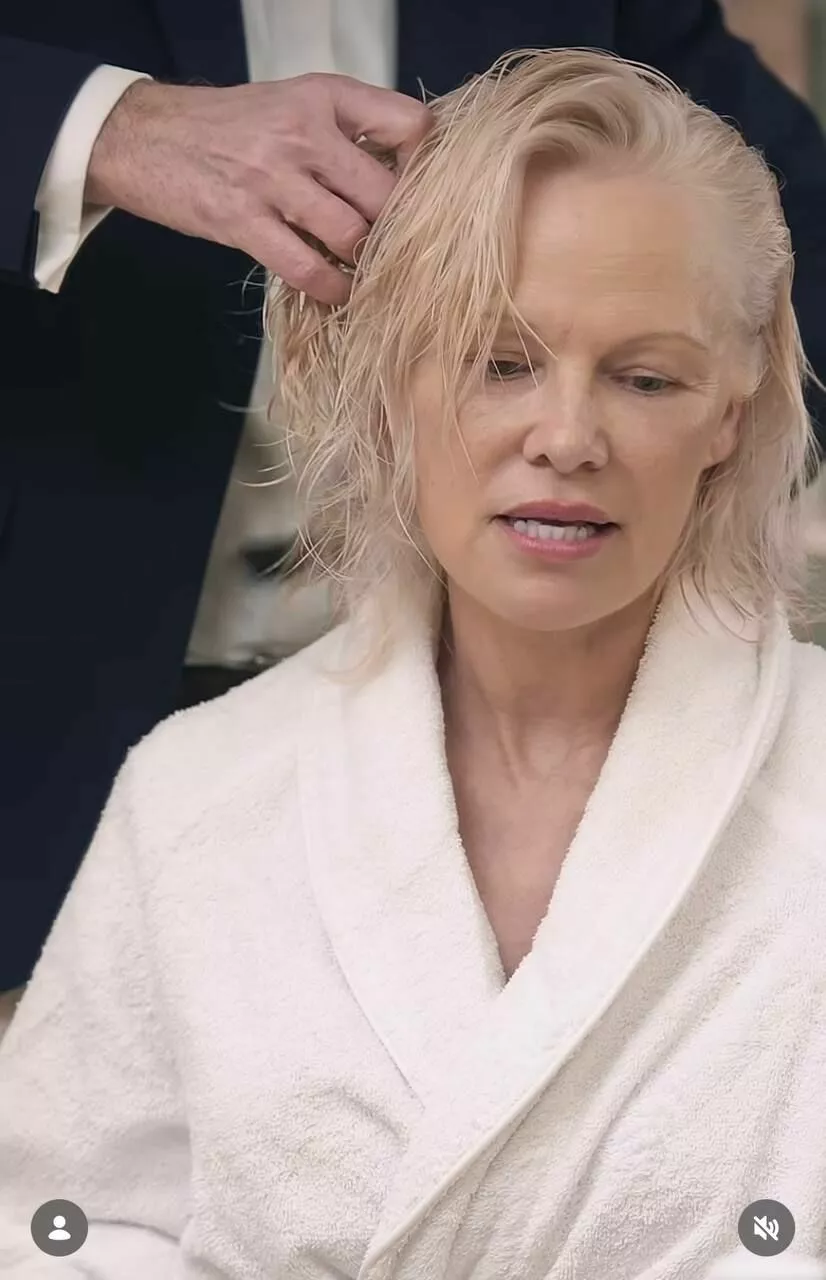
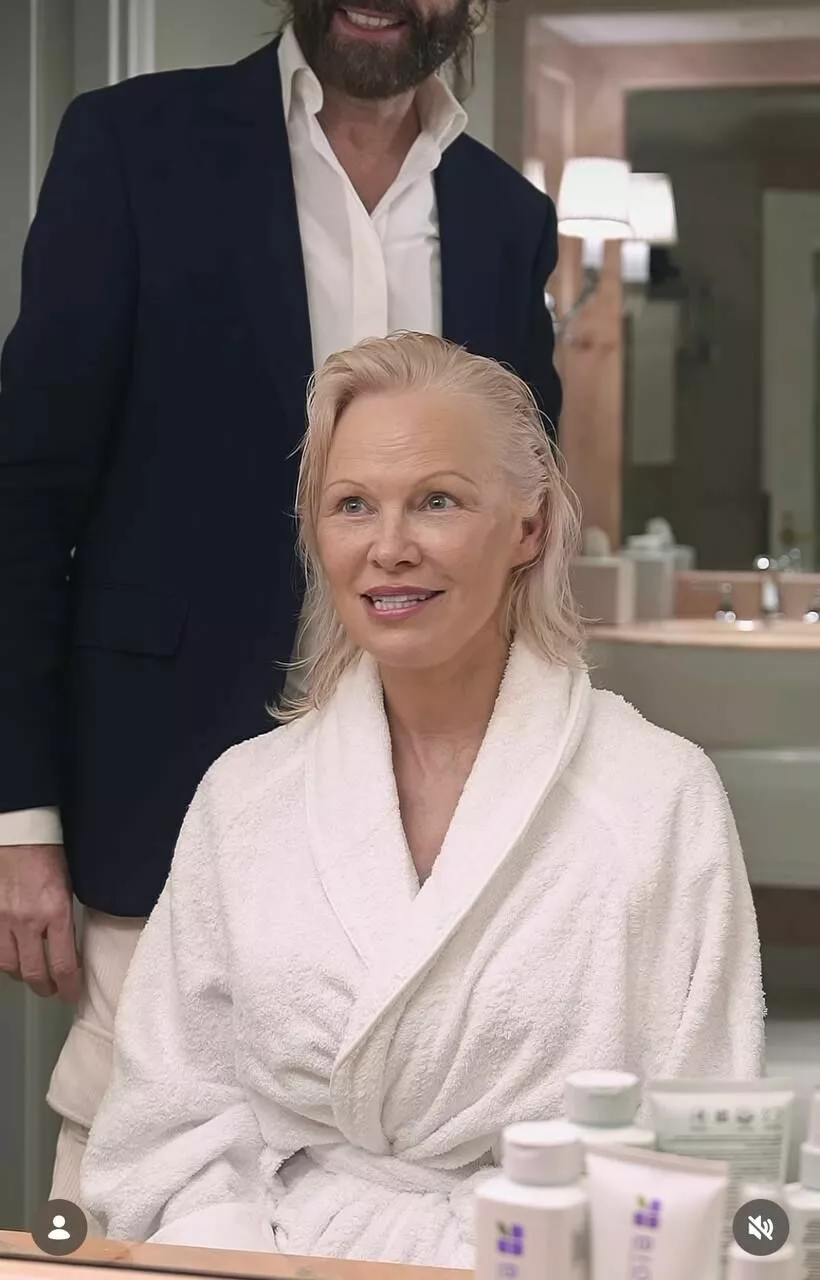
Another revealed behind-the-scenes footage of the styling process — hands shaping volume, light catching on smooth strands — as she prepared for the Golden Globe Awards 2026. These weren’t glossy campaign images. They were quiet glimpses into preparation, emphasizing process over spectacle.

When Anderson finally stepped onto the red carpet, the transformation came into full focus.
She wore a snow-white ensemble, clean-lined and architectural, paired with minimalist diamond jewelry that reflected light without overwhelming the look. The styling allowed space — space for her face, her posture, her presence.
The platinum hair framed her features like an echo from another time, but the mood was unmistakably different. This wasn’t the bombshell of the 1990s. This was composure.
There was calm in the way she carried herself. Control. Awareness.
The hair referenced a familiar image, but everything else resisted exaggeration. The result was neither ironic nor sentimental. It felt intentional — a reminder that revisiting the past doesn’t require surrendering to it.

Her captions reinforced that restraint. Under a portrait showcasing the revived blonde, she simply wrote, “Hello again.” No explanation. No narrative framing. Just acknowledgment.
In another post, paired with the styling video, she added: “Back to my blonde era.” The language was almost playful in its understatement. Anderson didn’t feel the need to justify the choice or dramatize its significance. She trusted the audience to understand the nuance.

What made the moment even more compelling was a small but meaningful deviation from her recent aesthetic rules.
After years of appearing publicly without makeup — a choice that had become central to her modern identity — Pamela opted for a light touch this time. Soft blush warmed her cheeks. A gentle coral gloss added subtle color to her lips.
It was barely perceptible, yet unmistakably deliberate. Like punctuation at the end of a carefully constructed sentence.
This wasn’t a rejection of her makeup-free philosophy. It was an expansion of it. Anderson wasn’t abandoning restraint; she was redefining it. The makeup didn’t conceal or transform her. It simply completed the look, signaling that intention matters more than absolutes.
What’s striking about this moment is how clearly it reflects Anderson’s evolving relationship with her own image.
For decades, she existed as a projection — a symbol shaped by media narratives, male gaze, and cultural shorthand. In recent years, she’s been reclaiming authorship. Each decision, whether to go bare-faced or return to blonde, feels authored rather than reactive.
This selective return to the past underscores a larger truth about reinvention: it doesn’t require erasure.
Anderson didn’t discard her history. She edited it. She chose which elements still resonated and stripped them of excess. Same color, different energy. Less armor. More awareness.
In an era where celebrity transformations are often loud, hyper-documented, and algorithm-driven, Pamela Anderson’s approach feels almost radical in its quietness.
There was no press release, no manifesto, no attempt to dominate the conversation. And yet, the moment landed. It lingered. It invited reflection rather than reaction.
Ultimately, this wasn’t about hair. It was about control — over narrative, over timing, over self-presentation. Pamela Anderson didn’t revert. She reframed. She demonstrated that maturity doesn’t mean disappearance, and reinvention doesn’t have to shout to be heard.
By returning to platinum blonde on her own terms, she reminded the world of something easily forgotten in celebrity culture: the most powerful transformations are often the ones that look simple, feel intentional, and arrive without apology.