When it comes to fantasy cinema, most people immediately think of The Lord of the Rings, Harry Potter, or the Disney classics that shaped childhoods across generations.
But long before CGI and billion-dollar franchises dominated the genre, a handful of filmmakers were using practical effects, stop-motion animation, and boundless imagination to transport audiences to other worlds.
Among those hidden treasures is Sinbad and the Eye of the Tiger (1977)—a film that may not receive the same recognition as its contemporaries but remains a fascinating, ambitious, and thoroughly entertaining adventure that deserves to be rediscovered.
Directed by Sam Wanamaker and produced by Charles H. Schneer, the film marked the third and final entry in the Sinbad trilogy that had begun with The 7th Voyage of Sinbad
(1958) and continued with The Golden Voyage of Sinbad (1973).
At the heart of these films was the legendary collaboration between Schneer and special effects pioneer Ray Harryhausen. Known for his groundbreaking stop-motion “Dynamation,” Harryhausen brought to life creatures that were at once terrifying, whimsical, and unforgettable.
In Sinbad and the Eye of the Tiger, he once again worked his magic, filling the screen with creatures that pushed the limits of imagination in the pre-digital era.
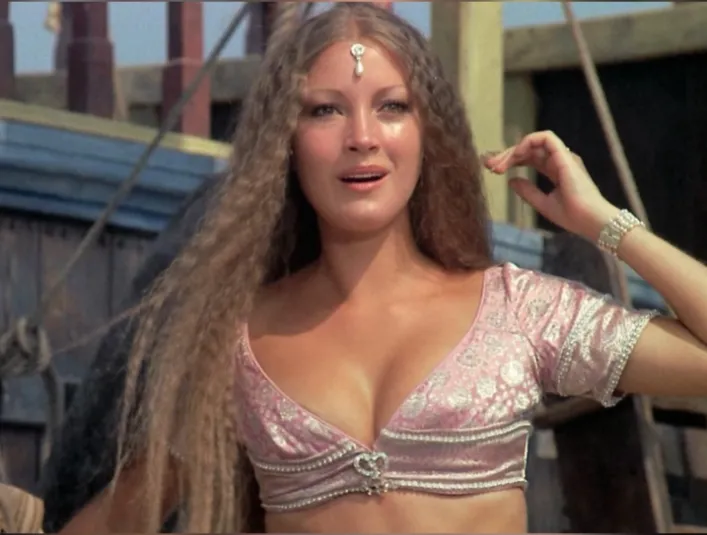
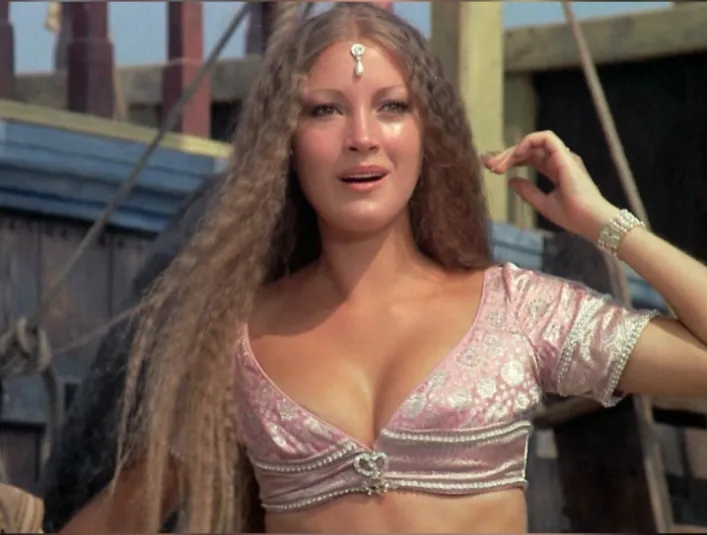
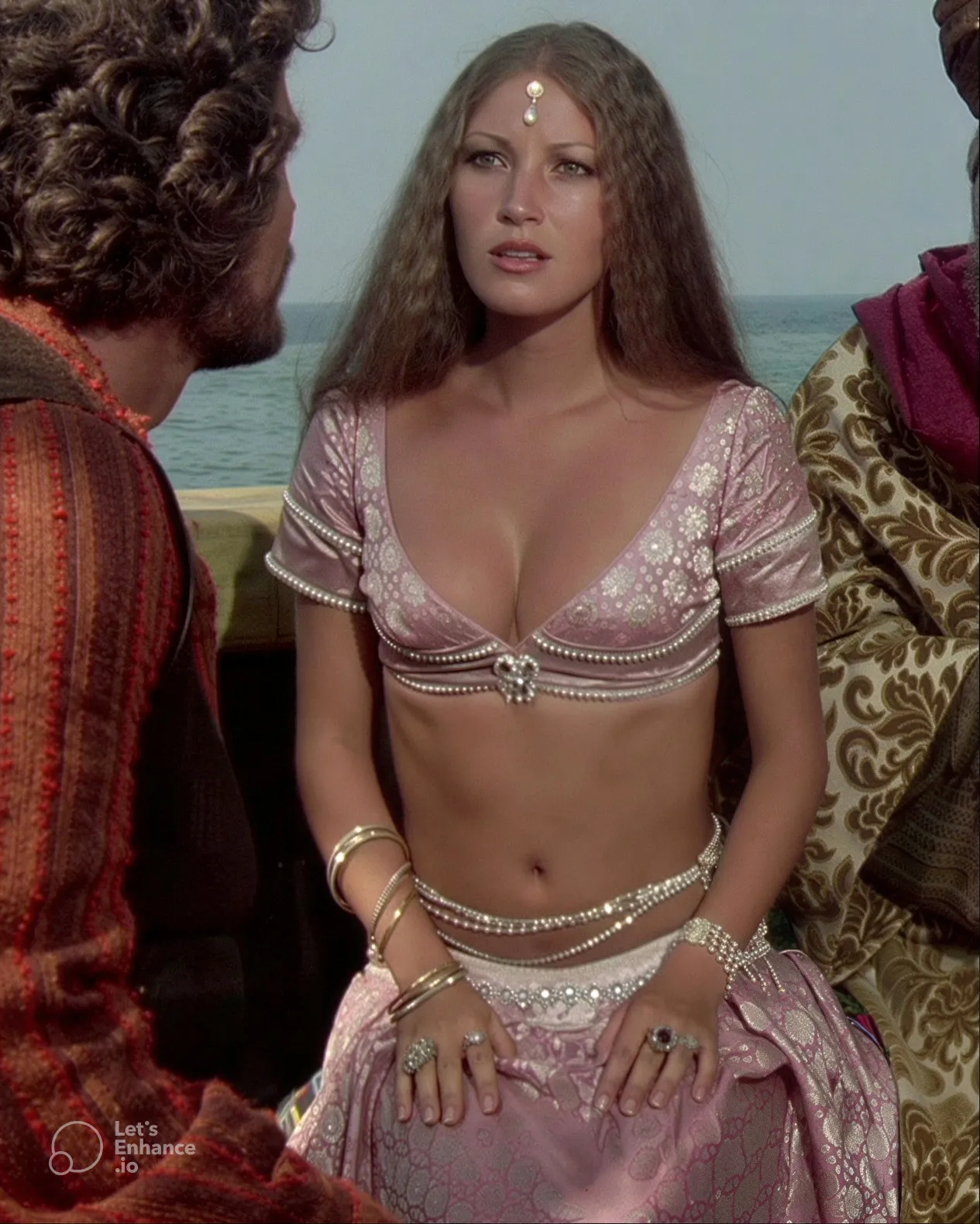
The story centers on the daring sailor Sinbad, played by Patrick Wayne (son of Hollywood icon John Wayne). Sinbad arrives in Charak to seek permission to marry Princess Farah (Jane Seymour), only to discover that her brother, Prince Kassim, has been cursed by their stepmother, the sorceress Zenobia (Margaret Whiting).
The once-proud Kassim has been transformed into a baboon, and unless the spell is broken, he will be denied his rightful place on the throne.
Determined to restore Kassim and win Farah’s hand, Sinbad embarks on a perilous quest that takes him across exotic lands, through icy wastelands, and into deadly encounters with mythical beasts.
At first glance, the film might appear to be just another swashbuckling fantasy, but what makes it endure is Harryhausen’s artistry. Every creature—from the lumbering troglodyte to the fearsome saber-toothed tiger—was crafted with meticulous detail and brought to life frame by painstaking frame.
The baboon, in particular, stands out as one of Harryhausen’s most expressive creations. Its movements and gestures capture both animal instinct and human vulnerability, reminding viewers that special effects can convey emotion as effectively as dialogue.
Another memorable creation is Zenobia’s mechanical minion, a bronze automaton who assists her in her schemes. Though it may appear simple compared to today’s robots, the automaton carried an eerie, otherworldly charm that perfectly matched the tone of the story.
Likewise, the towering Minoton (a bull-headed bronze giant) remains one of the most iconic images of the film, combining menace with Harryhausen’s trademark stop-motion fluidity.
While the creatures are the highlight, the human cast also deserves credit. Patrick Wayne brought an earnest charm to Sinbad, even if he lacked the rugged charisma of his predecessors.
Jane Seymour, in one of her earliest roles, exuded elegance and determination, hinting at the star power she would later bring to films like Somewhere in Time and the James Bond adventure
Live and Let Die.
Margaret Whiting as Zenobia delivered a performance filled with theatrical flair, embodying the archetype of the power-hungry sorceress with relish.
Released in 1977, Sinbad and the Eye of the Tiger
had the misfortune of arriving during a transformative moment in cinema. That same year, Star Wars hit theaters, changing the landscape of science fiction and fantasy forever.
Compared to the sleek spaceships and laser battles of George Lucas’s epic, Harryhausen’s stop-motion creatures felt, to some, like relics of a bygone era. As a result, the film struggled to stand out and was overshadowed by the blockbuster revolution that followed.

Yet, in hindsight, this so-called “dated” quality is part of what makes the film so special. Unlike modern CGI-heavy spectacles, Sinbad and the Eye of the Tiger exudes a handcrafted charm.
You can sense the artistry behind each creature, the effort that went into every jerky yet captivating movement. It’s a tactile kind of magic, one that reminds audiences of a time when fantasy worlds were built with ingenuity, patience, and imagination rather than computer algorithms.
The film also reflects the enduring appeal of the Sinbad mythos itself. For centuries, stories of Sinbad the Sailor—rooted in Middle Eastern folklore and The Arabian Nights—have captivated audiences with their blend of exotic locales, daring adventures, and supernatural wonders.
Sinbad and the Eye of the Tiger continues that tradition, offering a tale that is both timeless and universal: a hero facing impossible odds, driven by love, loyalty, and the pursuit of justice.

Critics at the time were divided. Some praised the visual spectacle and Harryhausen’s effects, while others criticized the film’s pacing and performances. But today, viewed outside the shadow of Star Wars
, It becomes easier to appreciate the film on its own terms.
It is not a flawless work—few fantasy films of that era were—but it carries a sincerity and sense of wonder that modern audiences often crave in an age of cynical reboots and hyperreal visuals.
For those who grew up watching the Sinbad films on television or VHS, The Eye of the Tiger often holds a nostalgic place in memory.
It was the kind of movie that transported children into a world where anything was possible: where giant scorpions battled men, sorceresses commanded unholy magic, and sailors faced creatures straight out of nightmares.
For new viewers discovering it today, it can be a revelation—a reminder that fantasy doesn’t need to be perfect to be magical.

Ultimately, Sinbad and the Eye of the Tiger deserves to be remembered not as a forgotten relic but as part of the rich tapestry of fantasy cinema. It showcases the brilliance of Ray Harryhausen at the height of his powers, the allure of timeless mythology, and the ability of cinema to ignite the imagination with limited tools but unlimited creativity.
So if you’ve never seen it—or if it’s been decades since you last did—perhaps it’s time to revisit Sinbad’s adventure. You may find yourself smiling at the slightly dated dialogue or the old-fashioned special effects, but you’ll also feel that spark of wonder that only true fantasy can provide.
In a world saturated with digital spectacles, Sinbad and the Eye of the Tiger remains a handcrafted gem—a forgotten classic you didn’t know you needed.