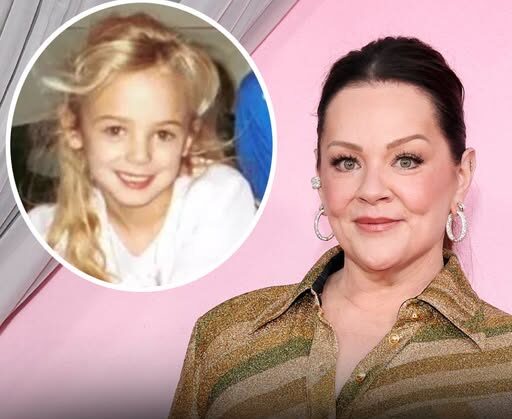
Melissa McCarthy says that spending months immersed in the JonBenét Ramsey case while preparing for her upcoming Netflix role left her with a deeply personal impression about one of America’s most closely scrutinized unsolved murders.
McCarthy will portray Patsy Ramsey, JonBenét’s mother, in Netflix’s upcoming limited series The Murder of JonBenét Ramsey, which is scheduled to premiere globally on December 10, 2026. Clive Owen will play JonBenét’s father, John Ramsey, while Emily Mitchell portrays JonBenét.
Netflix describes the series as an exploration of the six-year-old’s murder and the enormous public and media scrutiny that followed the tragedy, rather than simply another attempt to present the case as a mystery for viewers to solve.
For McCarthy, preparing to play Patsy required much more than reading a screenplay.
She said she immersed herself in the case material, including police and coroner reports, because she wanted to understand the woman at the center of the story and the circumstances surrounding her daughter’s death.
The research also forced McCarthy to confront something she had never fully considered before: how strongly people—including herself in the past—could become attached to theories about the case without necessarily knowing what the evidence actually established.
McCarthy said that, based on everything she had read, her personal “gut” tells her that no member of JonBenét’s immediate family was responsible for the child’s death.
But she was careful not to present that belief as a proven fact.
She acknowledged that she is not an investigator and cannot determine who actually killed JonBenét.
For an actor, however, she felt she needed to make a decision about Patsy’s emotional reality.
To portray Patsy honestly, McCarthy needed to understand what she believed had happened and how she might have experienced the years of suspicion, grief and public scrutiny that followed her daughter’s death.
That distinction is particularly important because the real case remains unsolved.
JonBenét Ramsey was six years old when she was killed in Boulder, Colorado, in December 1996.
Her family reported her missing from their home, and a ransom note was found inside the house.
Later, her body was discovered in the basement.
Her death was ruled a homicide.
The case quickly became one of the most heavily publicized criminal investigations in the United States.
Within days, the Ramsey family found themselves at the center of intense media attention.
For years, television programs, books, documentaries and tabloid reports presented competing theories about what might have happened inside the Ramsey home.
Suspicion repeatedly shifted.
Some theories focused on members of the family.
Others centered on the possibility of an intruder.
Questions were also raised about forensic evidence, the original investigation and how the crime scene was handled.
Yet despite decades of attention, no person has been convicted of JonBenét’s murder.
The case remains an active homicide investigation, and authorities continue to review evidence and work with forensic experts as new technologies become available. Netflix says that nearly 30 years after the killing, the perpetrator has still not been identified.
McCarthy’s approach to the upcoming series appears to reflect that uncertainty.
Rather than treating the story as a conventional whodunit with a dramatic final answer, she has described the project as something closer to a character study.
The focus is not simply on asking viewers to decide who committed the crime.
It is also on examining what happened to the Ramsey family before and after JonBenét’s death, and what it was like for them to live under an extraordinary level of public scrutiny.
McCarthy has spoken openly about developing compassion for Patsy while researching the role.
Patsy Ramsey died in 2006 after battling ovarian cancer.
McCarthy has also acknowledged that she once viewed the Ramsey story through the same sensationalized media lens as many other people.
She recalled seeing tabloid coverage when she was younger and realizing during her research for the series that she, too, had once participated in judging the family without fully understanding the circumstances.
That realization became part of why she ultimately agreed to take the role.
McCarthy has said she hopes the series can restore some humanity to a family whose tragedy became a form of public spectacle.
Her comments about the case are likely to attract attention because the question of who killed JonBenét remains one of the most fiercely debated subjects in true crime.
Over the years, competing theories have continued to circulate.
Some people have argued that someone inside the home was responsible.
Others have maintained that an intruder entered the house.
John Ramsey has consistently argued that an outside perpetrator killed his daughter and has repeatedly called for additional investigation and testing.
One later Boulder crime has also played a role in the intruder theory he has discussed publicly.
Months after JonBenét’s death, another young girl in Boulder was attacked in her home by a masked intruder.
John Ramsey has argued that the incident deserved greater consideration because, in his view, it demonstrated that a predator could have been operating in the same community.
He has suggested that the person responsible for that attack could potentially have been connected to JonBenét’s murder.
However, authorities have not established a proven connection between the two crimes.
The possibility of a link has remained a theory rather than an established fact.
That distinction is crucial in a case where so many competing explanations have circulated for decades.
John Ramsey has also continued criticizing aspects of the original investigation and advocating for additional DNA testing and outside review of evidence.
Meanwhile, investigators continue to treat JonBenét’s death as an open homicide case.
Netflix’s new series is expected to revisit many of those familiar details while placing greater emphasis on the human consequences of the tragedy.
At the center of that story is Patsy Ramsey.
For McCarthy, portraying her meant trying to understand a mother who lost her six-year-old daughter and then spent years living beneath an extraordinary level of suspicion and public attention.
McCarthy has said that she became particularly compassionate toward Patsy during the process.
She has even written unsent letters to John Ramsey and Burke Ramsey while working on the project, explaining that she wanted them to know she was trying to portray their family with care and respect.
That perspective appears to have influenced the tone of the series.
Instead of promising a sensational revelation that finally solves the case, The Murder of JonBenét Ramsey is being presented as an examination of grief, family, media attention and the lasting consequences of an unsolved crime.
And that may be the most important distinction surrounding McCarthy’s comments.
Her belief that no immediate family member was responsible is her personal interpretation, not a determination of who committed the murder.
The actual case remains unresolved.
No one has been convicted of killing JonBenét.
No definitive account of what happened inside the Ramsey home has been established in court.
And the competing theories surrounding the case continue to be debated.
Nearly three decades later, the central mystery remains.
Who killed JonBenét Ramsey?
Netflix’s new series will revisit that question—but according to McCarthy, its real focus may be less about declaring an answer and more about showing what happened to the people who had to live with the question for the rest of their lives.