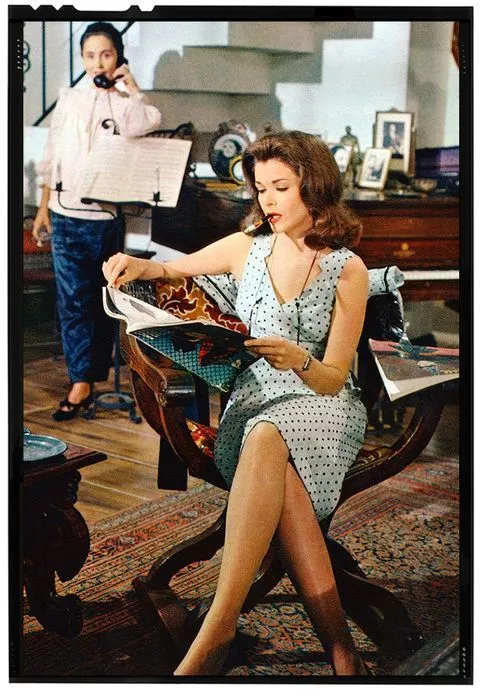
Before she became a household name for playing one of television’s most hilariously cold and calculating matriarchs, Jessica Walter was already a force in Hollywood. Captured in her youth, her natural glow and presence hinted at the remarkable career that was to come—one that would span over 170 film, stage, and television productions. Her versatility allowed her to move seamlessly between genres, from soap operas to thrillers, comedies to dramas, always leaving an indelible impression.

Born in Brooklyn, New York, in 1941, Jessica Walter grew up in a household that fostered creativity. Her father, a musician, and her mother, a teacher, encouraged her early artistic ambitions. After attending New York’s High School of Performing Arts and later HB Studio, she began to carve out a place for herself in an industry that demanded persistence as much as talent. What set Walter apart even then was her range—she could be vulnerable and luminous one moment, sharp and commanding the next.
Her breakout came in the 1960s, when she began landing significant roles both on stage and in front of the camera. She made her Broadway debut in 1960 in Advise and Consent and quickly became a regular presence in theater. But it was film that soon beckoned, offering her a platform to showcase her charisma to a wider audience.

In 1971, she took on what remains one of her most celebrated film roles in Clint Eastwood’s
Play Misty for Me. As Evelyn Draper, a woman whose infatuation turns dangerously obsessive, Walter delivered a chilling performance that won her critical acclaim. She managed to infuse Evelyn with both fragility and menace, creating one of cinema’s most memorable portrayals of obsession. It was a performance that demonstrated just how fearless she was as an actress, unafraid to dive into difficult characters and reveal their complexities.
Television, however, was where Jessica Walter truly flourished. Her résumé reads like a history of American TV, with appearances on Columbo, Mission: Impossible, Trapper John, M.D., Law & Order, and dozens more. She was a regular on Dinosaurs in the early 1990s, voicing the matriarch Fran Sinclair, a role that showcased her comedic timing even in voice work. Yet, even with decades of consistent work and respect within the industry, her most iconic role came much later in life.

In 2003, Jessica Walter was cast as Lucille Bluth in the groundbreaking sitcom Arrested Development. As the manipulative, martini-sipping, endlessly sarcastic matriarch of the Bluth family, Walter found the role of a lifetime. Lucille was sharp-tongued, unapologetically self-absorbed, and endlessly quotable, and Walter played her with such razor precision that she elevated every scene she was in. What could have been a caricature in less capable hands became a multi-dimensional force of comedy under her watch. Fans and critics alike praised her timing, delivery, and ability to make even the most outrageous lines feel natural.
The success of Arrested Development brought Walter a new generation of admirers who had never seen her earlier work. It cemented her place in pop culture, with Lucille Bluth becoming one of television’s most iconic characters of the 2000s. Even now, more than two decades since the show’s debut, her one-liners and expressions remain meme-worthy and beloved.

Her comedic resurgence didn’t stop there. She lent her voice to Malory Archer on the animated series Archer, another cold, manipulative, yet somehow endearing mother figure. Much like Lucille, Malory became a fan favorite, allowing Walter to bring her signature blend of sharp wit and biting delivery to a whole new medium.
Beyond her performances, Jessica Walter was deeply respected by her peers. She was known for her professionalism, generosity on set, and passion for her craft. Over her career, she earned Emmy nominations, won an Emmy in 1975 for her work in Amy Prentiss, and received countless accolades from critics who recognized her ability to transform even the smallest roles into something unforgettable.

What makes Jessica Walter’s story so compelling is not just her longevity but her adaptability. She wasn’t afraid to embrace new opportunities, to step into uncharted territory, and to reinvent herself as the industry shifted. She moved from ingenue roles in her youth to complex, commanding figures later in life, proving that talent doesn’t fade with age—it deepens.
When she passed away in 2021 at the age of 80, tributes poured in from across the entertainment world. Co-stars and fans alike celebrated her wit, her warmth, and her incredible body of work. Many noted how rare it was for an actress to enjoy two career-defining roles decades apart—first in
Play Misty for Me, and later in Arrested Development.

Jessica Walter’s legacy is that of a performer who refused to be typecast, who embraced every challenge with fearlessness, and who understood the power of both drama and comedy. She wasn’t just part of Hollywood history—she helped shape it, leaving behind performances that continue to resonate, inspire, and, in the case of Lucille Bluth and Malory Archer, make us laugh until it hurts.
So when we look back at those early portraits of Jessica Walter, captured before her rise to fame, we see more than youthful beauty. We see the promise of a career that would dazzle, surprise, and endure. And two decades since she joined that famously dysfunctional Bluth family, audiences are still talking, still laughing, and still grateful that Jessica Walter gave the world her extraordinary talent.