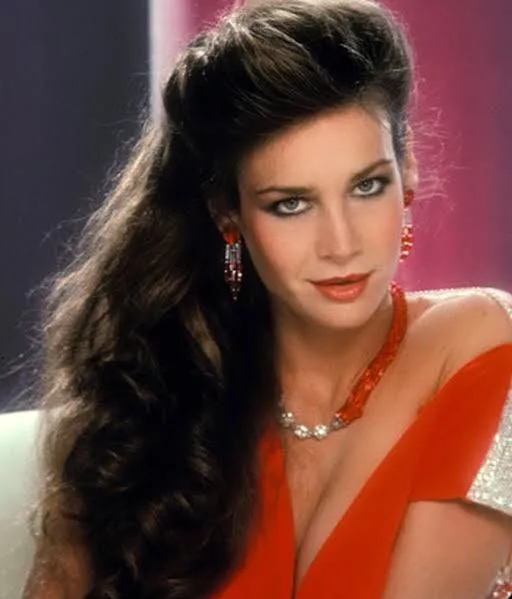
Some performances entertain. Others detonate. In the autumn of 1980, one actress delivered a moment so seismic that it reshaped prime-time television forever. Her name was Mary Crosby — and for one electric instant, the entire world seemed to hold its breath.
Long before she became synonymous with one of the most famous cliffhangers in television history, Crosby was already steeped in Hollywood legacy.
Born on September 14, 1959, in Los Angeles, she was the daughter of legendary entertainer Bing Crosby and actress Kathryn Grant. Fame was part of the air she breathed. But inheriting a famous surname and forging a personal identity in the same industry are two very different challenges
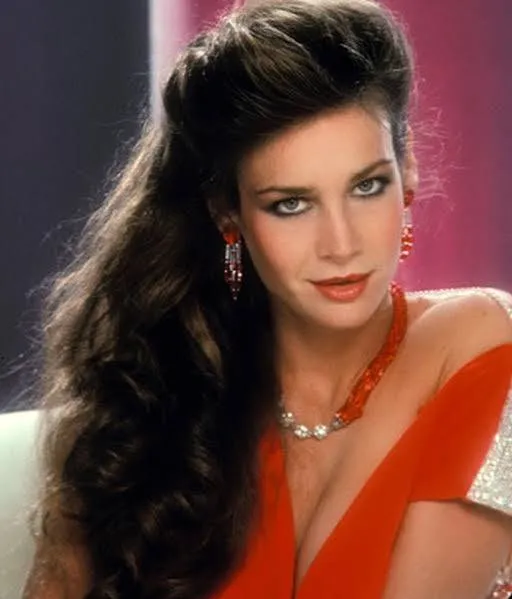
Mary chose the harder path.
Gifted academically as well as artistically, she graduated high school at just 15 and went on to study theater arts at the University of Texas at Austin. Those early years shaped a performer determined not to rely on pedigree. She wasn’t interested in being “Bing Crosby’s daughter.” She wanted to earn her own spotlight.
Throughout the 1970s, Crosby quietly built a résumé that showcased her poise and screen presence. She appeared in popular series such as Starsky & Hutch, CHiPs, and Charlie’s Angels, steadily gaining industry respect.
There was something arresting about her — a mix of classic Hollywood elegance and simmering intensity. Casting directors noticed.
Then came 1979.
When Crosby joined the cast of Dallas, the prime-time soap was already a ratings juggernaut. She was cast as Kristin Shepard, the calculating sister of Sue Ellen Ewing. Kristin wasn’t written as a mere supporting player. She was sharp, ambitious, and emotionally volatile — a character who could walk into a room and instantly change the temperature.
But no one — not even Crosby — could have predicted what would happen next.
In March 1980, the Season 3 finale of Dallas aired with a jaw-dropping cliffhanger: oil baron J.R. Ewing had been shot by an unseen assailant. The episode ended without revealing the culprit. Television had seen cliffhangers before, but never like this.

“Who Shot J.R.?” became more than a storyline — it became a global obsession.
For eight months, newspapers speculated. Office pools formed. T-shirts were printed. Politicians referenced it. Even foreign leaders reportedly inquired about the outcome. It was appointment television in the purest sense — a shared cultural mystery in an era before streaming and social media.
On November 21, 1980, more than 83 million American viewers tuned in to learn the answer. The reveal was explosive: Kristin Shepard had pulled the trigger.
Mary Crosby’s face — defiant, wounded, complex — was suddenly etched into television history.
The episode, titled “Who Done It?”, remains one of the highest-rated broadcasts of all time. In that moment, Crosby became the embodiment of one of pop culture’s most unforgettable twists.
Yet what made her performance endure wasn’t merely shock value. Kristin Shepard wasn’t a cartoon villain. She was layered — driven by betrayal, vulnerability, and simmering resentment. Crosby infused the character with emotional depth, turning what could have been a simple plot device into a psychologically compelling portrait.

The risk after such a defining role is obvious: typecasting. Many actors never escape their most famous moment. Crosby, however, refused to be confined by it.
In the years that followed, she expanded her career with versatility. She starred in the cult sci-fi adventure The Ice Pirates (1984), appeared in the glamorous miniseries Hollywood Wives (1985), and took part in Stagecoach (1986) alongside Johnny Cash.
Guest appearances in series like Murder, She Wrote, Hotel, and Beverly Hills, 90210 demonstrated her range.
She was no longer just the answer to a question. She was a working actress with staying power.
Unlike many stars who chase perpetual visibility, Crosby gradually stepped back from relentless publicity. In 1998, she married Mark Brodka and embraced a more private life. She continued to act selectively but prioritized family and personal fulfillment over constant exposure.
That decision may be the most revealing chapter of her story.

In an industry often defined by reinvention and reinvention’s pressure, Crosby chose steadiness. She did not attempt to outrun her defining moment — she accepted it as part of her legacy.
Today, Dallas continues to be revisited by new generations. Streaming platforms and nostalgia cycles have ensured that the “Who Shot J.R.?” phenomenon remains a benchmark for television storytelling. Modern showrunners frequently cite it as the gold standard of serialized suspense.
And at the heart of that benchmark stands Mary Crosby.
Her legacy rests on more than a single plot twist. It reflects an era when television could unite millions around one unanswered question. It highlights the power of performance to elevate melodrama into cultural memory.

And it proves that stepping out of a giant shadow — even one cast by a legend like Bing Crosby — is possible with talent, discipline, and conviction.
Some actors chase iconic roles. Others become one by accident.
Mary Crosby did both — and in doing so, she secured her place in television history.